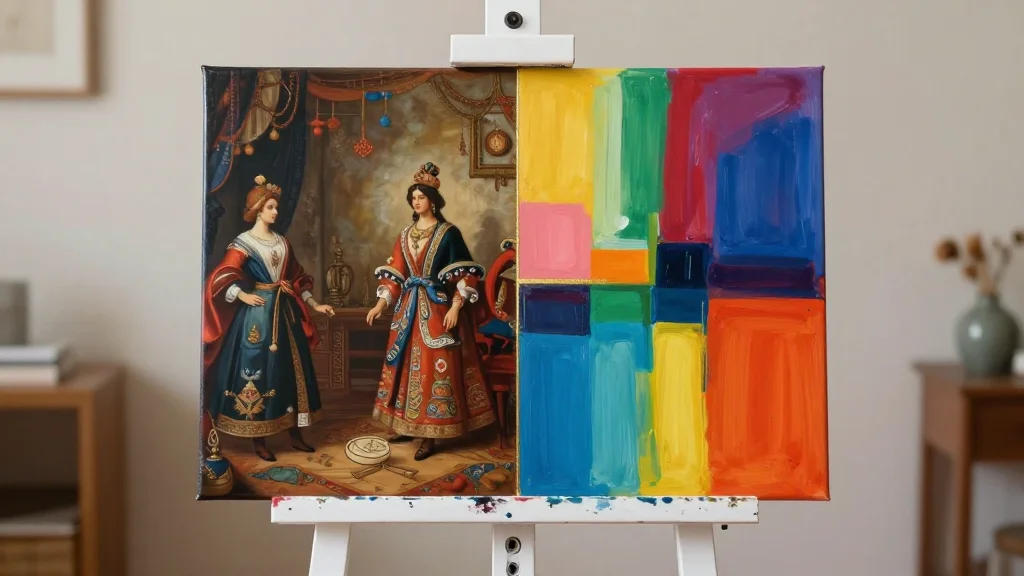
Art Paris 2026 Opens with 'La Réparation' Theme, Fonds D’Art Contemporary Showcases 37 Works

Why It Matters
The Art Paris 2026 fair’s focus on "la réparation" reflects a growing demand for museums and collectors to confront colonial legacies and to integrate historically excluded artists into mainstream narratives. By publicly restoring and exhibiting works that have never been shown before, the Fonds d’art contemporain signals that institutional accountability can translate into market relevance, encouraging other European and global institutions to adopt comparable decolonial frameworks. For collectors, the fair highlights a new valuation axis: provenance and ethical context are becoming as important as aesthetic merit. The visibility of previously unseen works may catalyse a reassessment of the financial and cultural worth of similar pieces in private and public collections, potentially reshaping acquisition strategies for the next decade.
Key Takeaways
- •Art Paris 2026 opened April 9‑12 at the Grand Palais under the theme "la réparation" curated by Alexia Fabre.
- •The Fonds d’art contemporain presented 37 works, 17 of which were never before shown to the public.
- •Research uncovered overlooked artists such as François de Hérain, Victoire Ravelonanosy, and Germaine Casse.
- •A round‑table conference "Les territoires de la réparation" featured curators, artists, and historian Stéphanie Pioda.
- •The stand includes restored historic pieces and a forthcoming digital brochure, extending the fair’s impact beyond its physical dates.
Pulse Analysis
Art Paris 2026 marks a watershed moment for European art fairs, where curatorial intent is explicitly tied to socio‑political repair rather than pure market spectacle. The decision to anchor the fair around "la réparation" aligns with a broader institutional pivot seen in recent years at venues like the Tate and MoMA, where decolonial audits have become public commitments. By integrating both historic Orientalist works and contemporary artists of migrant backgrounds, the Fonds d’art contemporain demonstrates a model for bridging past injustices with present creative agency.
From a market perspective, the unveiling of 17 previously unseen works creates a scarcity premium that can drive secondary‑market prices for comparable pieces. Collectors are increasingly sensitive to provenance narratives, and the fair’s emphasis on restitution and ethical display may elevate the perceived value of artworks that can be framed within this reparative discourse. Moreover, the digital brochure and conference recordings serve as intellectual property that can be leveraged for future exhibitions, educational programs, and even NFT‑based documentation, extending revenue streams beyond the fair’s four days.
Looking forward, the success of this thematic approach could inspire other fairs—such as Frieze London or Art Basel—to adopt similar frameworks, potentially reshaping the global art calendar into a series of platforms for cultural reckoning. Institutions that fail to engage with these narratives risk marginalisation as collectors and audiences gravitate toward fairs that demonstrate a clear ethical stance. In sum, Art Paris 2026 not only showcases a curated selection of works but also signals a strategic reorientation of the art market toward accountability, diversity, and long‑term cultural relevance.
Art Paris 2026 Opens with 'La Réparation' Theme, Fonds d’Art Contemporary Showcases 37 Works
Comments
Want to join the conversation?
Loading comments...