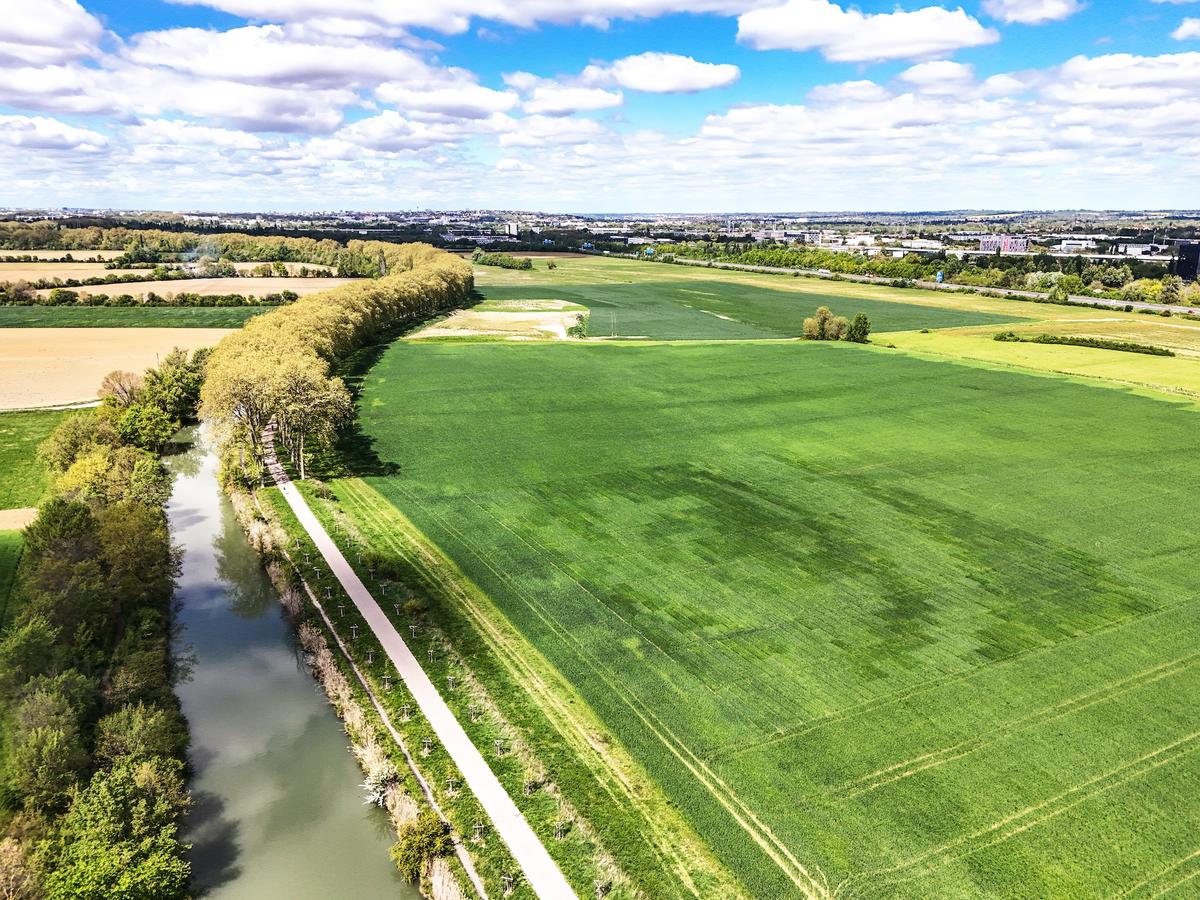
Artist Grows What Could Be the Largest Photograph Ever Made in a Field Near Toulouse
Key Takeaways
- •11,000 sqm field turned into living photograph of an eye
- •Project took three years, survived record‑wet winter 2025‑26
- •Uses photosynthesis, echoing 19th‑century anthotype imaging technique
- •Collaboration with INRAE links art, agriculture, climate research
- •Harvested wheat milled into flour, extending artwork's life
Pulse Analysis
Almudena Romero’s *Farming Photographs* pushes the boundaries of visual art by converting an entire agricultural plot into a single, colossal image. Spanning roughly the size of two football fields, the cultivated eye is composed of wheat and other crops whose growth patterns encode light and shade, echoing the 19th‑century anthotype process that relied on plant pigments. By abandoning chemical developers and embracing photosynthesis, Romero reframes photography as a living, time‑based medium, inviting viewers to consider the materiality of images in a new ecological context.
The collaboration with the French National Research Institute for Agriculture, Food and Environment (INRAE) adds scientific rigor to the artistic vision. Researchers supplied agronomic expertise to ensure the seed varieties would respond predictably to light, moisture and soil conditions, turning the field into a large‑scale experimental platform. The project’s delayed debut—caused by the wettest winter on record since 1947—underscores how climate volatility can directly impact creative endeavors that depend on natural cycles. As extreme weather becomes more common, Romero’s work serves as a visual case study of agriculture’s fragility and the need for resilient, sustainable practices.
Beyond its immediate aesthetic impact, *Farming Photographs* signals a broader shift toward bio‑mediated art forms that blur the line between creator and ecosystem. The eventual harvest, converting the wheat into flour for community use, extends the piece’s lifecycle and embeds it within local economies. This model of circularity could inspire future projects that fuse cultural production with food systems, offering investors and cultural institutions a template for environmentally responsible, interdisciplinary collaborations that resonate with both art audiences and sustainability stakeholders.
Artist Grows What Could Be the Largest Photograph Ever Made in a Field Near Toulouse
Comments
Want to join the conversation?