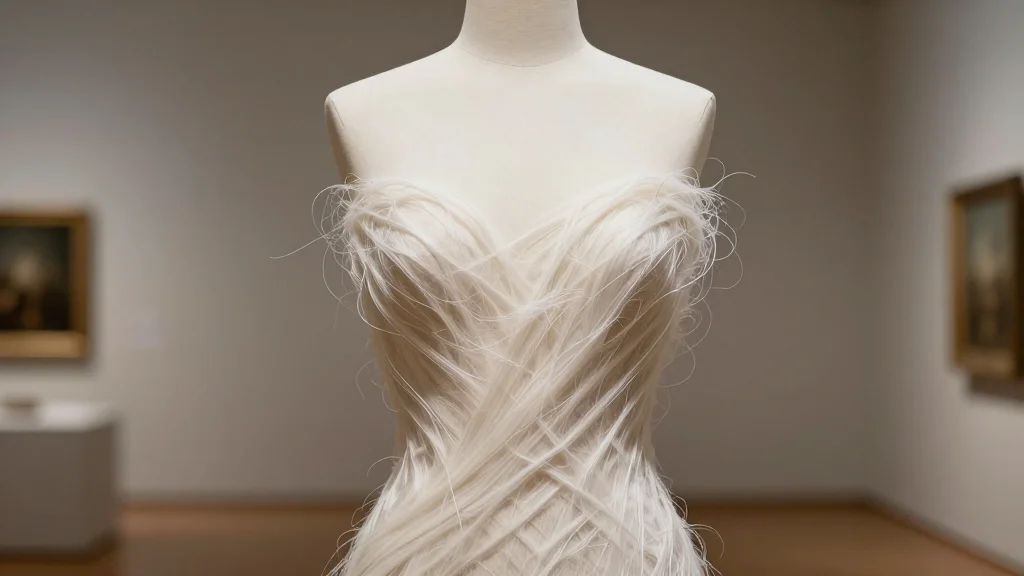
Artists Spar Over Credit For A Dress Displayed In The Met’s ‘Costume Art’ Exhibition
Why It Matters
The clash spotlights how museums and fashion houses handle intellectual‑property rights, potentially reshaping attribution standards for collaborative art‑fashion pieces. It also raises questions about transparency in curatorial labeling and the protection of innovative textile patents.
Key Takeaways
- •Samms claims Met dress copies her hair‑based textile design.
- •Hadari says displayed dress uses his own concept, not Samms’ fabric.
- •Met’s label omits hair, listing only synthetic materials.
- •Contract gave Samms IP rights to the hair fabric.
- •Dispute underscores fashion‑art IP challenges in museum shows.
Pulse Analysis
The Metropolitan Museum’s "Costume Art" exhibition has become a flashpoint for a dispute that blends high fashion, contemporary art, and intellectual‑property law. Anouska Samms, known for weaving human hair into textile sculptures, says the dress *Corpus Nervina 0.0* on display is a near‑copy of her earlier *Nervina* hair dress, created during a 2023 residency with Yoav Hadari at the Lee Alexander McQueen Sarabande Foundation. While Samms holds the patent for the hair‑based fabric, Hadari contends the museum’s piece reflects his own evolving concept and does not incorporate her proprietary material. The museum’s wall label further muddies the issue by listing only silk, polyester, cotton, synthetic and resin, omitting any reference to hair, which Samms argues is a material misrepresentation.
At the heart of the controversy is a 2023 collaboration contract that granted Samms sole ownership of the fabric’s intellectual property. When the Met expressed interest in acquiring the original *Nervina* dress, negotiations fell through, and Hadari later offered alternative pieces, including the contested *Corpus Nervina 0.0*. This scenario underscores a broader challenge in the fashion‑art ecosystem: how to protect designers’ material innovations while allowing reinterpretation and exhibition. Museums, traditionally custodians of cultural heritage, now face pressure to verify provenance and material authenticity, especially when works blur the line between couture and contemporary art.
The outcome could set a precedent for future museum acquisitions and collaborations. If Samms secures acknowledgment or compensation, institutions may adopt stricter due‑diligence protocols, requiring detailed material disclosures and clearer attribution for joint creations. Conversely, a ruling favoring Hadari could reinforce the notion that design concepts can evolve independently of specific material patents. Either way, the dispute signals a growing need for clearer legal frameworks governing fashion‑art collaborations, ensuring that innovators receive proper credit while preserving the fluid creativity that defines the sector.
Artists Spar Over Credit For A Dress Displayed In The Met’s ‘Costume Art’ Exhibition
Comments
Want to join the conversation?
Loading comments...