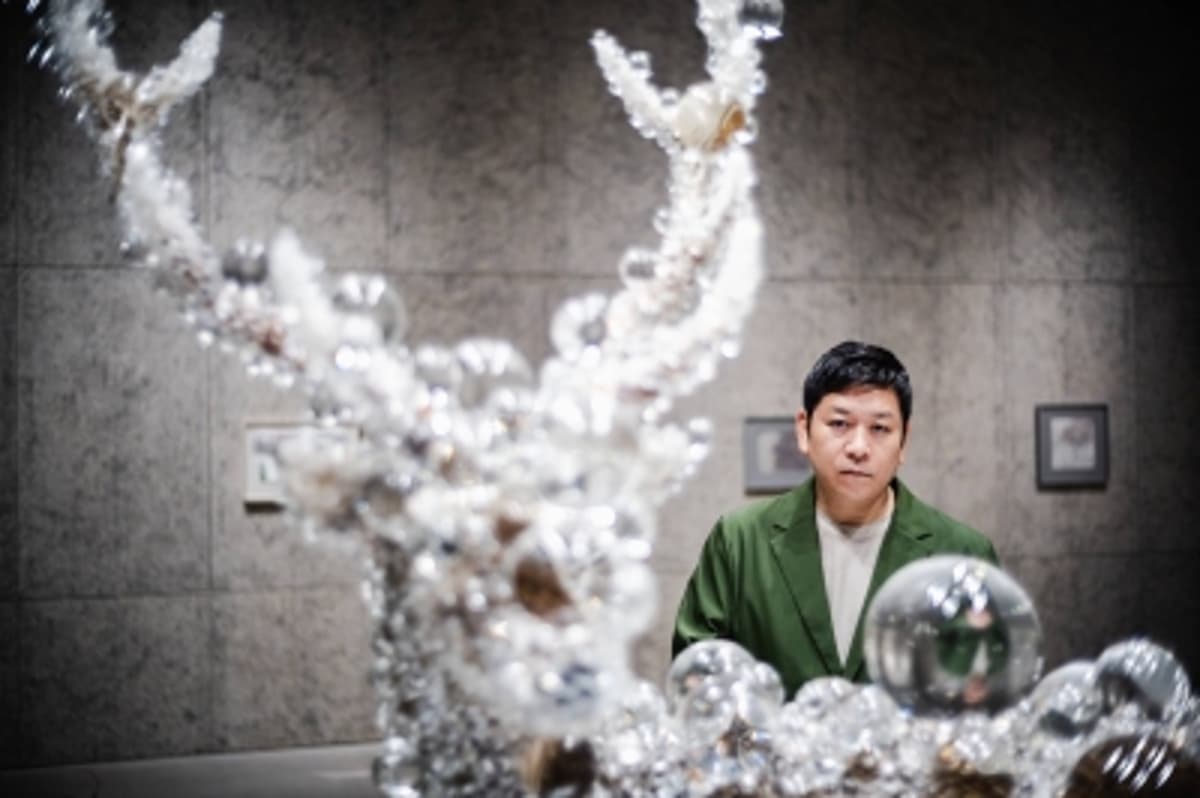
At Kohei Nawa’s Studio, the World Is Seen Through Glass Bubbles
Companies Mentioned
Why It Matters
The exhibition signals a major cross‑Pacific platform for Nawa’s environmentally resonant practice, expanding his market reach while prompting dialogue on art’s role in climate and political discourse.
Key Takeaways
- •"Photon Camp" marks Nawa’s first solo show in Los Angeles
- •Studio “Sandwich” employs ~50 staff across art, design, architecture
- •PixCell series turns 25, using glass beads to refract objects
- •Works reference 2011 tsunami debris and climate crisis themes
- •Exhibit includes politically charged MAGA hat covered in PixCell beads
Pulse Analysis
Kohei Nawa’s Kyoto atelier, rebranded as Sandwich after its former sandwich‑factory home, has become a production hub where artisans, designers and engineers collaborate on the "PixCell" technique. By encasing everyday objects in thousands of glass beads, Nawa creates a micro‑lens effect that forces viewers to confront the mediated nature of perception. The method, now celebrating its 25th anniversary, has migrated from Japanese museums to high‑profile international venues, reflecting a growing appetite for tactile, concept‑driven sculpture that blurs the line between art and science.
"Photon Camp," Nawa’s inaugural solo presentation at Pace in Los Angeles, expands the PixCell language with the "Prism" subset, where transparent enclosures multiply forms through light refraction. The exhibition’s object roster—an elk, a television, a microscope—draws directly from the debris left by the 2011 Tōhoku tsunami, linking personal memory to broader environmental narratives. Nawa also injects contemporary political commentary, most visibly with a red MAGA hat swarmed by beetle‑like insects, juxtaposing American pop symbolism against Japanese cultural motifs. These layers invite collectors and critics to consider how material cycles and climate urgency intersect within the gallery space.
From a market perspective, the Los Angeles show positions Nawa alongside blue‑chip contemporary artists who leverage socially resonant themes to command premium prices. Pace’s involvement signals confidence in the commercial viability of work that merges rigorous craftsmanship with activist undertones. As museums in Asia and Europe schedule further shows, the artist’s global footprint is set to expand, offering galleries a compelling narrative that aligns with collectors’ increasing demand for pieces that are both aesthetically striking and intellectually provocative.
At Kohei Nawa’s studio, the world is seen through glass bubbles
Comments
Want to join the conversation?
Loading comments...