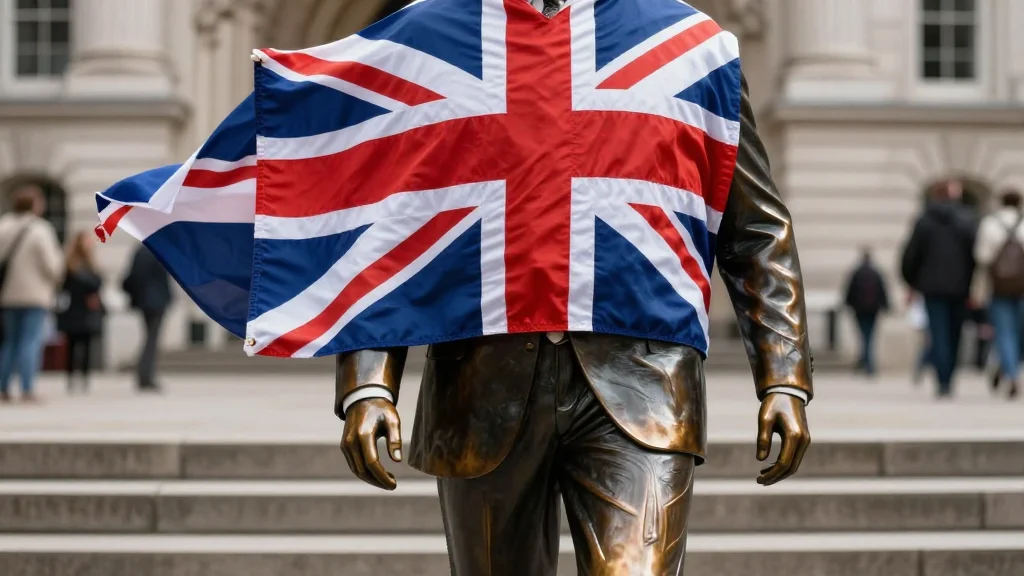
Banksy Unveils Flag‑Waving Statue in London, Satirizing Blind Patriotism

Why It Matters
The statue’s rapid emergence highlights the power of pop‑culture interventions to shape public conversation around nationalism, especially in a post‑Brexit Britain still negotiating its identity. By leveraging a high‑profile location, Banksy forces civic authorities to balance heritage preservation with contemporary artistic expression. Moreover, the piece re‑energises debate over the commercial impact of an artist’s anonymity, a factor that has historically driven premium prices for his work. For collectors and institutions, the incident serves as a reminder that the value of street art is not solely derived from scarcity but also from the narrative surrounding each drop. As Banksy continues to operate outside traditional gallery systems, his works become live experiments in how art can command both cultural relevance and market attention simultaneously.
Key Takeaways
- •Banksy confirmed his authorship of a new statue in Waterloo Place, London.
- •The work depicts a suited man with a flag covering his face, critiquing blind patriotism.
- •Westminster City Council has placed barriers but kept the piece publicly accessible.
- •Social media reaction includes praise for its universal, non‑national symbolism.
- •The statue revives discussion about Banksy’s anonymity after Reuters’ identity claim.
Pulse Analysis
Banksy’s latest stunt underscores a strategic shift from covert wall pieces to overt public monuments, a move that amplifies his cultural footprint while testing the limits of municipal tolerance. By situating the work among established historical statues, he forces a dialogue between the past and present, positioning street art as a legitimate commentator on national myth‑making. This tactic not only garners immediate media buzz but also creates a de‑facto exhibition space that bypasses traditional curatorial gatekeepers.
From a market perspective, the statue functions as a live‑valued asset. Its visibility and the narrative of ‘unauthorised yet celebrated’ can inflate secondary‑market expectations for future drops. Collectors are likely to monitor the city’s response closely; a decision to preserve the piece could set a precedent for institutional endorsement of street interventions, potentially stabilising price trajectories for Banksy’s work. Conversely, a swift removal could reinforce the scarcity narrative that fuels auction premiums. In either scenario, the episode illustrates how the artist’s brand—rooted in mystery, political satire, and surprise—continues to command both cultural relevance and financial clout.
Looking ahead, the incident may inspire other artists to adopt similar high‑visibility tactics, prompting cities worldwide to develop clearer policies on temporary public art. The balance between protecting heritage sites and embracing contemporary critique will shape the next chapter of urban cultural policy, with Banksy’s flag‑waving figure serving as a benchmark for that evolving conversation.
Banksy Unveils Flag‑Waving Statue in London, Satirizing Blind Patriotism
Comments
Want to join the conversation?
Loading comments...