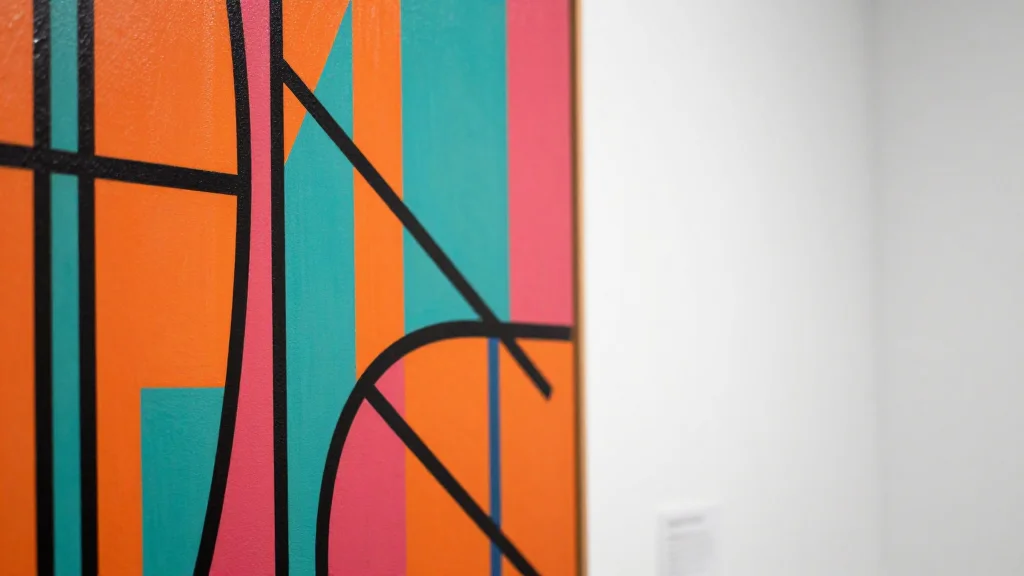
Berry Campbell Launches First Major Louisa Chase Retrospective in 25 Years

Companies Mentioned
Why It Matters
Louisa Chase’s retrospective arrives at a pivotal moment when the art world is actively revisiting the 1980s canon to address historic gender imbalances. By spotlighting her work, Berry Campbell not only restores a critical voice to scholarly discourse but also signals to collectors that previously undervalued artists can command renewed market interest. The exhibition’s emphasis on works on paper—a medium often less represented in major shows—broadens the understanding of Chase’s practice and offers fresh material for academic study, potentially influencing future museum acquisitions and exhibition programming. The show also illustrates how estate representation can serve as a strategic lever for galleries to shape market narratives. As institutions and auction houses respond to the renewed focus, Chase’s work may experience heightened demand, affecting price trajectories and prompting other galleries to reassess the commercial potential of overlooked artists from the same era.
Key Takeaways
- •Berry Campbell opens "Louisa Chase: The Eighties" on April 15, 2026, the largest retrospective in 25 years.
- •Exhibition runs through May 30, 2026, focusing on works on paper from 1975‑1985.
- •Gallery announced representation of Louisa Chase’s estate concurrent with the show.
- •Chase’s work is held in MoMA, the Met, the National Gallery, and the Walker Art Center.
- •The show aligns with a broader reexamination of 1980s women artists in museums and the market.
Pulse Analysis
Berry Campbell’s decision to mount a comprehensive Louisa Chase retrospective reflects a strategic convergence of scholarship and market dynamics. Historically, the 1980s have been narrated through a male‑dominated lens, with figures like Julian Schnabel and David Salle receiving disproportionate attention. By foregrounding Chase—a Yale‑trained painter mentored by Philip Guston—the gallery taps into a growing appetite for corrective narratives that acknowledge the contributions of women artists. This aligns with recent institutional shifts, such as MoMA’s 2025 exhibition on women of the 1980s, indicating a systemic rebalancing of the canon.
From a commercial perspective, estate representation serves as a catalyst for price appreciation. The announcement of Chase’s estate representation, paired with a high‑profile show, creates a scarcity narrative that can drive auction demand. Early indicators suggest that comparable works by her peers have seen price premiums of 15‑20% in the past year, a trend likely to extend to Chase’s oeuvre. Galleries that successfully marry scholarly rigor with market activation—like Berry Campbell—position themselves as arbiters of taste and value, potentially influencing future acquisition budgets of major museums.
Looking ahead, the exhibition could set a precedent for how mid‑career estates are revitalized. If the catalogue raisonné and subsequent museum loans materialize, Chase’s market trajectory may mirror that of other rediscovered artists, such as Agnes Martin, whose posthumous valuations surged after major retrospectives. The key takeaway for stakeholders is that the intersection of academic reappraisal and strategic estate management can reshape both cultural narratives and financial outcomes in the art world.
Berry Campbell Launches First Major Louisa Chase Retrospective in 25 Years
Comments
Want to join the conversation?
Loading comments...