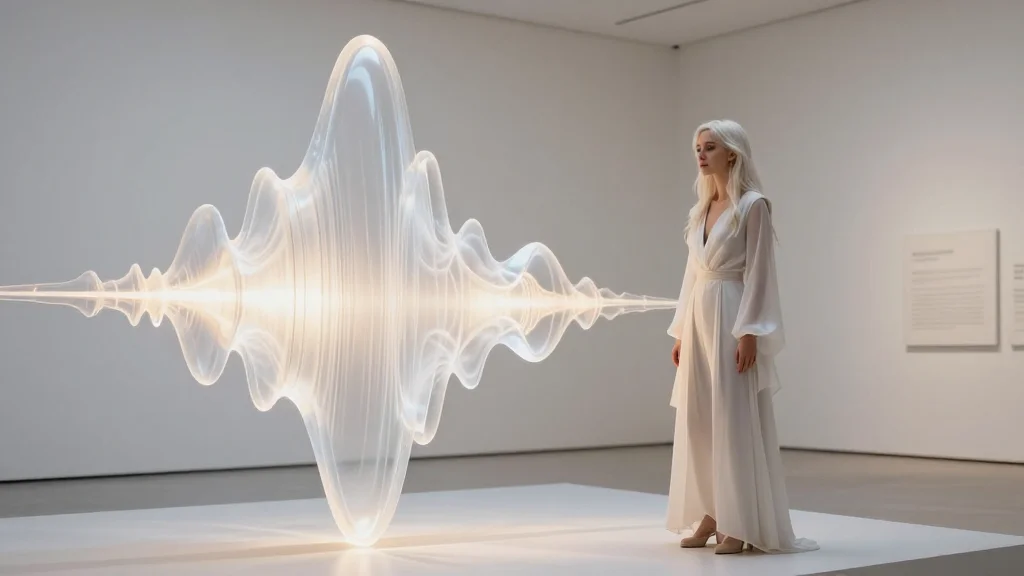
Björk Debuts ‘Nerve Bloom’ Within Iceland’s Immersive ‘Echolalia’ Exhibition

Why It Matters
The echolalia exhibition illustrates how contemporary art institutions are redefining their role, moving from static repositories to active sound‑scapes that fuse music, technology, and performance. Björk’s participation validates this shift, showing that high‑profile musicians can leverage museum platforms to preview unreleased material, thereby creating new revenue streams and audience touchpoints. For the broader art market, the project signals a rising demand for immersive experiences that combine auditory and visual stimuli. Galleries and museums that invest in spatial audio infrastructure may attract a younger, tech‑savvy demographic, while artists gain a novel venue to experiment with form and narrative beyond traditional album releases.
Key Takeaways
- •Björk previewed the new song “Nerve Bloom” inside the National Gallery of Iceland’s echolalia exhibition.
- •The exhibition runs through September 20, 2026, transforming the museum into a theatrical listening environment.
- •Re‑imagined versions of “Ancestress” and “Sorrowful Soil” are presented as spatial and choral installations.
- •Visual collaborators Andrew Thomas Huang and Víðar Logi provide lighting and projection that reinforce the immersive experience.
- •The project exemplifies a growing trend of music‑art crossovers that blur museum and concert‑hall boundaries.
Pulse Analysis
Björk’s decision to debut “Nerve Bloom” within an immersive museum setting reflects a strategic pivot in how artists release and market new work. Historically, album launches relied on singles, videos, and tours; today, the experiential economy rewards creators who can turn a song into a physical environment. By embedding the track in echolalia, Björk not only creates buzz but also gathers real‑time audience feedback in a controlled, artistic context—a form of live market research that can inform final production choices.
The National Gallery’s investment in spatial audio and custom visual design signals a broader institutional shift. Museums worldwide are competing for foot traffic in an era where digital streaming dominates music consumption. Offering a multisensory experience that cannot be replicated online gives physical venues a unique value proposition. If successful, echolalia could inspire similar collaborations, prompting galleries to allocate budgets toward acoustic engineering and interdisciplinary curatorial teams.
Looking ahead, the partnership may influence contract negotiations between artists and record labels. As immersive installations become a viable promotional channel, artists could demand a share of ancillary revenue—ticket sales, merchandise, and licensing of the immersive content. Labels, in turn, might fund such projects as part of a broader marketing package, reshaping the economics of album cycles. The outcome of Björk’s experiment will likely be watched closely by both the music industry and the contemporary art world, setting a precedent for how sound and space can co‑create cultural moments.
Björk Debuts ‘Nerve Bloom’ Within Iceland’s Immersive ‘echolalia’ Exhibition
Comments
Want to join the conversation?
Loading comments...