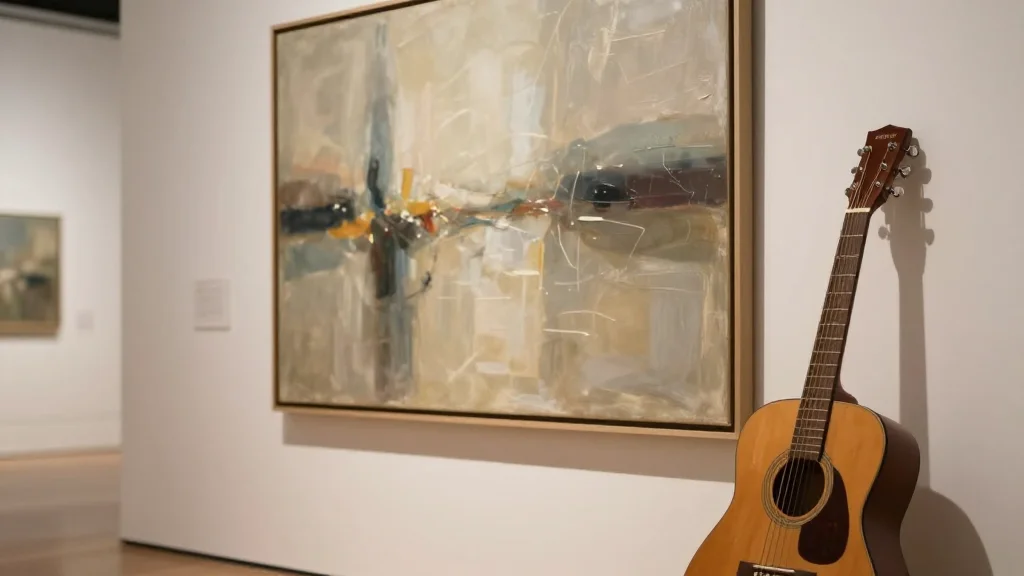
Bob Dylan’s ‘Retrospectrum’ Opens Free at Manchester’s Castle Fine Art

Why It Matters
Bob Dylan’s Retrospectrum exhibition underscores a growing trend where iconic musicians leverage their cultural capital to establish parallel careers in the visual arts. By presenting his work in a free, publicly accessible setting, Castle Fine Art challenges traditional gatekeeping in the art world and invites a broader audience to engage with a multidisciplinary legacy. The show also signals to galleries and museums that cross‑disciplinary retrospectives can attract diverse crowds, potentially reshaping programming strategies and funding models for future exhibitions. Moreover, the exhibition highlights the commercial viability of music‑linked visual art. As collectors increasingly seek works that bridge popular culture and fine art, Dylan’s sustained output—spanning paintings, drawings, and sculptures—offers a template for how artists can cultivate a credible visual practice alongside a music career. This could influence emerging musicians to invest more seriously in visual mediums, expanding the market for hybrid artistic productions.
Key Takeaways
- •Bob Dylan’s Retrospectrum opens May 16 at Castle Fine Art Manchester, free to the public.
- •Exhibition runs until August 2 and features over 30 original works plus limited‑edition pieces.
- •Shows follow previous retrospectives in Rome, Miami and Shanghai, marking Dylan’s second major UK showing.
- •Includes key series such as The Drawn Blank Series, Ironworks, Route 66, Mondo Scripto and Point Blank (2025).
- •Gallery plans talks, workshops and a potential traveling version after the Manchester run.
Pulse Analysis
The Manchester Retrospectrum exhibition is more than a vanity project; it reflects a strategic convergence of cultural branding and market expansion. Historically, musicians who dabble in visual art have been relegated to novelty status—think of the occasional album cover or limited‑edition print. Dylan, however, has built a two‑decade‑long visual oeuvre that rivals his musical catalog in depth and consistency. By situating the show in a commercial gallery rather than a museum, Castle Fine Art taps into a niche where high‑net‑worth collectors intersect with pop‑culture enthusiasts, creating a hybrid buyer pool that can drive secondary market prices for Dylan’s works.
The decision to keep the exhibition free is a calculated risk that pays dividends in foot traffic and media coverage. In an era where galleries compete for attention on social platforms, a free show featuring a household name generates organic buzz, social shares, and press that a ticketed event might not achieve. This model could inspire other institutions to adopt similar approaches, especially when showcasing artists whose primary fame lies outside the traditional art world.
Looking ahead, the success of Retrospectrum may accelerate the institutional acceptance of musician‑artists as serious visual creators. If the planned touring version secures partnerships with European museums, it could set a precedent for cross‑continental collaborations that blend music heritage with visual art programming. For collectors, the exhibition serves as a litmus test: demand for Dylan’s paintings may surge, prompting auction houses to re‑evaluate his works’ valuation. Ultimately, Retrospectrum illustrates how the art market is evolving to accommodate interdisciplinary narratives, reshaping both curatorial practice and collector behavior.
Bob Dylan’s ‘Retrospectrum’ Opens Free at Manchester’s Castle Fine Art
Comments
Want to join the conversation?
Loading comments...