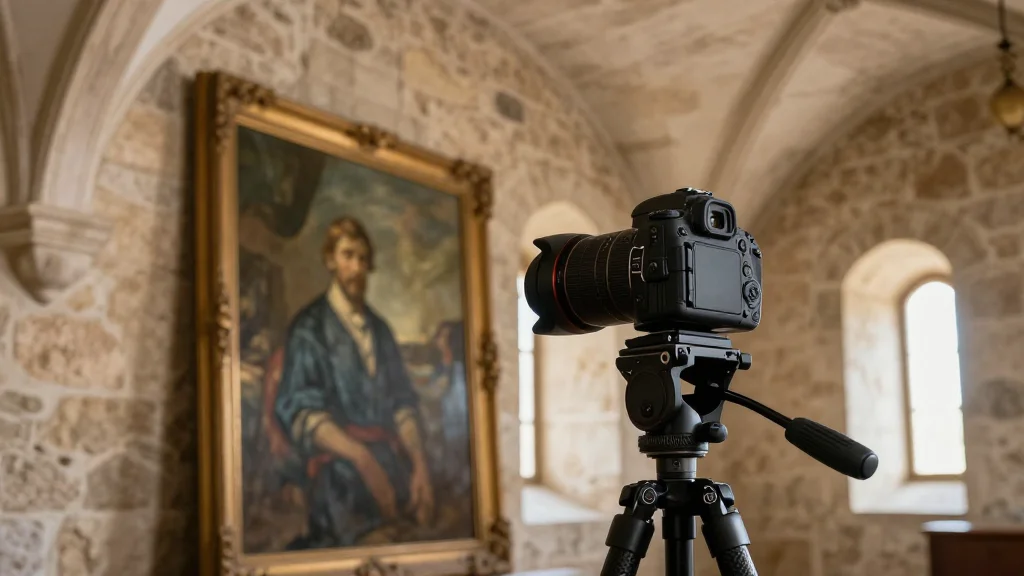
Caravaggio and Rubens Works Destroyed by Fire in Second World War Are Brought Back to (Digital) Life
Why It Matters
Digitising the negatives restores visual access to irreplaceable masterpieces and fuels provenance research, enhancing scholarly work and public engagement with cultural heritage.
Key Takeaways
- •Digitised glass negatives reveal lost Caravaggio, Rubens works
- •Project took six weeks to photograph 430 wartime negatives
- •Online database will allow global high‑resolution access later this year
- •Digitisation supports provenance research for artworks destroyed in WWII
Pulse Analysis
The Gemäldegalerie in Berlin, home to one of Europe’s most extensive Old Master holdings, suffered a catastrophic loss at the end of World II when a fire in the Friedrichshain flak tower destroyed roughly 430 large‑format paintings. Among the vanished works were ten Rubens canvases, five Veronese pieces, five van Dyck paintings and three attributed to Caravaggio. These gaps have long hampered attribution, provenance and conservation studies, leaving scholars with only low‑resolution catalogues and scattered photographs. Restoring visual access to these lost masterpieces is therefore a pivotal step for art history.
To bridge that void, the museum’s photo archive team re‑photographed each of Gustav Schwarz’s original glass negatives with a high‑resolution camera, rather than scanning the fragile plates. The process, completed in just under six weeks, involved careful unpacking, digitising, editing and archival rehousing in acid‑free containers. The resulting images retain the striking sharpness of the 1925‑1944 negatives, offering scholars the ability to zoom into brushwork and compositional details that were previously only described in text. By publishing the files in an online collection, the Gemäldegalerie democratizes access for researchers, educators and the public worldwide.
Beyond restoring visual records, the digitisation initiative fuels provenance research by providing the primary visual source for artworks listed as destroyed, stolen or confiscated during the war. Institutions worldwide are now planning similar projects, recognizing that digital surrogates safeguard fragile originals while enabling cross‑institutional comparisons and restitution efforts. The Gemäldegalerie aims to extend the program to cover an additional 585 lost objects, including unrecovered loans and Soviet‑confiscated pieces, positioning Berlin as a leading hub for transparent, technology‑driven art scholarship.
Caravaggio and Rubens works destroyed by fire in Second World War are brought back to (digital) life
Comments
Want to join the conversation?
Loading comments...