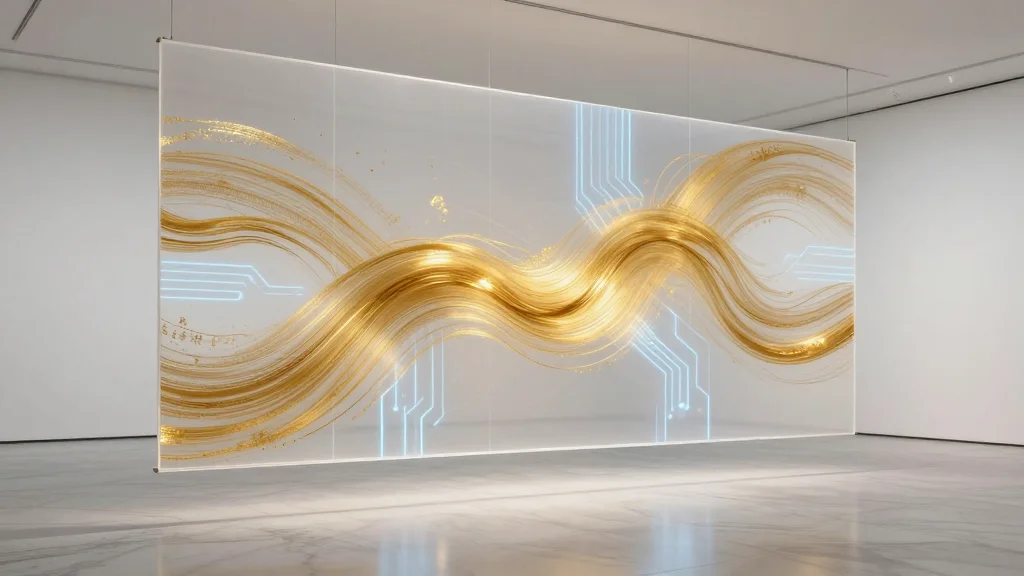
China Pavilion’s “Dream Stream” Leads Venice Biennale 2026 Opening with Immersive Tech‑Art Fusion

Why It Matters
Dream Stream’s debut marks a pivotal moment where state‑sponsored cultural programming embraces AI and immersive media, positioning China as a leader in the fusion of heritage and technology on a global stage. The exhibition’s blend of ancient calligraphy with robotic co‑writing and interactive light installations challenges traditional museum narratives and invites audiences to experience cultural continuity through a digital lens. The broader Biennale program, featuring fashion‑art collaborations and high‑profile diplomatic attendance, signals that art festivals are evolving into multidisciplinary platforms where cultural diplomacy, commercial luxury, and technological innovation intersect. This shift could redefine funding models, curatorial priorities, and audience expectations for major art events worldwide.
Key Takeaways
- •Dream Stream opened May 8 at the China Pavilion, curated by Professor Yu Xuhong of the China Academy of Art.
- •Installation 2027 Shen Kuo reimagines the Song‑dynasty hand‑scroll using LED technology.
- •Black Myth: Wukong debuted as a game‑art piece, highlighting the rise of interactive media in biennials.
- •Fortuny + Chahan Minassian transformed the Countess Gozzi house into an operatic, immersive environment.
- •Italian Deputy PM Matteo Salvini and Biennale President Pietrangelo Buttafuoco praised the exhibition, underscoring its diplomatic significance.
Pulse Analysis
The 2026 Venice Biennale illustrates a decisive pivot toward technologically mediated cultural narratives. China’s Dream Stream leverages AI, robotics and large‑scale digital installations to reinterpret historical motifs, a strategy that aligns with Beijing’s broader soft‑power agenda. By embedding a video‑game title within a national pavilion, the curators signal that the boundaries of ‘high art’ are dissolving, a trend that could pressure other nations to adopt similarly ambitious tech‑heavy programs to remain competitive.
Historically, the Biennale has been a barometer for artistic movements—from the avant‑garde of the 1960s to the rise of global contemporary art in the 2000s. This year’s emphasis on immersive, multisensory experiences reflects the market’s appetite for experiential consumption, driven by younger, digitally native audiences. Luxury brands like Fortuny and Dries Van Noten are capitalizing on this shift, using the Biennale’s prestige to showcase products as art objects, thereby blurring commercial and cultural lines.
Looking ahead, the success of Dream Stream may catalyze a wave of AI‑centric national pavilions, prompting museums and cultural institutions to invest in technical infrastructure and interdisciplinary expertise. The challenge will be balancing technological spectacle with substantive artistic inquiry, ensuring that the allure of novelty does not eclipse critical discourse. As the Biennale progresses, stakeholders will watch closely whether the integration of AI and heritage becomes a lasting paradigm or a fleeting experiment.
China Pavilion’s “Dream Stream” Leads Venice Biennale 2026 Opening with Immersive Tech‑Art Fusion
Comments
Want to join the conversation?
Loading comments...