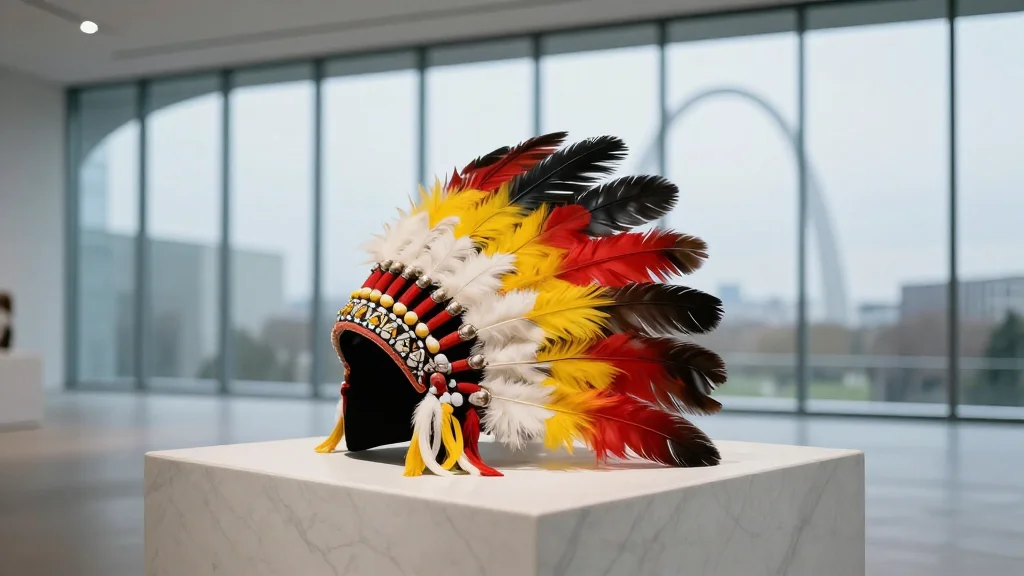
Counterpublic Comes to New York Ahead of Its Next Triennial, Coyote Time
Why It Matters
The program demonstrates how public art can drive community dialogue on pressing social and environmental issues while setting new sustainability standards for large‑scale exhibitions.
Key Takeaways
- •Coyote Time runs Sep 12–Dec 12, featuring ~50 artists across St Louis
- •Frieze New York partnership launches with Kite’s Wíhaŋyablapi performance
- •Projects address migration, climate, education, and civic structures
- •Climate impact report will detail greenhouse‑gas inventory for the exhibition
Pulse Analysis
Counterpublic has become a leading force in American public art, using large‑scale installations to spark civic conversation. Its upcoming triennial, Coyote Time, arrives at a moment when cities are seeking cultural interventions that address migration, climate urgency, and technological change. By staging works across historic neighborhoods, former industrial sites, and the Mississippi riverfront, the exhibition positions St. Louis as a laboratory for socially engaged art that can be both locally resonant and globally relevant.
The New York kickoff underscores Counterpublic’s expanding reach. Partnering with Frieze New York, the organization will debut Kite’s Wíhaŋyablapi at The Shed, a performance born from workshops that translated participants’ dreams into a Lakȟóta geometric language. This collaboration not only highlights Indigenous artistic practices but also signals a strategic push to attract new audiences and donors on the East Coast. The commission serves as a preview of the triennial’s permanent installation, blending community‑driven methodology with high‑profile exposure.
Beyond aesthetics, Counterpublic is committing to measurable sustainability. A post‑exhibition climate impact report will publish a full greenhouse‑gas inventory, offering transparency and a template for future art institutions. Site‑specific projects at the International Institute of St. Louis, The Ville, and the former Monsanto town will confront migration narratives and environmental remediation, reinforcing the idea that public art can be a catalyst for policy‑level discussions. By integrating low‑carbon production practices and rigorous reporting, the triennial sets a benchmark for responsible cultural programming in the art world.
Counterpublic comes to New York ahead of its next triennial, Coyote Time
Comments
Want to join the conversation?
Loading comments...