
Why It Matters
Counterpublic’s New York preview bridges regional public‑art practice with the global art fair circuit, amplifying the visibility of civic‑oriented projects that often remain localized. By partnering with Frieze New York, the nonprofit signals that public art can occupy the same commercial and critical spaces as gallery‑based work, challenging traditional hierarchies. The focus on Indigenous methodologies, exemplified by Kite’s geometric language, introduces new epistemologies into mainstream art discourse, encouraging institutions to reconsider how cultural knowledge is integrated into exhibition making. The upcoming Coyote Time triennial also arrives at a moment when cities are grappling with migration, climate change and digital transformation. Its multi‑site format and emphasis on community‑driven programming provide a replicable model for other municipalities seeking to embed art within public policy and urban planning. The initiative’s blend of high‑profile artists and local collaborators demonstrates how large‑scale exhibitions can simultaneously achieve critical acclaim and grassroots impact.
Key Takeaways
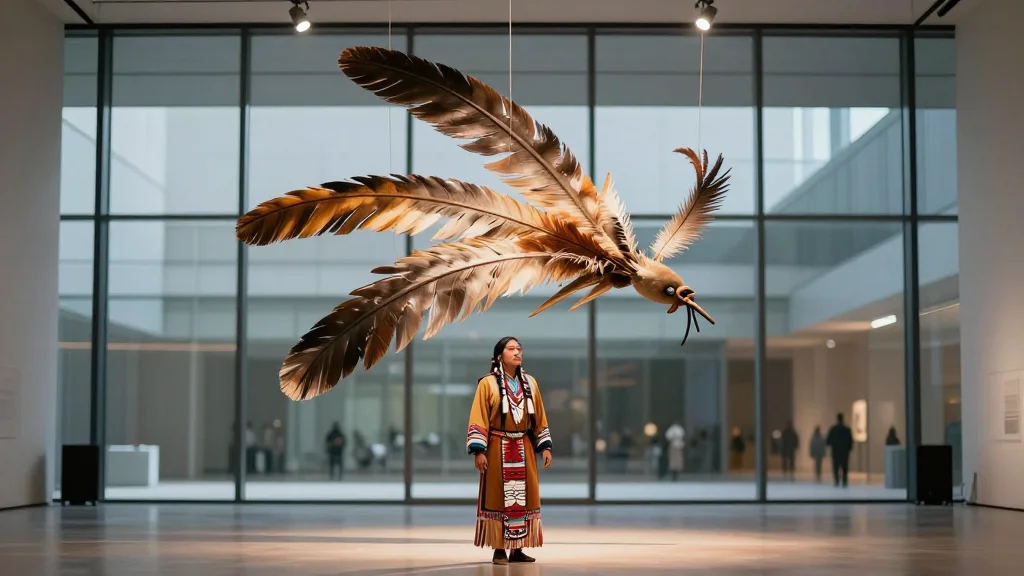
- •Counterpublic will present Oglála Lakȟóta artist Kite’s performance at The Shed on May 13‑14, 2026.
- •The preview marks Counterpublic’s first partnership with Frieze New York.
- •Coyote Time, the third triennial, runs September 12‑December 12, 2026, across five St. Louis sites.
- •Nearly 50 artists, including Petrit Halilaj and Rirkrit Tiravanija, will explore migration, climate and technology.
- •A multi‑year fellowship at the International Institute of St. Louis will continue through the end of 2026.
Pulse Analysis
Counterpublic’s decision to launch its Coyote Time triennial with a New York preview reflects a broader shift in the public‑art sector toward market integration without sacrificing community focus. Historically, large public‑art exhibitions have been anchored in their host cities, limiting exposure to regional audiences. By aligning with Frieze New York, Counterpublic taps into a network of collectors, curators and media that can amplify its civic agenda, potentially unlocking new funding streams and partnerships.
The choice of Kite’s Lakȟóta‑based geometric language is particularly noteworthy. It foregrounds Indigenous epistemologies at a time when museums and biennials are under pressure to decolonize their narratives. This move may encourage other institutions to adopt similar collaborative frameworks, where community knowledge directly informs artistic production. Moreover, the triennial’s thematic focus on “Coyote Time”—the liminal pause before a leap—mirrors the art world’s own moment of reckoning with climate urgency and digital disruption. Artists are being asked to envision not just aesthetic solutions but actionable interventions, a demand that Counterpublic appears prepared to meet through its multi‑site, interdisciplinary programming.
Looking ahead, the success of the New York preview could set a precedent for other regional art organizations seeking national relevance. If the performance and associated events generate significant press and collector interest, Counterpublic may secure additional sponsorships that could expand its fellowship model and support more permanent installations. Conversely, the organization must balance this growth with its core mission of serving St. Louis communities, ensuring that increased visibility does not dilute the local impact that has defined its past editions. The coming months will reveal whether Counterpublic can sustain this dual trajectory of global engagement and grassroots relevance.
Counterpublic Unveils New York Preview of Coyote Time Triennial
Comments
Want to join the conversation?
Loading comments...