Why It Matters
The project demonstrates how adaptable, sustainable design can revitalize public spaces, fostering community interaction and setting a precedent for scalable urban interventions.
Key Takeaways
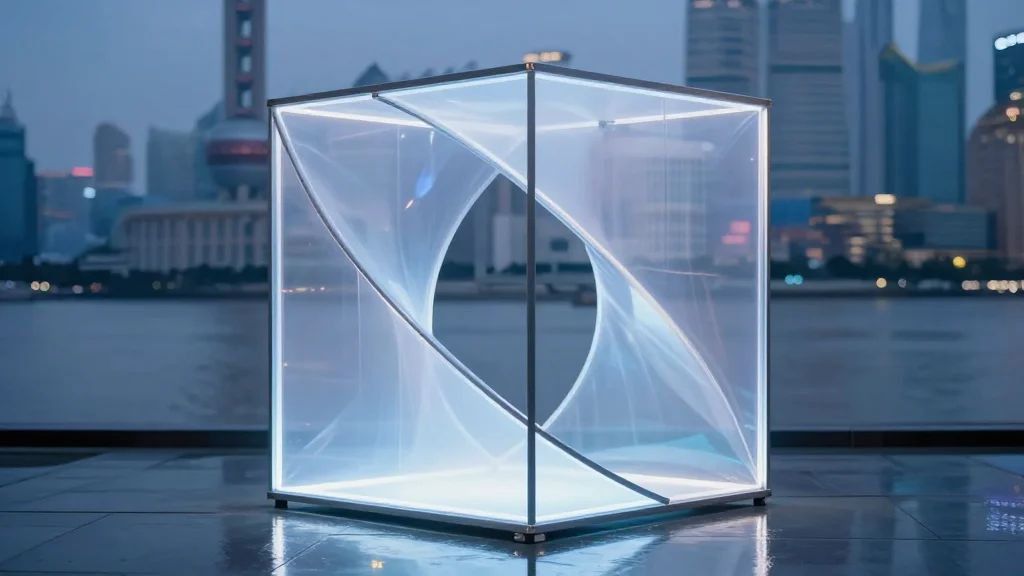
- •Gyroid-inspired tensile membrane creates fluid form
- •Daytime shade, nighttime light sculpture
- •Modular 2‑meter frames enable rapid reconfiguration
- •Functions as seating, partitions, or trampolines
- •Scalable, transportable solution for diverse urban venues
Pulse Analysis
Public art is increasingly intersecting with modular architecture to address the challenges of dense urban environments. Curly Cube exemplifies this trend by employing a Gyroid‑derived geometry that maximizes structural efficiency while delivering an eye‑catching aesthetic. The use of tensile membranes over lightweight frames reduces material consumption and simplifies logistics, making the installation both environmentally responsible and economically viable for municipalities seeking low‑maintenance attractions.
Beyond its visual impact, Curly Cube’s dual‑mode functionality reshapes how citizens engage with public spaces. In daylight, the shaded canopies invite relaxation and informal gatherings; after dark, programmable LEDs transform the membranes into a kinetic light display that reacts to viewer perspective. The modular components double as functional furniture—seating, partitions, even trampolines—encouraging spontaneous play and social connectivity. Such versatility aligns with contemporary urban design goals that prioritize flexibility, inclusivity, and experiential richness.
For city planners and developers, Curly Cube offers a replicable model for scalable interventions. Its stackable frames and transportable modules mean the installation can be adapted to parks, plazas, or waterfronts worldwide with minimal site preparation. This portability, combined with the growing demand for immersive, community‑focused environments, positions modular art installations as a lucrative niche within the broader smart‑city and placemaking markets. As more municipalities adopt similar solutions, we can expect a shift toward adaptable, technology‑enhanced public realms that blend functionality with cultural expression.
Curly Cube / People's Architecture Office
Comments
Want to join the conversation?
Loading comments...