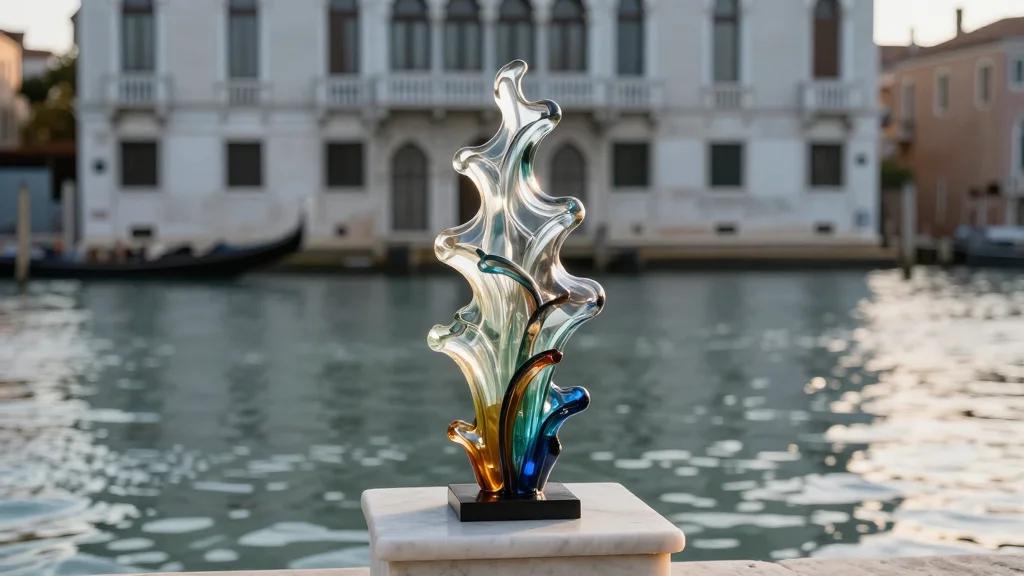
Dale Chihuly Unveils Three Giant Glass Sculptures on Venice’s Grand Canal

Why It Matters
Chihuly’s Grand Canal project reaffirms the power of public art to transform iconic urban environments, drawing global attention and economic activity to heritage sites. By marrying traditional Murano techniques with modern fabrication across multiple continents, the exhibition showcases how contemporary glassmaking can serve both artistic ambition and tourism strategy. The collaboration between Pilchuck Glass School and Frederik Meijer Gardens signals a growing model where educational institutions and private cultural organizations co‑produce large‑scale works, sharing costs, expertise, and audience reach. This model could inspire similar partnerships worldwide, expanding opportunities for artists working in technically demanding media.
Key Takeaways
- •Three massive glass sculptures installed on Venice’s Grand Canal for “Chihuly: Venice 2026”
- •Project marks 30th anniversary of the 1996 “Chihuly Over Venice” exhibition
- •Pilchuck Glass School and Frederik Meijer Gardens co‑produced the installation
- •Works fabricated in Ireland, Finland, Mexico and the U.S., then assembled in Venice
- •Installation expected to attract thousands of tourists and boost local economy
Pulse Analysis
Chihuly’s latest Venice venture illustrates a pivotal moment where legacy artists leverage historic venues to amplify contemporary relevance. The decision to revisit the Grand Canal after three decades is both a nostalgic homage and a strategic move to capitalize on the city’s enduring allure for cultural tourists. By aligning with Pilchuck and Meijer Gardens, Chihuly taps into institutional resources that mitigate financial risk while expanding his brand’s institutional footprint.
From a market perspective, the project underscores a shift toward hyper‑visible, site‑specific installations that function as both artistic statements and destination attractions. The logistical feat of coordinating cross‑border fabrication highlights how advances in shipping, modular design, and digital documentation have lowered barriers for large‑scale glass works, a medium once constrained by fragility and local studio capacity. This could spur a new wave of glass artists to pursue ambitious public commissions, knowing that the supply chain now supports such endeavors.
Looking ahead, the success of “Chihuly: Venice 2026” may prompt city planners and cultural agencies to formalize pathways for artists to navigate permitting and heritage preservation, turning ad‑hoc negotiations into repeatable frameworks. For Chihuly, the challenge will be sustaining relevance as he ages; future projects may need to balance monumental scale with mentorship, perhaps integrating emerging glass talent into his installations. The outcome will shape how legacy artists evolve their practice in an era where public art is as much about economic impact as it is about aesthetic innovation.
Dale Chihuly Unveils Three Giant Glass Sculptures on Venice’s Grand Canal
Comments
Want to join the conversation?
Loading comments...