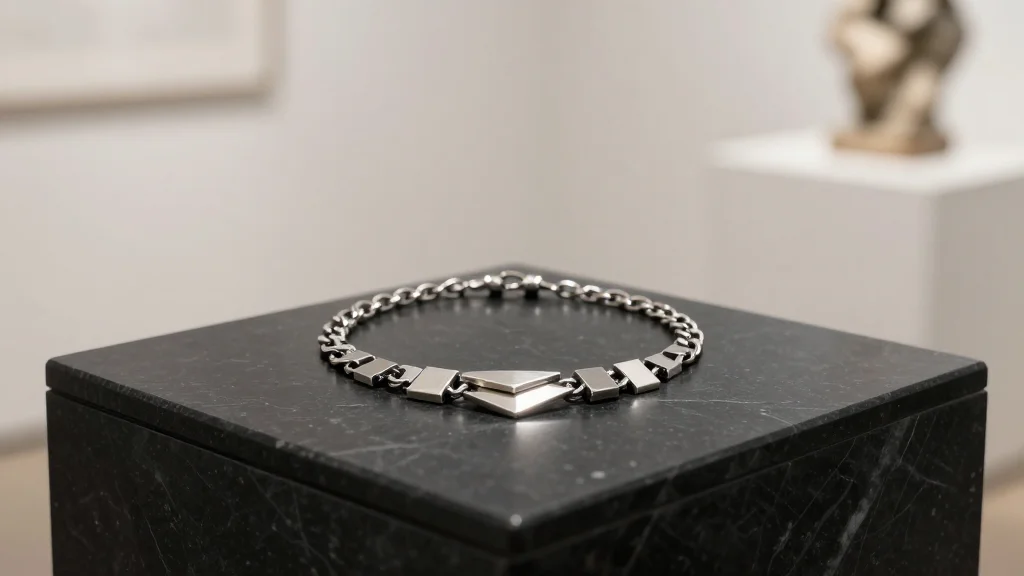
Dallas Museum of Art Launches “Constellations” To Elevate Jewelry to Fine Art

Why It Matters
By positioning jewelry within a fine‑art framework, the Dallas Museum of Art challenges long‑standing hierarchies that separate decorative objects from “high” art. This reclassification can broaden the market for contemporary jewelers, granting them access to museum funding, scholarly attention, and a wider collector base. It also forces institutions to reconsider curatorial practices, conservation protocols, and audience education strategies for objects that straddle utility and aesthetics. The exhibition’s historical narrative underscores how donor choices and curatorial vision can shape an institution’s collection identity over decades. As DMA showcases its 75‑year journey, other museums may be prompted to audit their own holdings, potentially leading to a wave of jewelry‑focused shows that further legitimize the medium.
Key Takeaways
- •Dallas Museum of Art opened “Constellations” on March 13, 2026, its first dedicated jewelry exhibition.
- •The show features four thematic sections and a historical overview of 75 years of collecting.
- •Pieces include experimental works by Levan Jishkariani, Peter Chang, Friedrich Becker, and others.
- •DMA’s jewelry collection began in 1950 with three Ellamarie Woolley pendants and has grown rapidly in the last 15 years.
- •The exhibition signals a shift toward treating wearable objects as fine art in museums and markets.
Pulse Analysis
The launch of “Constellations” reflects a broader institutional pivot toward integrating design disciplines into the canon of visual art. Historically, museums have compartmentalized decorative arts, often relegating them to peripheral galleries. DMA’s decision to allocate prime gallery space and a comprehensive curatorial narrative to jewelry suggests a recognition that the medium’s conceptual depth rivals that of traditional sculpture or painting. This move aligns with recent acquisitions by major institutions such as the Met and the V&A, which have begun to acquire contemporary wearable art for their permanent collections.
From a market perspective, the exhibition could accelerate the commodification of experimental jewelry. Auction houses have already reported record prices for limited‑edition pieces by artists like Stephen Jones and Wallace Chan. By framing these objects as museum‑grade works, DMA may influence price benchmarks and encourage collectors to view jewelry as a portfolio diversifier rather than a niche luxury. However, the shift also raises logistical challenges: museums must develop new conservation protocols for kinetic and mixed‑media pieces that may be more fragile than traditional metalwork.
Looking ahead, “Constellations” may serve as a prototype for interdisciplinary programming that bridges fashion, design, and fine art. If the exhibition garners strong attendance and critical acclaim, other institutions are likely to follow suit, potentially leading to a re‑evaluation of how museums define “art” in the 21st century. The success of this model will depend on sustained audience interest and the ability of curators to balance scholarly rigor with the tactile allure that makes jewelry uniquely engaging.
Dallas Museum of Art Launches “Constellations” to Elevate Jewelry to Fine Art
Comments
Want to join the conversation?
Loading comments...