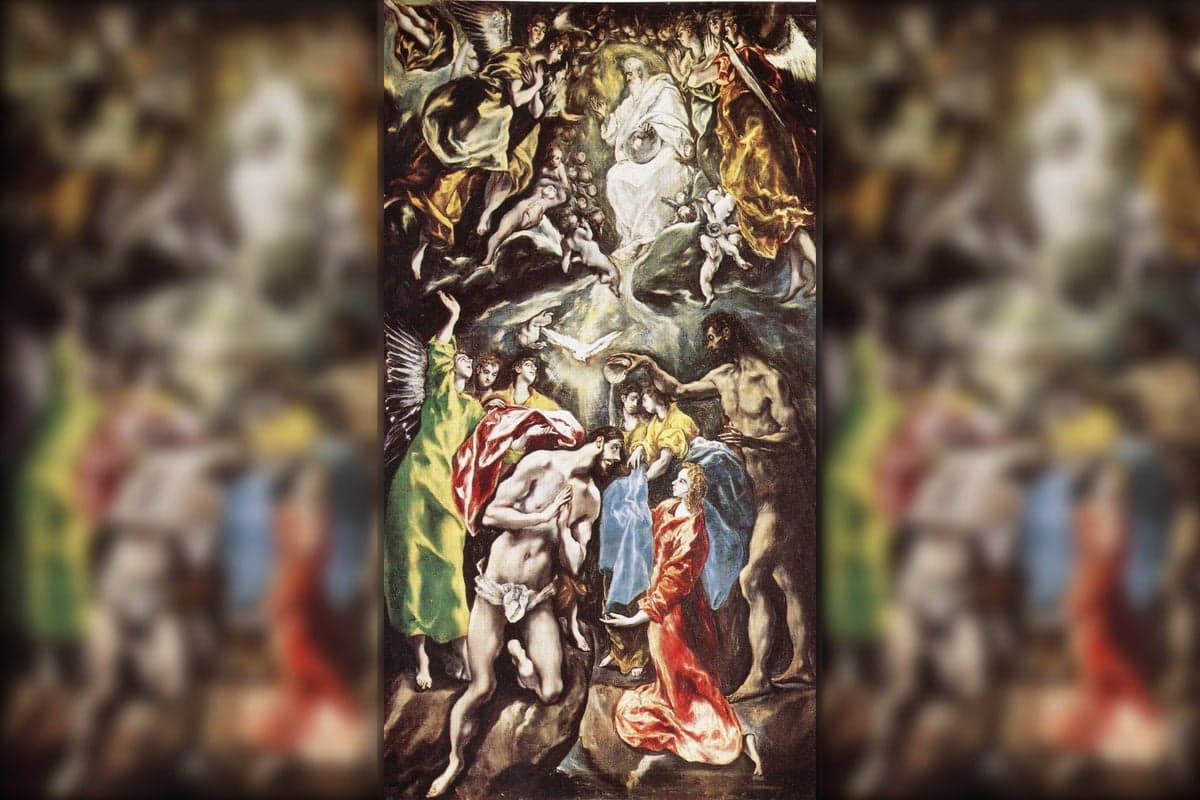
Did AI Just Solve the Mystery of One of El Greco’s Most Enigmatic Paintings?
Why It Matters
The attribution shift could reshape market valuations and scholarly narratives about El Greco’s late oeuvre, while demonstrating AI’s potential to resolve long‑standing art‑historical disputes.
Key Takeaways
- •AI model analyzed brushstroke texture at single‑bristle resolution
- •Study suggests El Greco painted most of “The Baptism of Christ.”
- •Researchers used 25 student paintings to train the machine‑learning algorithm
- •Experts urge larger datasets before AI can definitively attribute historic works
Pulse Analysis
Artificial intelligence is increasingly being deployed to tackle the most stubborn puzzles in art history, where traditional connoisseurship often hinges on subjective visual cues. Machine‑learning algorithms can quantify microscopic features—such as pigment granularity and brushstroke micro‑textures—that are invisible to the naked eye, offering a data‑driven complement to scholarly expertise. In the case of El Greco’s "The Baptism of Christ," a Purdue team trained a model on a modest set of 25 student reproductions, then applied it to the masterpiece and a control work, revealing a surprising uniformity that points to the master’s hand rather than a collaborative workshop.
The study’s methodology underscores both promise and limitation. By focusing on a single‑bristle resolution, the AI could detect subtle consistencies across the canvas, suggesting El Greco may have used varied brushes or altered technique late in life. However, critics highlight the narrow training dataset and the need for broader validation against known attributions. Without extensive testing on a diverse corpus of authenticated works, the risk of overfitting remains, and the system cannot yet replace the nuanced judgments of seasoned art historians. Ongoing dialogue between technologists and scholars will be essential to refine the model’s robustness.
If future research confirms the AI’s conclusions, the ramifications extend beyond academic debate. Re‑attributing a high‑profile work to El Greco himself could boost its insurance and auction value, while also prompting museums to reassess provenance records for other late‑period pieces. Moreover, the technology could be scaled to map stylistic fingerprints across entire workshops, potentially resurrecting the identities of forgotten apprentices. As AI tools mature, they are poised to become indispensable allies in the stewardship of cultural heritage, blending computational precision with human interpretive insight.
Did AI just solve the mystery of one of El Greco’s most enigmatic paintings?
Comments
Want to join the conversation?
Loading comments...