Companies Mentioned

Why It Matters
The exhibition signals a new asset class for collectors, blurring lines between art and science and raising questions about the ethical stewardship of culturally significant fossils.
Key Takeaways
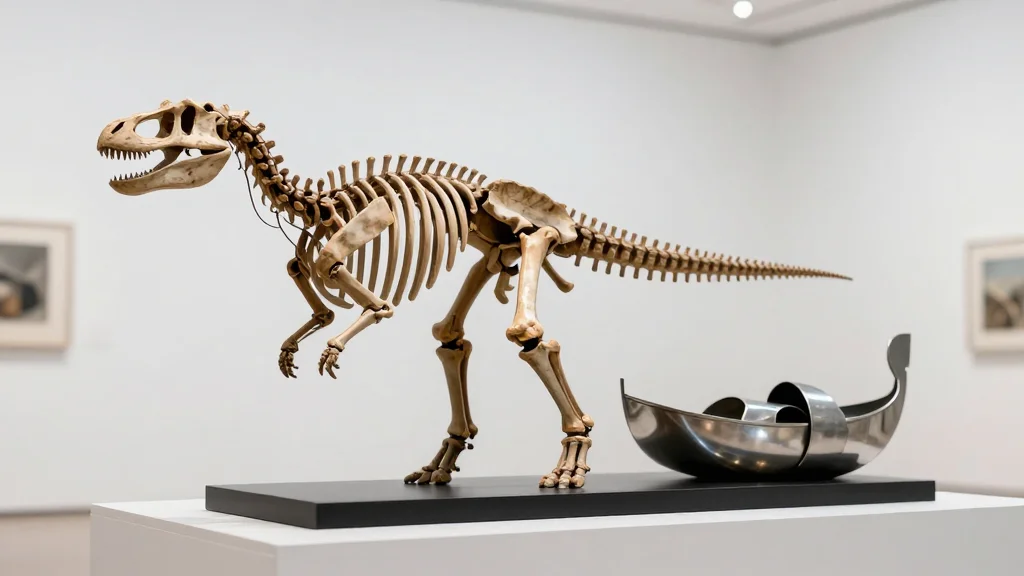
- •Amanita gallery displays rare Maiasaura fossils alongside Chamberlain’s sculpture.
- •Fossils are 62‑85% real bone, unprecedented for a NYC gallery.
- •Dinosaur fossils have fetched over $44 million at recent New York auctions.
- •Private fossil sales spark debate over public access and stewardship.
- •Chamberlain’s limited‑edition gondola sculptures number only fourteen worldwide.
Pulse Analysis
The intersection of paleontology and contemporary art is no longer a novelty; it has become a lucrative niche that attracts both museum curators and high‑net‑worth collectors. Over the past few years, dinosaur fossils have transitioned from scientific specimens to marquee assets, with record‑breaking auction results—like the $44.6 million Stegosaurus sold at Sotheby’s—demonstrating their investment appeal. This trend reflects broader shifts in the art market, where scarcity, provenance, and narrative drive price, and where the dramatic visual impact of a fossil can rival that of a masterpiece painting.
Amanita’s Bowery exhibition pushes the boundary by placing three Maiasaura skeletons—each 62‑85% authentic bone—next to Chamberlain’s *Gondola Marianne Moore*, one of only fourteen such works worldwide. The gallery frames the fossils as sculptural objects, drawing parallels between Chamberlain’s crushed‑metal forms and the natural compression that preserves bone over millions of years. By presenting these specimens in a commercial art space rather than a museum, Amanita challenges traditional display conventions and offers collectors a rare opportunity to experience museum‑grade paleontology in an intimate, market‑driven setting.
However, the surge in private fossil sales has ignited ethical concerns. Critics argue that culturally and scientifically valuable specimens belong in public institutions where they can be studied and shared. Proponents, including gallery partners, contend that responsible private stewardship can fund preservation and public access initiatives. As the market matures, regulatory scrutiny and provenance standards are likely to tighten, shaping how future exhibitions balance commercial ambition with the responsibility to protect humanity’s deep‑time heritage.
Dinosaurs roam New York’s Bowery
Comments
Want to join the conversation?
Loading comments...