Why It Matters
Wright’s fusion of science, drama, and market‑ready spectacle reshaped British art, offering a lens on the cultural shift toward Enlightenment values and the nascent Romantic sensibility. The exhibition deepens understanding of how visual culture mediated public engagement with knowledge and emotion in the 18th century.
Key Takeaways
- •Exhibition features ten Wright canvases from 1765‑1773.
- •Wright pioneered chiaroscuro in British oil painting.
- •Paintings blend scientific curiosity with Romantic darkness.
- •Curators pair works with period mezzotints and lantern artifacts.
- •Shows Wright as savvy marketeer for metropolitan audiences.
Pulse Analysis
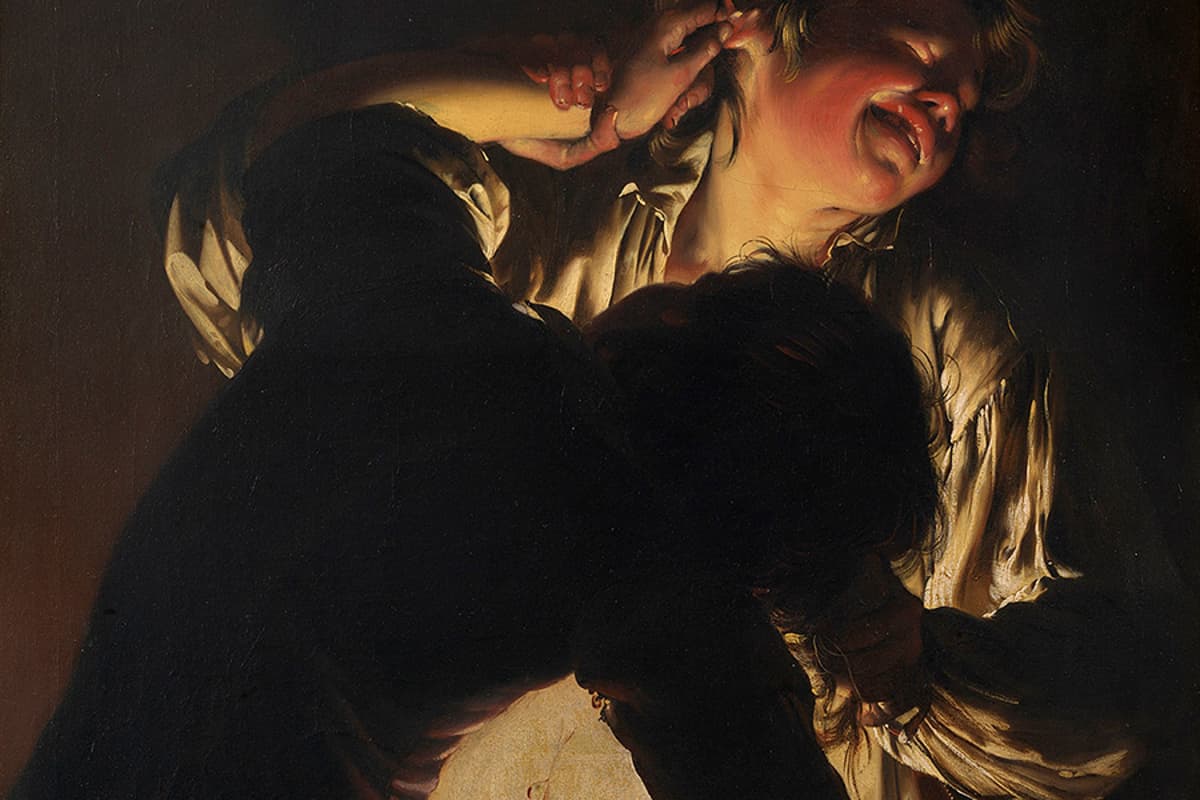
The National Gallery’s latest showcase, "Drawn to the Void," reunites ten of Joseph Wright of Derby’s seminal works from the late 1760s, offering visitors a rare chronological sweep of the artist’s early career. Curators Christine Riding and Lucy Bamford contextualize each canvas with period mezzotints, magic lanterns, and toy‑theater models, illustrating how Wright’s dramatic candlelit scenes were packaged for both provincial patrons and the London elite. By concentrating on this cohesive group, the exhibition reveals the painter’s strategic use of light to command attention and sell ideas.
Wright’s hallmark chiaroscuro—dark backgrounds pierced by luminous sources—was unprecedented in British oil painting and directly borrowed from Caravaggist tenebrism. Yet he adapted the technique to celebrate Enlightenment science, as seen in "An Experiment on a Bird in an Air Pump" and the orrery lecture scene, where candlelight illuminates both apparatus and human wonder. This visual marriage of empirical inquiry and theatrical drama positioned Wright as a visual translator of Newtonian concepts, while also hinting at a proto‑Romantic fascination with the sublime and the unknown.
For today’s audience, the exhibition reframes Wright not merely as a regional portraitist but as a shrewd cultural entrepreneur who anticipated modern branding. His ability to turn scientific spectacle into marketable art foreshadows contemporary intersections of technology, media, and visual storytelling. By revisiting these works, scholars and collectors gain fresh insight into the 18th‑century shift toward a middle‑class audience hungry for knowledge, emotion, and spectacle—an evolution that still shapes how art engages public consciousness.
Drawn to the Void
Comments
Want to join the conversation?
Loading comments...