
Companies Mentioned
Why It Matters
The exhibition underscores a growing trend of private collectors acting as cultural intermediaries, reshaping public access to works that might otherwise remain hidden. By foregrounding themes of displacement and memory, the Dubai Collection invites both regional and global audiences to confront the lingering effects of conflict on artistic expression. This public‑private synergy not only enriches the Gulf’s cultural ecosystem but also positions the region as a critical node in the worldwide discourse on art and identity. Moreover, the show’s emphasis on historically rooted motifs—such as the *wuquf ala al‑atlal* tradition—highlights how contemporary Gulf artists are reinterpreting classical narratives to comment on present‑day realities. This blend of heritage and modernity offers a template for future exhibitions seeking to balance reverence for the past with urgent contemporary concerns.
Key Takeaways
- •Dubai Collection launches “Belonging and Loss” at Art Dubai 2026, featuring works from 20 private collections.
- •Dana Awartani’s drawings reference destroyed Gaza tiles, using gouache and walnut ink on cotton paper.
- •Seher Shah’s “Ruined Score” series visualizes the trauma of India’s 1947 partition through fragmented musical notation.
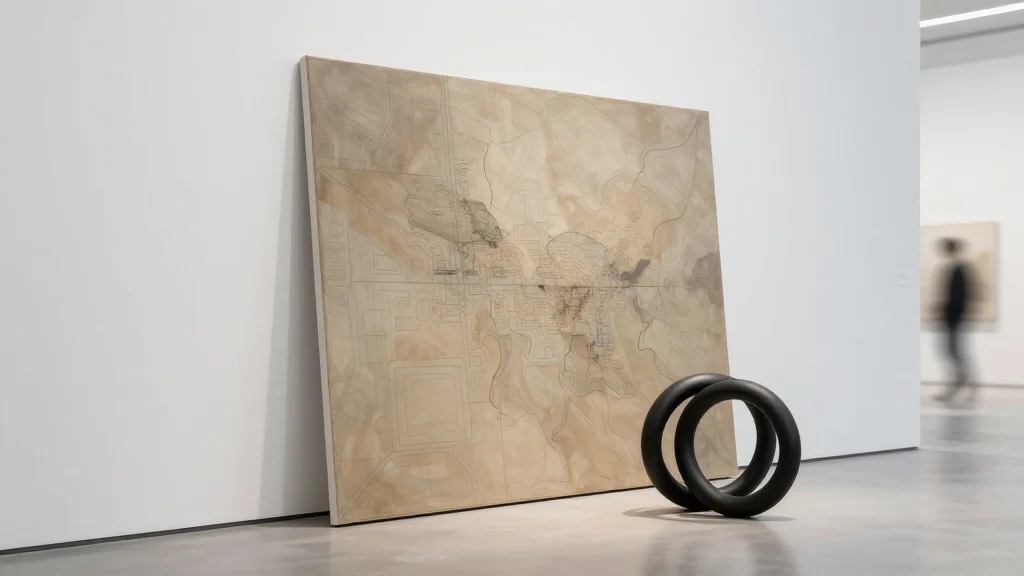
- •Asma Belhamar’s beech‑wood sculptures reinterpret regional balustrade designs, symbolizing memory’s distortion.
- •The exhibition reflects a broader shift toward private‑public collaborations in Gulf contemporary art.
Pulse Analysis
The Dubai Collection’s decision to stage a thematic exhibition at Art Dubai signals a maturation of the region’s art market, where private wealth is increasingly channeled into public cultural infrastructure. Historically, Gulf art fairs relied heavily on government‑sponsored galleries; today, the infusion of privately held works adds depth and diversity to the narrative presented to international collectors. This model mirrors similar developments in Europe, where private foundations have become key players in shaping museum programming.
From a curatorial perspective, the focus on belonging and loss taps into a universal human experience while anchoring it in specific geopolitical contexts—Gaza’s recent devastation, the legacy of the Indian partition, and the shifting urban fabric of the Gulf. By juxtaposing these stories, the exhibition creates a layered dialogue that challenges visitors to consider how personal and collective histories intersect. The visual language—fractured lines, muted palettes, distorted forms—reinforces the notion that memory is both fragile and resilient.
Looking ahead, the exhibition’s success could encourage other Gulf institutions to adopt similar private‑collection‑driven models, potentially accelerating the region’s integration into the global contemporary art circuit. As collectors recognize the reputational benefits of public exposure, we may see a surge in loan agreements, collaborative curatorial projects, and cross‑border exhibitions that further elevate Gulf artists on the world stage.
Dubai Collection’s ‘Belonging and Loss’ Opens at Art Dubai 2026
Comments
Want to join the conversation?
Loading comments...