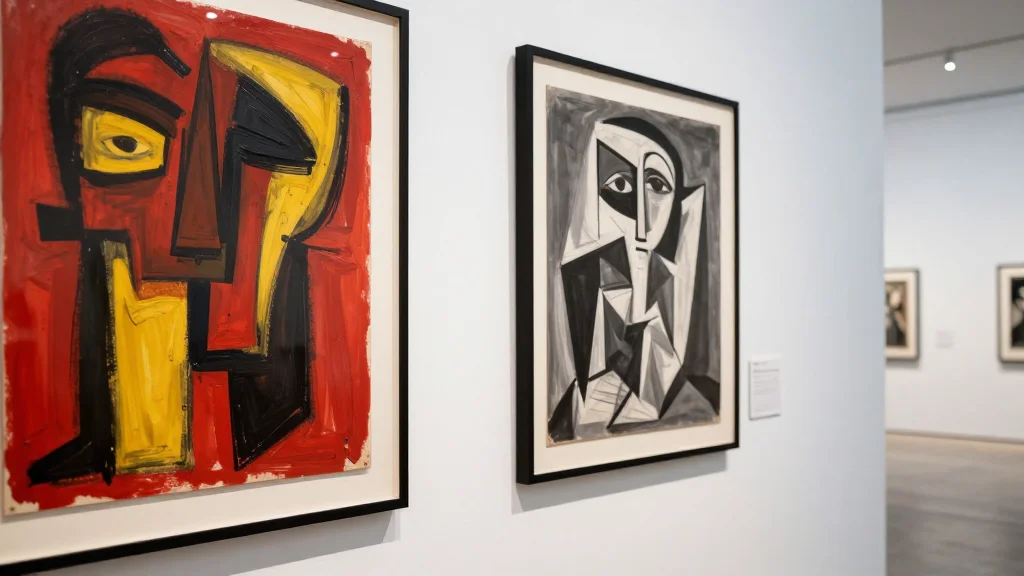
Dumile Feni’s ‘African Guernica’ Joins Picasso’s Masterpiece at Madrid’s Reina Sofía

Why It Matters
Placing Dumile Feni’s “African Guernica” beside Picasso’s iconic canvas forces a re‑examination of the Western art canon, exposing how narratives of suffering have been historically filtered through Eurocentric lenses. The exhibition underscores a growing institutional willingness to address past exclusions of African artists, offering a platform for anti‑racist discourse that resonates beyond the museum walls. For the broader art market, the move signals that major institutions are now willing to loan historically marginalized works for high‑visibility pairings, potentially increasing demand for African modernist pieces and prompting collectors to reassess the value of works previously deemed peripheral. This could accelerate a redistribution of attention—and capital—toward artists from the Global South.
Key Takeaways
- •Dumile Feni’s 1967 drawing “African Guernica” is displayed opposite Picasso’s 1937 mural at Madrid’s Reina Sofía.
- •The work is on loan from the University of Fort Hare and is shown outside South Africa for the first time.
- •The exhibition inaugurates the museum’s series “History Doesn’t Repeat Itself, But It Does Rhyme.”
- •Director Manuel Segade highlighted the need to correct racist parameters that have marginalized African art.
- •The pairing aims to provoke new readings of both works and inspire similar cross‑cultural curatorial projects.
Pulse Analysis
The Reina Sofía’s decision to juxtapose Feni’s “African Guernica” with Picasso’s masterpiece is more than a curatorial novelty; it is a strategic re‑positioning of the museum’s narrative authority. Historically, institutions have used canonical works like Picasso’s to anchor their identity, often relegating non‑Western art to peripheral spaces. By giving Feni equal wall real estate, the museum not only acknowledges the artistic merit of a self‑taught South African but also forces a confrontation with the shared language of trauma across continents. This move aligns with a wave of decolonial initiatives seen in institutions from the Tate to MoMA, where provenance research and repatriation debates have reshaped acquisition policies.
From a market perspective, the exhibition could catalyze a reassessment of African modernist works that have long been undervalued. Auction houses have reported a modest uptick in sales of mid‑20th‑century African drawings, but the visibility afforded by a high‑profile pairing may push those figures higher, encouraging private collectors and public institutions to invest in similar pieces. Moreover, the loan arrangement with the University of Fort Hare demonstrates a collaborative model that could become standard practice, reducing barriers for African institutions to showcase their holdings internationally.
Looking ahead, the success of this pairing will likely influence how museums design future exhibitions. If visitor engagement metrics and critical reception remain strong, we may see a cascade of “dialogue” shows that deliberately place non‑Western works beside Western icons to highlight thematic resonances. Such programming could become a cornerstone of a more inclusive curatorial agenda, reshaping not only exhibition design but also the economics of the art world, as demand for historically marginalized artists rises in tandem with their critical re‑evaluation.
Dumile Feni’s ‘African Guernica’ Joins Picasso’s Masterpiece at Madrid’s Reina Sofía
Comments
Want to join the conversation?
Loading comments...