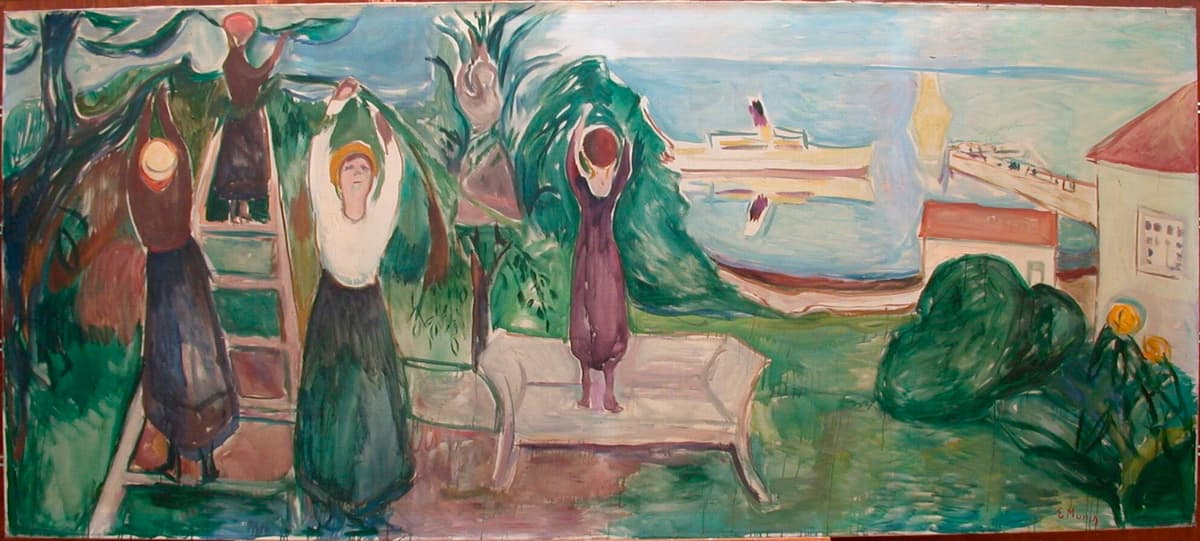
Edvard Munch’s Paintings for a Chocolate Factory Get a Rare Museum Outing
Why It Matters
The public debut of these rare Munch paintings offers scholars and visitors a unique view of corporate patronage and Norway’s early labor reforms. It also reinforces the Munch Museum’s role as a steward of cultural heritage that bridges fine art and social history.
Key Takeaways
- •Freia Frieze comprises 12 Munch paintings created in 1922.
- •Paintings hung in Freia chocolate factory canteen for a century.
- •Exhibition runs May 21‑Oct 11, 2026 at Oslo’s Munch Museum.
- •Show highlights art‑industry links and Norway’s early labor reforms.
- •Freia employees receive replica Munchs while originals travel to museum.
Pulse Analysis
The Freia Frieze represents one of only two public commissions ever undertaken by Edvard Munch, making it a rarity in the artist’s oeuvre. Commissioned by industrialist Johan Throne Holst, the twelve large canvases were intended to beautify the women’s canteen of his Oslo chocolate factory, reflecting an early 20th‑century belief that aesthetic enrichment could improve worker morale. Their survival—despite a century of exposure to cocoa dust and nicotine—underscores both the durability of Munch’s technique and the historical neglect of corporate‑owned art collections.
The museum’s decision to display the frieze alongside preparatory sketches and period advertising films creates a multidimensional narrative. Curator Ana María Bresciani emphasizes how the works illuminate intersections of gender, labor, and modernity in interwar Norway, while director Tone Hansen highlights the broader story of the working class. By situating the paintings within the context of Freia’s progressive labor policies—such as a 48‑hour work week and on‑site medical care—the exhibition offers a rare glimpse into how early corporate social responsibility manifested through both policy and patronage.
Beyond scholarly interest, the exhibition has commercial implications for Oslo’s cultural tourism. Opening the frieze to the public for the first time generates foot traffic for the Munch Museum and reinforces the value of making private corporate art accessible. It also prompts other companies to reconsider the public potential of their own art holdings, potentially sparking a wave of similar collaborations that blend heritage preservation with brand storytelling.
Edvard Munch’s Paintings for a Chocolate Factory Get a Rare Museum Outing
Comments
Want to join the conversation?
Loading comments...