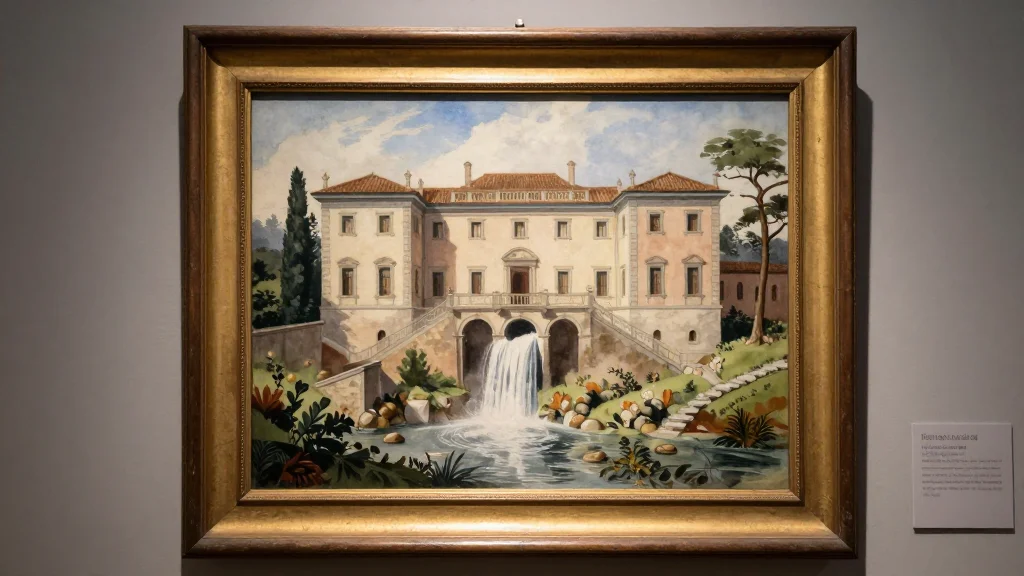
Eye Candy for Today: Sargent Watercolor From Villa Di Marlia
Key Takeaways
- •Sargent’s "Villa di Marlia" employs Chinese White for opacity
- •Painting measures 16 × 21 in., housed at MFA Boston
- •Technique blends watercolor and gouache, creating luminous highlights
- •Brooklyn Museum show highlighted Sargent’s watercolor mastery
- •Chinese White was common among 19th‑century watercolorists
Pulse Analysis
John Singer Sargent is best known for his portraiture, yet his watercolors reveal a parallel mastery of light and atmosphere. "Villa di Marlia, Lucca – A Fountain" captures a Tuscan garden scene with a delicate balance of transparent washes and opaque highlights. By integrating Chinese White—a zinc‑based pigment—into his palette, Sargent achieved a gouache‑like solidity that accentuates the cascading water and sun‑lit foliage. This approach situates him alongside contemporaries like Winslow Homer and J.M.W. Turner, who also experimented with mixed media to push watercolor’s expressive limits.
The use of Chinese White was a hallmark of late‑19th‑century watercolor practice. Artists mixed the pigment with water‑based colors to raise their value and opacity, allowing for precise highlights without sacrificing the medium’s fluidity. In Sargent’s fountain scene, the white pigment outlines the water’s froth and the marble’s reflective surfaces, creating a three‑dimensional illusion on paper. This technique not only enhanced visual impact but also addressed the technical challenges of rendering bright whites in a medium traditionally dominated by translucent tones.
For collectors, museums, and scholars, the painting’s provenance and exhibition history add layers of significance. Its inclusion in the Brooklyn Museum’s retrospective underscored the growing appreciation for Sargent’s watercolors, which historically received less attention than his oil portraits. The work’s placement in the Museum of Fine Arts, Boston, ensures scholarly access and public visibility, influencing market valuations and prompting renewed research into Sargent’s mixed‑media experiments. Contemporary watercolorists continue to study his method, recognizing its relevance for achieving depth and vibrancy in modern practice.
Eye Candy for Today: Sargent watercolor from Villa di Marlia
Comments
Want to join the conversation?