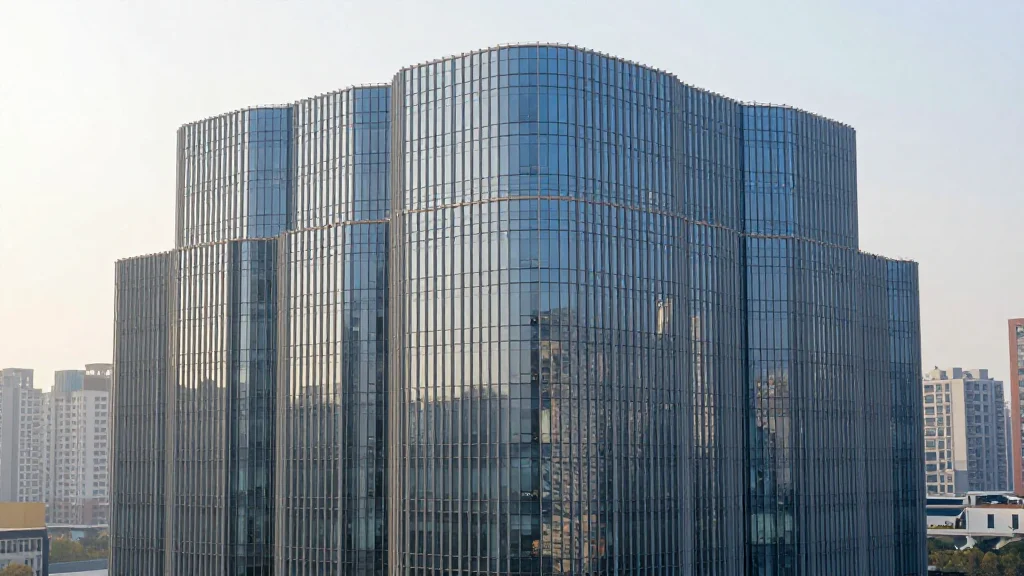
Foster + Partners Unveils Glass‑clad Jia Art Gallery in Shanghai

Why It Matters
The Jia Art Gallery illustrates how architecture can become a catalyst for urban regeneration, turning cultural programming into a driver of economic activity. By embedding a high‑profile art venue within a new mixed‑use district, Foster + Partners demonstrates a model where cultural capital and real‑estate development reinforce each other, a formula that could reshape city planning across Asia. Moreover, the building’s transparent, petal‑inspired envelope challenges traditional museum typologies, encouraging future projects to prioritize openness, community engagement, and sustainable daylighting. For the art world, the gallery offers a fresh platform for Chinese and international artists to reach broader audiences in a space designed to be both iconic and welcoming. Its community‑focused facilities signal a shift away from elite, siloed institutions toward more inclusive cultural ecosystems, potentially influencing funding bodies and curators to prioritize public‑oriented programming.
Key Takeaways
- •Foster + Partners completed the Jia Art Gallery in Shanghai’s Putuo district, featuring tubular glass facades that mimic a blossoming flower.
- •The 5,800‑sq‑m building combines exhibition halls with community event and education spaces, anchored by a double‑height atrium.
- •Senior partner John Blythe and founder Norman Foster highlighted the design’s focus on light, symmetry, and civic identity.
- •The project serves as the cultural centerpiece of the Changfeng mixed‑use development, aiming to boost foot traffic and local engagement.
- •Opening slated for September 2026, the gallery is expected to set a new benchmark for museum architecture in rapidly urbanising Asian cities.
Pulse Analysis
Foster + Partners’ Jia Art Gallery arrives at a crossroads where architecture, real‑estate, and cultural policy intersect. Historically, landmark museums—think Guggenheim Bilbao or the Louvre Abu Dhabi—have acted as economic engines, drawing tourists and revitalising surrounding neighborhoods. Jia Art follows that lineage but adapts it for a denser, more integrated urban fabric. By embedding the gallery within a larger mixed‑use development, the firm sidesteps the "stand‑alone museum" model and instead leverages cultural programming as an amenity that directly supports residential and commercial occupancy.
The design’s reliance on tubular glass and curvilinear steel tubes is more than aesthetic flair; it reflects a growing emphasis on sustainable performance. Daylighting reduces operational costs, while the transparent envelope signals openness—a symbolic counterpoint to the often opaque world of high‑end art institutions. This approach could inspire a new generation of Asian museums that prioritize environmental credentials alongside iconic form.
Looking ahead, the Jia Art Gallery may become a proving ground for how cultural infrastructure can be woven into the DNA of new urban districts. If the gallery succeeds in attracting sustained visitor numbers and fostering community participation, developers across China and Southeast Asia may replicate the model, commissioning cultural anchors as integral components of future city blocks. The ripple effect could reshape funding priorities, with public and private stakeholders viewing cultural venues not as charitable add‑ons but as essential drivers of economic vitality and social cohesion.
Foster + Partners unveils glass‑clad Jia Art Gallery in Shanghai
Comments
Want to join the conversation?
Loading comments...