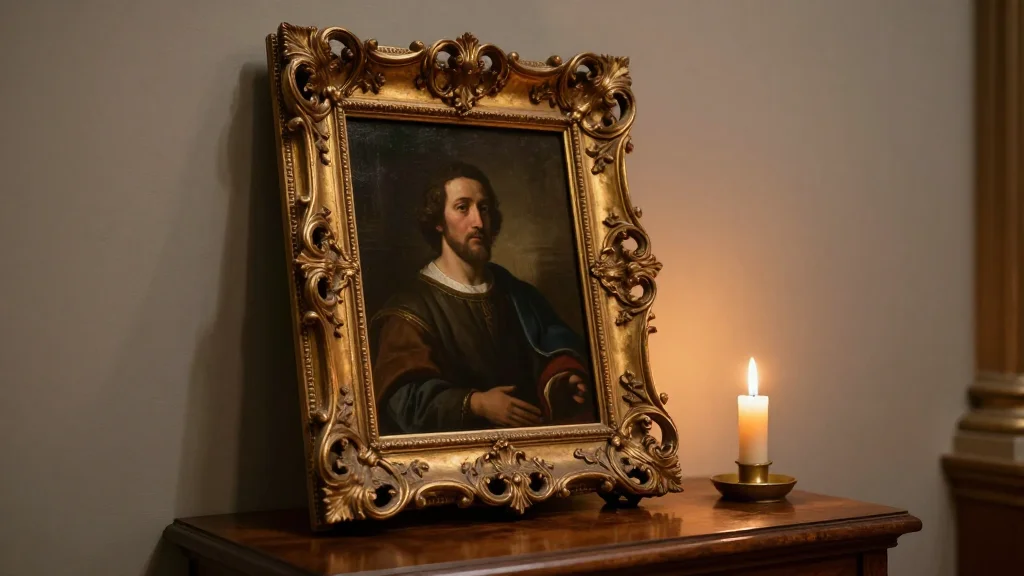
From Intimate Still Lives to Shadowed Saints: The Many Sides of Spanish Painter Francisco De Zurbarán Go on Show at London’s National Gallery
Why It Matters
By revealing previously unseen works and re‑contextualising Zurbarán’s late period, the exhibition reshapes scholarly understanding of Spanish Baroque art and enhances the National Gallery’s draw for global audiences.
Key Takeaways
- •Exhibition reunites rare altarpiece tier, 15 m tall, unseen in 175 years
- •Two newly attributed still‑lifes reveal Zurbarán’s preparatory method
- •Late works shown as softer, intimate pieces, challenging decline narrative
- •Curator highlights continuity between devotional still‑lifes and grand religious canvases
- •Show underscores Zurbarán’s self‑awareness through painted “cartellini” signatures
Pulse Analysis
Francisco de Zurbarán has long been synonymous with stark, candle‑lit saint portraits, yet his oeuvre extends far beyond that narrow image. The National Gallery’s new survey places his meticulous still‑lifes, large‑scale altarpieces, and intimate late‑period canvases side by side, allowing visitors to trace a consistent visual language of precision and spiritual intensity. By gathering works from the Musée de Grenoble, the National Museum in Poznań, and the Museu Nacional d’Art de Catalunya, the show reconstructs a 15‑metre altarpiece tier that has not been displayed together since the 18th century, offering a rare glimpse of how Zurbarán’s monumental commissions filled Andalusian churches.
The exhibition’s standout discoveries are two previously unknown still‑lifes, now attributed to Zurbarán and possibly his son Juan. These small, highly detailed studies match elements in the larger "Still Life with Four Vessels," suggesting a systematic workflow where the master sketched individual objects before scaling them up for grand compositions. This insight challenges the myth of the solitary genius and highlights a workshop practice that blended observation with compositional planning. Additionally, the show reframes Zurbarán’s post‑plague output, presenting softer palettes and domestic scales that signal a purposeful artistic pivot rather than a decline, underscoring his adaptability amid personal loss.
For the art market and scholarship, the exhibition signals a renewed appetite for reassessing canonical artists through fresh research and cross‑institutional loans. Museums worldwide may follow suit, leveraging newly discovered works to attract broader audiences and generate media buzz. Moreover, the inclusion of painted "cartellini" signatures—self‑referential notes on canvas—adds a layer of meta‑commentary on the painter’s role, inviting contemporary viewers to contemplate the enduring dialogue between art, identity, and spirituality. The National Gallery’s ambitious presentation thus not only enriches public understanding of Zurbarán but also reinforces London’s status as a hub for groundbreaking art exhibitions.
From intimate still lives to shadowed saints: the many sides of Spanish painter Francisco de Zurbarán go on show at London’s National Gallery
Comments
Want to join the conversation?
Loading comments...