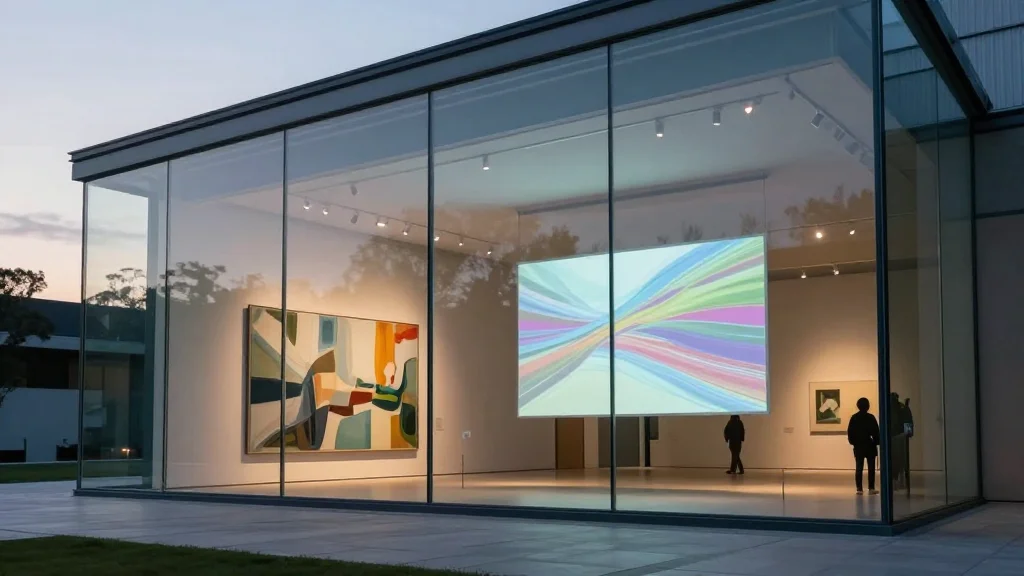
Fundación Santander Launches 'ReversoDoble' Show on Landscape and Identity

Why It Matters
The launch of "ReversoDoble" underscores a growing movement among museums to reconfigure physical spaces as active participants in artistic narratives. By using a glass façade that reacts to natural light, Fundación Santander demonstrates how architecture can amplify thematic concerns—in this case, the fluid boundary between personal identity and the surrounding environment. The exhibition also highlights the potential of interdisciplinary collaborations, merging painting, video, and performance to reach audiences that might not traditionally engage with contemporary art. For the broader art ecosystem, the show offers a template for institutions seeking to broaden their demographic reach without sacrificing curatorial rigor. The emphasis on educational programming and free public access could influence funding models, encouraging donors and sponsors to prioritize projects that deliver measurable community impact alongside artistic excellence.
Key Takeaways
- •Fundación Santander opened "ReversoDoble" featuring Valeria Maggi and Luis Garay.
- •Curator Mariano Mayer highlighted the interior‑exterior dialogue through a sunset‑colored glass façade.
- •Artist Elena Tavelli emphasized the museum’s fishbowl architecture to engage non‑traditional visitors.
- •The exhibition includes a rooftop boxing video performance and a large‑format landscape painting.
- •Program runs through June with workshops, school tours, and a panel on site‑specific art.
Pulse Analysis
ReversoDoble arrives at a moment when cultural institutions are grappling with relevance in an increasingly digital world. By embedding the exhibition within a mutable architectural skin, Fundación Santander sidesteps the static white‑cube model that has dominated museum design for decades. The sunset gradient on the glass not only creates a visual spectacle but also serves as a metaphor for the shifting perceptions of identity in a globalized urban landscape. This approach signals a willingness to let the building itself become a canvas, a strategy that could inspire other institutions to reconsider how architecture can be leveraged as an active component of curatorial practice.
The partnership between a painter and a video artist also reflects a broader interdisciplinary trend. Audiences today consume content across multiple media, and exhibitions that fuse traditional and new media are better positioned to capture attention. Maggi’s expansive landscapes provide a contemplative anchor, while Garay’s kinetic video injects kinetic energy, mirroring the push‑pull between stability and motion inherent in personal identity formation. This duality resonates with younger demographics who value experiential over purely visual encounters.
Looking ahead, the success of ReversoDoble could reshape funding priorities. Foundations and corporate sponsors may increasingly allocate resources to projects that demonstrate measurable community outreach, such as school visits and free public programming. If the exhibition’s attendance figures and educational impact meet expectations, it could set a benchmark for future grant proposals, encouraging a shift toward inclusive, site‑responsive art that blurs the line between exhibition and public space.
Fundación Santander Launches 'ReversoDoble' Show on Landscape and Identity
Comments
Want to join the conversation?
Loading comments...