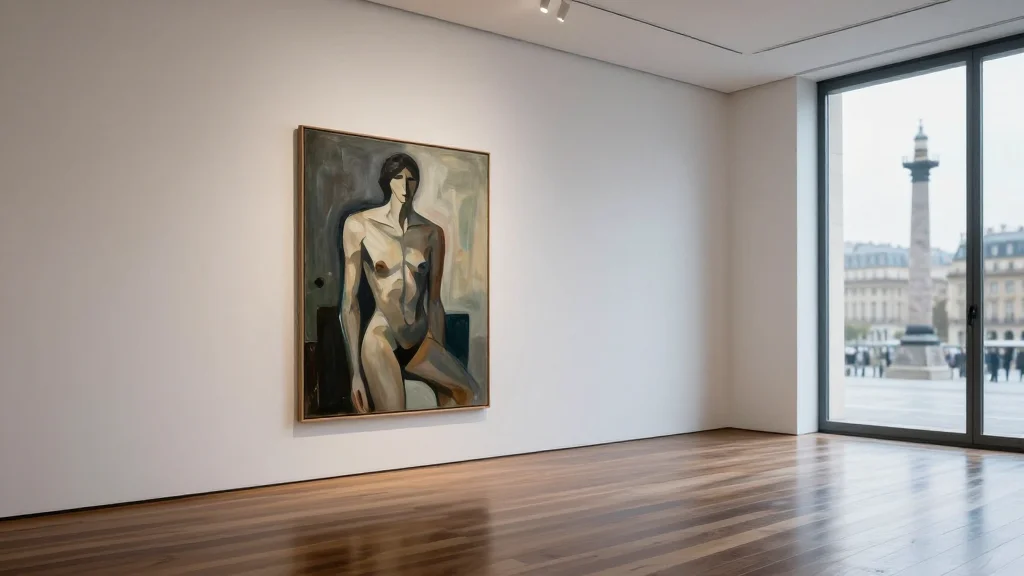
Gagosian Launches Paris Space to Debut Three Late Francis Bacon Paintings

Companies Mentioned
Why It Matters
The debut of three late Bacon paintings in a commercial gallery underscores a shifting paradigm where private dealers increasingly curate exhibitions with scholarly depth. By situating the works in a public-facing Parisian arcade, Gagosian expands access beyond the traditional museum audience, potentially influencing how future estates negotiate loans and how collectors perceive the value of previously unseen works. Moreover, the show highlights Bacon’s enduring connection to Paris, offering fresh material for researchers studying his late period and the city’s impact on his visual language. The exhibition also tests the market’s appetite for rare Bacon pieces outside auction houses. If the show draws significant public interest, it could elevate the market profile of late Bacon works, prompting other galleries to pursue similar high‑profile loans. This dynamic may reshape the balance of power between museums, estates, and commercial galleries in determining the visibility of iconic artists’ late oeuvres.
Key Takeaways
- •Gagosian opens a new Paris gallery off Place Vendôme to exhibit three late Francis Bacon paintings.
- •The works—1982, 1986, and 1989‑90 pieces—have rarely been shown together and will be visible from the historic street arcade.
- •Larry Gagosian emphasizes Paris’s influence on Bacon and the gallery’s suitability for the exhibition.
- •Critic Sebastian Smee links _Man at a Washbasin_ to a Muybridge photograph and the death of George Dyer.
- •The show blurs lines between private galleries and museums, signaling a trend toward dealer‑driven scholarship.
Pulse Analysis
Gagosian’s Paris venture reflects a broader strategic shift among elite galleries: leveraging iconic works to create cultural destinations that rival museum programming. By securing three late Bacon canvases—pieces that have only appeared sporadically in institutional contexts—Gagosian not only enhances its brand cachet but also positions itself as a gatekeeper of scholarly access. This move could pressure museums to negotiate more aggressively for loans, especially when estates recognize the promotional power of high‑visibility commercial shows.
Historically, private galleries have been viewed as market intermediaries rather than curatorial authorities. The current wave, exemplified by Gagosian’s Paris space, suggests a redefinition of that role. The gallery’s decision to make the exhibition publicly viewable from a street arcade democratizes access while simultaneously creating a commercial backdrop that can drive foot traffic and ancillary sales. If successful, the model may inspire other dealers to invest in flagship locations that double as cultural hubs, further eroding the monopoly museums have held over scholarly exhibitions.
From a market perspective, the exposure of rarely seen Bacon works could catalyze renewed interest in his late period, potentially inflating auction estimates for comparable pieces. Collectors may view the exhibition as a validation of the works’ significance, prompting pre‑emptive acquisitions. However, the reliance on private venues also raises concerns about provenance transparency and the long‑term stewardship of cultural heritage. As galleries like Gagosian continue to curate museum‑level shows, the art world will need to negotiate new standards for accountability, public benefit, and the preservation of artistic legacies.
Gagosian Launches Paris Space to Debut Three Late Francis Bacon Paintings
Comments
Want to join the conversation?
Loading comments...