German Pavilion’s “Ruin” Installation Rewrites Post‑War Narrative at Venice Biennale

Why It Matters
“Ruin” reframes a national pavilion—traditionally a platform for soft power—into a site of contested memory, foregrounding East German experiences that have often been eclipsed by West‑German narratives. By physically overlaying a post‑war building with personal and collective histories, the work challenges institutions to address the continuity of far‑right ideologies and the marginalization of migrant laborers who helped construct the GDR. The installation also signals a broader shift in contemporary art toward immersive, site‑specific interventions that blend architecture, personal biography, and political critique. The project’s emphasis on Vietnamese contract workers adds a transnational dimension, reminding audiences that post‑war reconstruction was a global enterprise with lasting social repercussions. As museums and biennials worldwide grapple with decolonization and historical reckoning, “Ruin” offers a template for how artists can embed under‑represented narratives into the very fabric of iconic cultural spaces.
Key Takeaways
- •German pavilion opens with “Ruin,” a joint installation by Sung Tieu and Henrike Naumann.
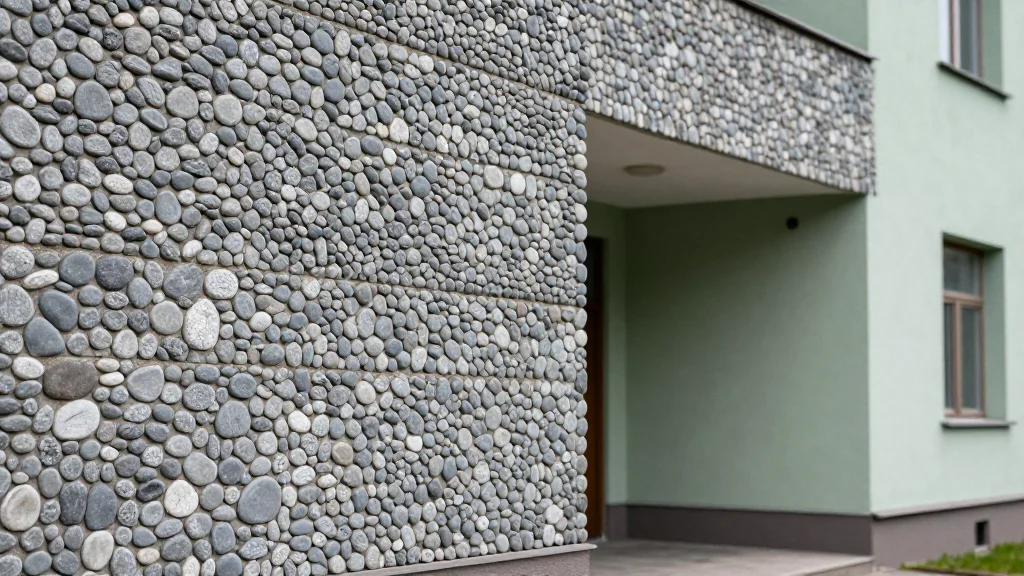
- •The façade is covered with over 3 million marble stones sourced from the Gehrenseestraße housing complex.
- •Curator Kathleen Reinhardt says media focused on the artists’ East‑German origins, reducing the work to an identity debate.
- •Tieu’s mosaic references 60,000 Vietnamese contract workers who built the GDR and were later marginalized.
- •Naumann reworks a 1960s Socialist Realist mural and a monochrome Neues Deutsches Design living‑room.
Pulse Analysis
The German pavilion’s “Ruin” marks a decisive turn in how national representations at major biennials engage with contested histories. Rather than presenting a sanitized, market‑friendly aesthetic, the curatorial team chose a confrontational architecture‑based strategy that forces viewers to inhabit the very walls that once housed Nazi propaganda. This approach aligns with a growing trend in institutional critique where the building itself becomes a canvas for political discourse, echoing earlier interventions like Haacke’s floor shattering but moving beyond destruction to a constructive overlay of memory.
By foregrounding the lived experience of East German citizens and Vietnamese contract workers, the project also expands the conversation about post‑war Europe beyond the binary of West versus East. It underscores how labor migration, state‑driven identity projects, and the persistence of far‑right ideologies intersect in the built environment. As European museums increasingly confront colonial legacies, “Ruin” offers a model for integrating migrant narratives into national histories without relegating them to peripheral exhibitions.
Looking ahead, the pavilion’s success may inspire other national pavilions to adopt similarly immersive, site‑specific formats that interrogate their own architectural histories. If the installation travels to other institutions, it could catalyze a wave of re‑examinations of fascist‑era structures across Europe, prompting curators to ask not only what art is shown, but how the very walls that house it shape the stories we tell.
German Pavilion’s “Ruin” Installation Rewrites Post‑War Narrative at Venice Biennale
Comments
Want to join the conversation?
Loading comments...