Why It Matters
If authentic, the piece reinforces Banksy’s market power and draws tourists, while a fake could highlight the growing commercial exploitation of his brand. Either outcome influences the valuation of street art and public‑space curation in major cities.
Key Takeaways
- •Sculpture installed on Waterloo Place, near historic monuments
- •Signed by Banksy but lacks official Instagram confirmation
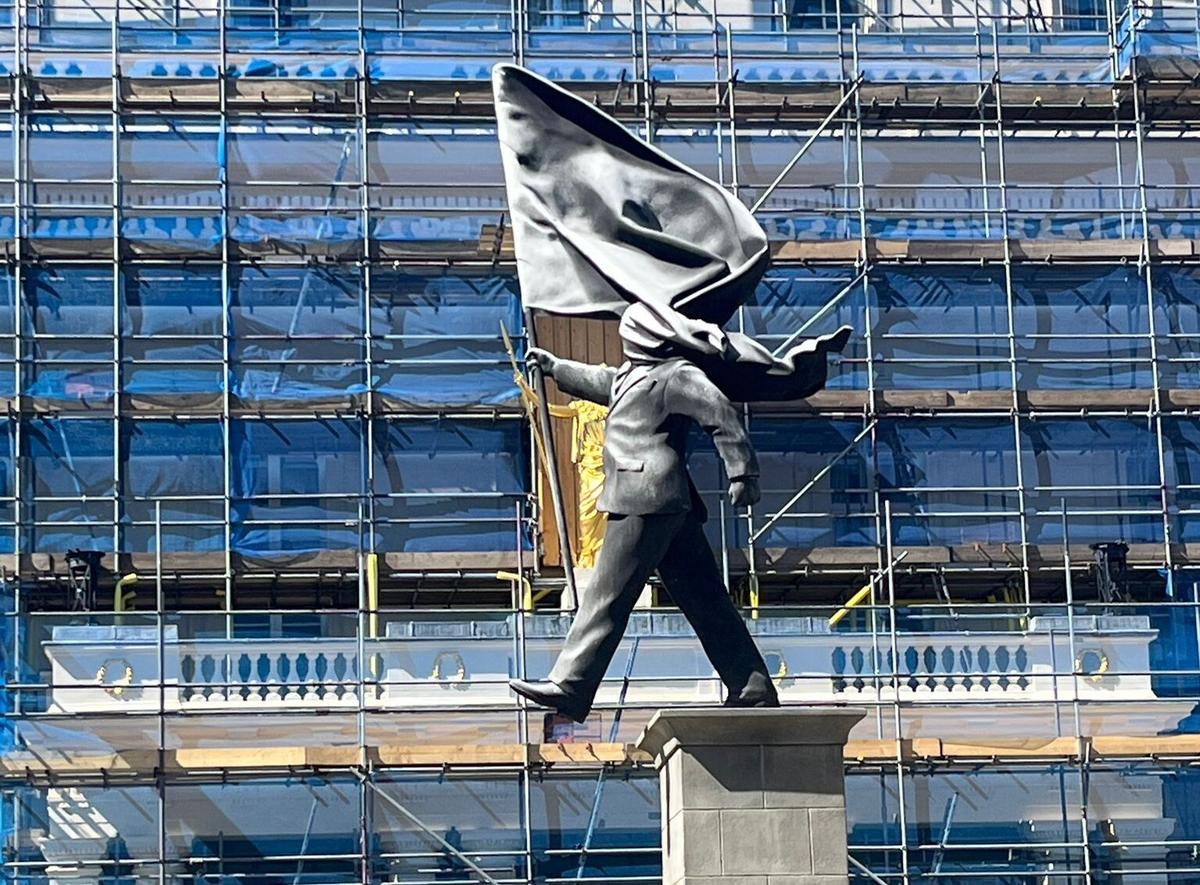
- •Depicts a suited figure blinded by a flag, typical political satire
- •Potential impact on London’s street‑art tourism and market value
Pulse Analysis
The newly surfaced sculpture on Waterloo Place has sparked a flurry of speculation among art lovers and market watchers. While the work bears Banksy’s distinctive signature, the artist’s usual practice of announcing fresh pieces on Instagram is missing, leaving the authenticity question open. This ambiguity is not new; counterfeit works have long shadowed the elusive street‑artist, prompting collectors to rely on provenance and digital verification. As the public gathers around the plinth, the debate underscores the challenges of authenticating guerrilla art that appears overnight.
Banksy’s influence on London’s cultural landscape extends beyond graffiti walls to high‑value auction houses and museum exhibitions. Recent sales of his pieces have fetched millions of dollars, cementing his status as a blue‑chip asset in the contemporary art market. A confirmed new work would likely trigger a surge in demand for related memorabilia, driving up prices for both original and derivative pieces. Conversely, a proven forgery could trigger a wave of caution among buyers, prompting tighter due‑diligence protocols and potentially reshaping how galleries and auction houses handle street‑art acquisitions.
Beyond market dynamics, the sculpture’s presence reshapes the city’s public‑space narrative. Banksy’s work traditionally provokes dialogue about power, consumerism, and social injustice, and a piece positioned near historic monuments amplifies that conversation. Whether authentic or not, the installation is already attracting tourists, media coverage, and local foot traffic, boosting nearby businesses and reinforcing London’s reputation as a global art destination. City planners and cultural institutions will likely monitor the situation closely, weighing the benefits of spontaneous street art against the need for preservation and curated public art programs.
Has a new Banksy artwork appeared in central London?
Comments
Want to join the conversation?
Loading comments...