Hiroshi Sugimoto's Largest Southeast Asian Survey Opens at Singapore Art Museum

Why It Matters
Sugimoto’s "Form Is Emptiness" provides Southeast Asian audiences with unprecedented access to a body of work that has shaped contemporary photography worldwide. By situating his exploration of time, perception, and materiality within a Singaporean context, the exhibition bridges Western avant‑garde traditions with regional cultural narratives, fostering dialogue about the role of photography in modern art. Additionally, the show reinforces Singapore’s ambition to become a premier destination for landmark art exhibitions, encouraging further investment in cultural infrastructure and international collaborations. The inclusion of personal fossil specimens adds a unique interdisciplinary layer, inviting viewers to consider the deep temporal scales that photography often compresses. This convergence of art and natural history may inspire curatorial experiments that blend scientific artifacts with visual art, expanding the interpretive possibilities for future exhibitions across the region.
Key Takeaways
- •Hiroshi Sugimoto's "Form Is Emptiness" opens at Singapore Art Museum, his largest Southeast Asian solo survey.
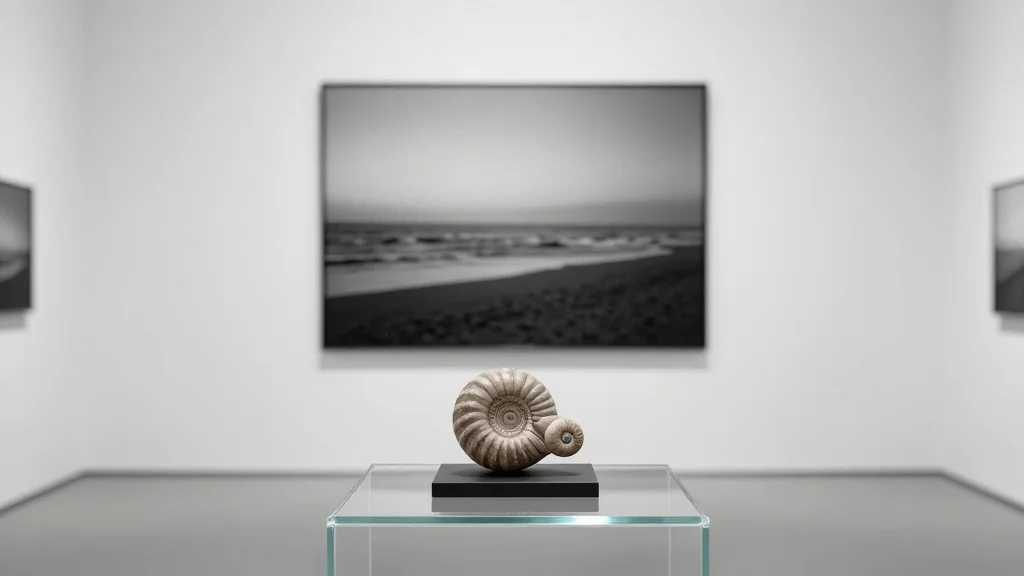
- •Exhibition includes over 60 works from 11 series and 14 fossil specimens from Sugimoto's personal collection.
- •Runs until Oct. 4, 2026, offering a five‑decade retrospective of the photographer's career.
- •Title references the Buddhist Heart Sutra, emphasizing perception's role in shaping reality.
- •Show highlights Singapore's growing capacity to host major international art exhibitions.
Pulse Analysis
Sugimoto’s Singapore show arrives at a pivotal moment for the region’s cultural economy. Over the past decade, Singapore has leveraged tax incentives, public‑private partnerships, and a strategic location to attract marquee exhibitions that were once confined to European capitals. "Form Is Emptiness" not only validates those policies but also sets a benchmark for the scale and depth of future surveys. By presenting a comprehensive cross‑section of Sugimoto’s work, the museum signals its readiness to handle complex, multi‑disciplinary narratives that demand sophisticated curatorial resources.
Historically, large‑scale retrospectives have acted as catalysts for market activity, often spurring increased auction prices for an artist’s back catalog. Sugimoto’s heightened visibility in Southeast Asia could stimulate demand among regional collectors, many of whom are still building their photography portfolios. Moreover, the exhibition’s fossil component blurs the line between art and natural history, hinting at a broader trend where museums curate hybrid experiences to attract diverse audiences. This interdisciplinary approach may become a template for institutions seeking to differentiate themselves in a crowded cultural calendar.
Looking ahead, the exhibition’s planned rotation of selected works to other venues could create a networked exhibition model, extending the impact of a single show across multiple markets. Such a strategy would amplify Sugimoto’s influence while providing regional museums with high‑quality content without the logistical burden of a full survey. If successful, this could encourage more collaborative touring circuits, reinforcing Southeast Asia’s emergence as a cohesive, influential art hub.
Hiroshi Sugimoto's Largest Southeast Asian Survey Opens at Singapore Art Museum
Comments
Want to join the conversation?
Loading comments...