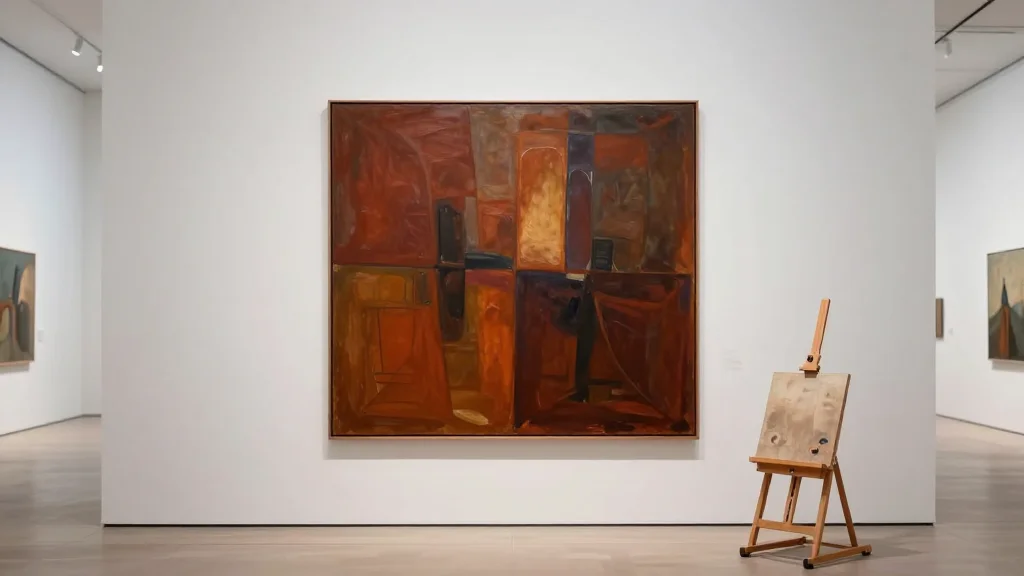
Hurvin Anderson Retrospective Opens at Tate Britain, Fusing Politics and Beauty

Why It Matters
Hurvin Anderson’s retrospective marks a watershed moment for representation in Britain’s premier art institutions. By foregrounding an artist whose oeuvre bridges Caribbean heritage and English urbanity, Tate Britain not only validates a historically under‑represented perspective but also signals to collectors, curators, and academia that narratives of migration and race are central to the nation’s cultural discourse. The exhibition’s commercial success – highlighted by multi‑million‑dollar auction records – demonstrates that market appetite aligns with critical interest, potentially reshaping acquisition strategies across public and private collections. The inclusion of *Hansworth Song* further blurs the line between visual art and documentary film, encouraging museums to adopt multidisciplinary approaches when addressing complex histories. As the UK grapples with ongoing debates over immigration, identity, and post‑colonial reckoning, Anderson’s work offers a nuanced lens through which audiences can confront these issues without sacrificing aesthetic pleasure.
Key Takeaways
- •Tate Britain opens a comprehensive Hurvin Anderson retrospective
- •Featured works include *Audition* (£7.4 m/$9.3 m) and *Is It Ok To Be Black?*
- •Anderson selected John Akomfrah’s documentary *Hansworth Song* for a dedicated screening room
- •Turner Prize jury described his art as speaking to “our current political moment”
- •Exhibition runs until September, accompanied by talks and educational programmes
Pulse Analysis
Anderson’s Tate Britain show arrives at the intersection of market momentum and cultural urgency. Over the past decade, the UK art market has witnessed a pronounced shift toward artists whose practice interrogates identity and post‑colonial legacies; Anderson’s soaring auction prices reflect both collector confidence and a broader institutional commitment to diversifying narratives. By pairing his canvases with a documentary that contextualises the Black British experience, the museum creates a layered experience that transcends traditional exhibition formats, positioning Tate Britain as a laboratory for interdisciplinary storytelling.
Historically, major retrospectives have served as career‑defining milestones, often catalysing a reassessment of an artist’s place within the canon. In Anderson’s case, the retrospective not only consolidates his status alongside peers like David Hockney but also re‑positions him as a conduit for political discourse within visual art. This duality—beauty married to activism—offers a template for future exhibitions seeking to balance aesthetic appeal with sociopolitical relevance. As galleries and auction houses continue to chase works that can deliver both critical acclaim and financial return, Anderson’s model may inspire a new generation of curators to foreground artists who navigate the delicate terrain of beauty and politics.
Looking ahead, the exhibition’s impact will likely ripple beyond Tate Britain’s walls. Its success could prompt other institutions to commission similar surveys of artists from marginalized backgrounds, while collectors may accelerate acquisitions of works that embody this hybrid appeal. In a market where provenance, narrative, and visual allure intersect, Anderson’s retrospective underscores a decisive moment: the art world is increasingly rewarding creators who can render the political beautiful, and the commercial and cultural stakes are now inextricably linked.
Hurvin Anderson Retrospective Opens at Tate Britain, Fusing Politics and Beauty
Comments
Want to join the conversation?
Loading comments...