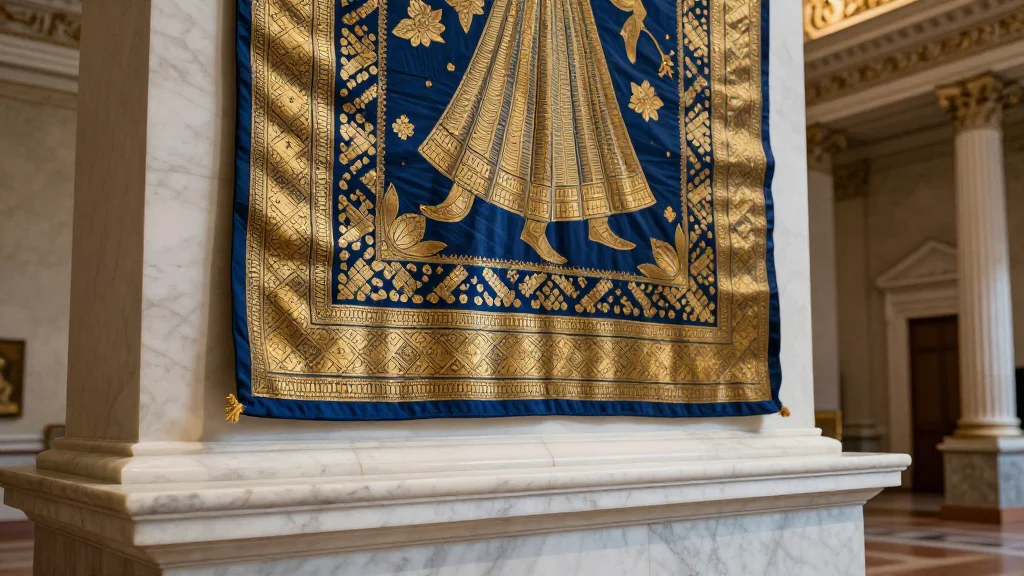
Indian Contemporary Art Debuts at St. Petersburg’s Hermitage in “Sediments of Becoming”

Why It Matters
The Hermitage’s decision to host a dedicated Indian contemporary art exhibition reflects a broader shift toward inclusive narratives in major museums, where non‑Western voices are gaining institutional legitimacy. For Indian artists, the exposure to a global audience in a venue renowned for its classical collections can accelerate international careers and attract new patronage. Conversely, Russian cultural institutions benefit from fresh perspectives that revitalize visitor engagement and signal openness in a geopolitical climate often marked by tension. By foregrounding personal connections over state‑driven cultural diplomacy, the exhibition offers a model for future collaborations that prioritize artistic exchange rather than political posturing. This approach may inspire other legacy museums to pursue similar grassroots partnerships, reshaping the global art market’s geography.
Key Takeaways
- •The Hermitage opened “Sediments of Becoming” on June 7, 2026, featuring eleven Indian contemporary artists.
- •Curated by Marina Schultz, the show emphasizes friendship‑based cultural exchange over official diplomacy.
- •Artists include Nindita Bhattacharya, Manjunath Kamath, Lakshmi Madhavan and others, with several works created for the exhibition.
- •The exhibition runs until October 2026 and includes public programs and a residency component.
- •The show marks the first Indian art presence at the Hermitage since a 2009 collaboration, signaling a shift toward more inclusive museum narratives.
Pulse Analysis
The Hermitage’s foray into Indian contemporary art arrives at a moment when Western institutions are actively re‑examining their collections for diversity and relevance. Historically, the museum’s narrative has been anchored in European canon; inserting Indian voices disrupts that linearity and invites a re‑contextualization of art history. This move aligns with a growing market trend where Asian contemporary art has outperformed many traditional sectors at major auction houses, driven by rising collector interest in the Global South.
From a strategic standpoint, the exhibition serves both cultural and commercial interests. For the Hermitage, showcasing Indian artists can attract new visitor demographics, particularly younger, globally minded audiences who seek cross‑cultural experiences. For Indian artists, the platform offers unprecedented visibility, potentially translating into higher secondary market prices and invitations to other prestigious venues. The curatorial emphasis on “friendships, horizontal connections” also sidesteps the geopolitical friction that often clouds cultural exchanges between Russia and the West, positioning the project as a soft‑power conduit that is less vulnerable to diplomatic fallout.
Looking ahead, the success of “Sediments of Becoming” could catalyze a series of reciprocal exhibitions, where Russian artists appear in Indian museums, further entrenching a bilateral art dialogue. Such reciprocity would not only diversify institutional programming but also create new trade routes for galleries and auction houses operating across Eurasia. The key question remains whether this partnership can sustain momentum beyond the exhibition’s October close, translating into lasting institutional change rather than a one‑off showcase.
Indian Contemporary Art Debuts at St. Petersburg’s Hermitage in “Sediments of Becoming”
Comments
Want to join the conversation?
Loading comments...