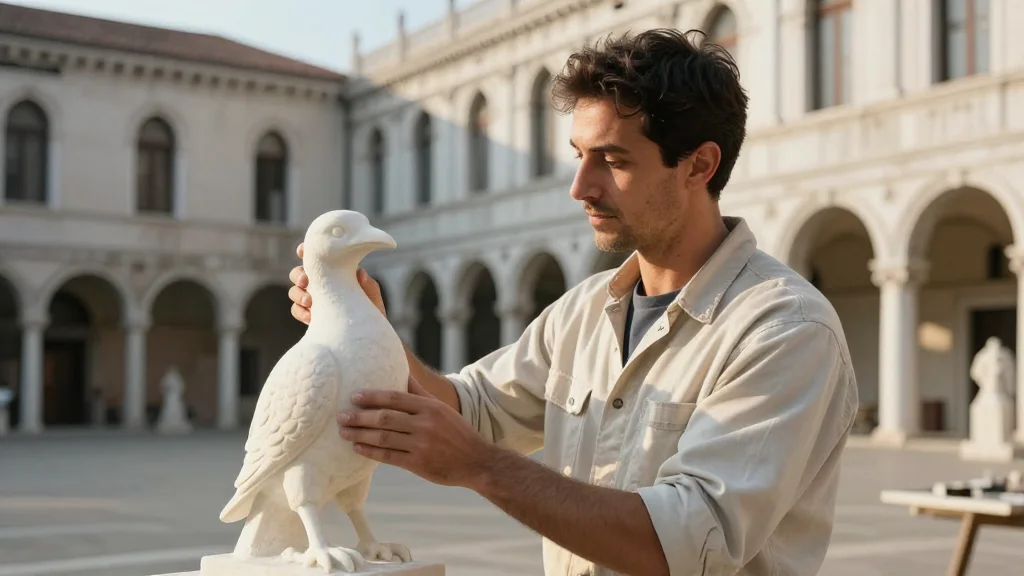
Israeli Biennale Artist Rejects Boycott, Defends Dialogue Amid Tensions

Why It Matters
The dispute over Israel’s participation at the Venice Biennale illustrates how cultural events can become arenas for geopolitical contestation. A decision to bar or retain a national pavilion could influence funding, sponsorship, and attendance at future art fairs, as institutions weigh the reputational risk of aligning with contested states. Moreover, the episode forces artists, curators, and patrons to confront the ethical dimensions of cultural representation, potentially reshaping curatorial practices that prioritize political neutrality versus activist engagement. For the broader art market, the controversy may affect the valuation of works associated with politically charged narratives. Collectors who prioritize socially responsible investing could shy away from artists linked to contentious regimes, while others may see heightened relevance—and thus market interest—in works that directly address conflict. The outcome will likely inform how museums and biennials draft policies on cultural boycotts, setting a benchmark for future disputes.
Key Takeaways
- •Belu‑Simion Fainaru, Israel’s Venice Biennale artist, publicly rejects cultural boycott calls.
- •Fainaru’s installation *Rose of Nothingness* emphasizes absence and dialogue.
- •Hundreds of artists have petitioned to bar Israel, citing alleged war crimes in Gaza.
- •Biennale officials have so far upheld a policy against exclusion or censorship.
- •The controversy may reshape curatorial policies and market dynamics for politically sensitive art.
Pulse Analysis
The Venice Biennale has long been a barometer for the intersection of art and politics, and this year’s Israeli pavilion controversy underscores a growing willingness among artists to confront state actions directly from within institutional frameworks. Fainaru’s stance—rejecting boycott while advocating for dialogue—mirrors a broader shift toward nuanced engagement rather than binary condemnation. This approach could inspire a new model of cultural diplomacy where artists act as mediators, leveraging their platforms to foster conversation without compromising ethical standards.
Historically, biennials have responded to political pressure by either amplifying dissenting voices or retreating into apolitical programming. The current impasse suggests that the Biennale may opt for the former, allowing contested works to coexist with protest, thereby preserving its reputation as a forum for free expression. However, the risk is a potential splintering of the art community, as galleries and collectors reassess relationships with institutions perceived as either complicit or resistant to political accountability. In the long term, the outcome could influence funding structures, with sponsors demanding clearer ethical guidelines, and could accelerate the emergence of alternative venues that explicitly align with activist agendas.
For artists, the episode signals that personal statements can carry significant weight in shaping institutional responses. Fainaru’s articulate defense of openness may embolden peers to articulate their positions, turning individual agency into collective leverage. As the Biennale opens, the world will watch not only the artworks but also the dialogues they provoke, setting a precedent for how global art events navigate the fraught terrain of geopolitics.
Israeli Biennale Artist Rejects Boycott, Defends Dialogue Amid Tensions
Comments
Want to join the conversation?
Loading comments...