Why It Matters
Swavely’s process‑driven abstraction signals a renewed market appetite for tactile, experiential painting, reinforcing the legacy of mid‑century color‑field masters in today’s contemporary art scene.
Key Takeaways
- •Swavely abandons representational forms for reductive color fields
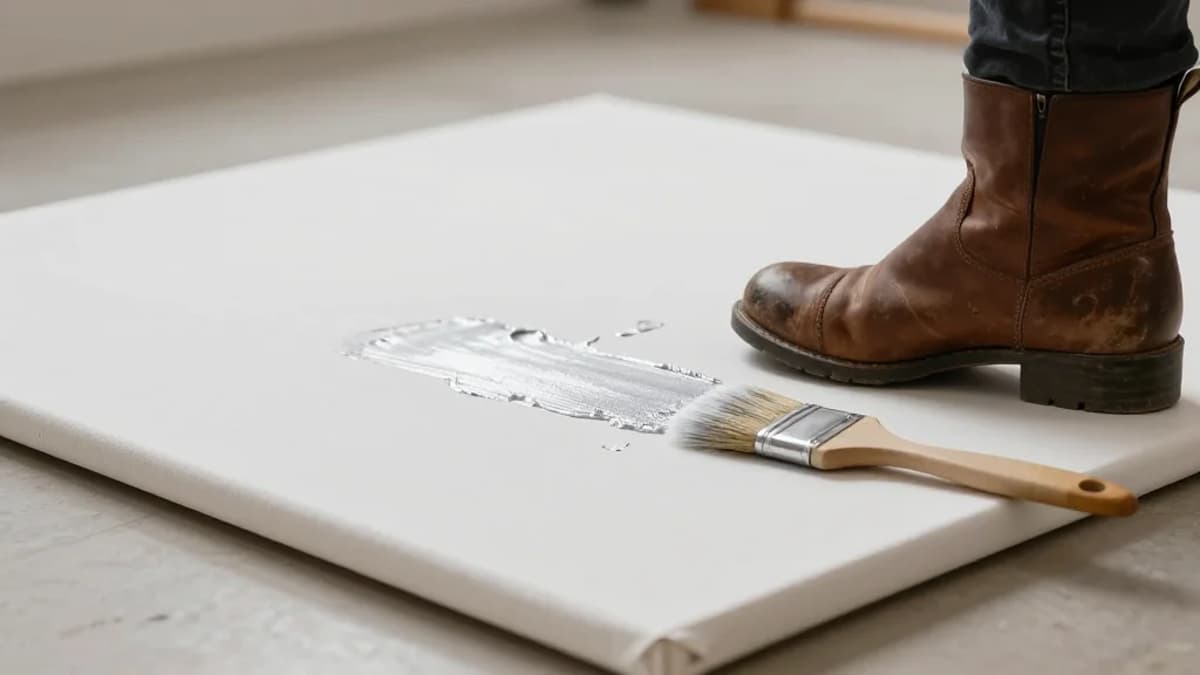
- •Paintings created by walking, boot‑stained, sponge‑wiped technique
- •Silver pigment adds luminescent glow inspired by Dan Flavin
- •Works shown at Currier Museum and Milan gallery this March
- •Titles left untitled to avoid influencing viewer interpretation
Pulse Analysis
Jane Swavely’s artistic trajectory mirrors a broader shift in contemporary painting, where legacy techniques are reinterpreted through a minimalist lens. After a career rooted in figurative and landscape work, Swavely embraced the language of color‑field painting—a movement pioneered by artists like Jules Olitski and Mark Rothko—by stripping composition to expansive swaths of hue. This evolution reflects a desire among seasoned creators to explore the essence of paint itself, positioning Swavely alongside peers who prioritize surface, texture, and the physical act of making over narrative content.
The hallmark of Swavely’s recent oeuvre is its performative creation process. She walks onto the stretched canvas, using worn Prada boots to press pigment into the fabric before a large brush distributes color along the edges. A dishwashing sponge then removes excess, leaving ghostly residues and occasional handprints that become part of the visual narrative. By mixing silver into the underpainting, she achieves a subtle glow reminiscent of Dan Flavin’s fluorescent installations, adding a luminous depth that invites viewers to contemplate light as a material. This tactile methodology blurs the line between painting and sculpture, offering collectors a work that is both visual and physical.
Swavely’s upcoming shows at the Currier Museum and Kaufmann Repetto Gallery underscore the commercial and critical relevance of her practice. Aligning her work with a Jules Olitski retrospective situates her within a respected lineage, attracting institutional interest and high‑end collectors seeking provenance linked to historic movements. Moreover, the dual exhibition in the United States and Europe expands her market footprint, signaling to galleries and investors that process‑centric abstraction remains a potent driver of contemporary art value.
Jane Swavely
0
Comments
Want to join the conversation?
Loading comments...