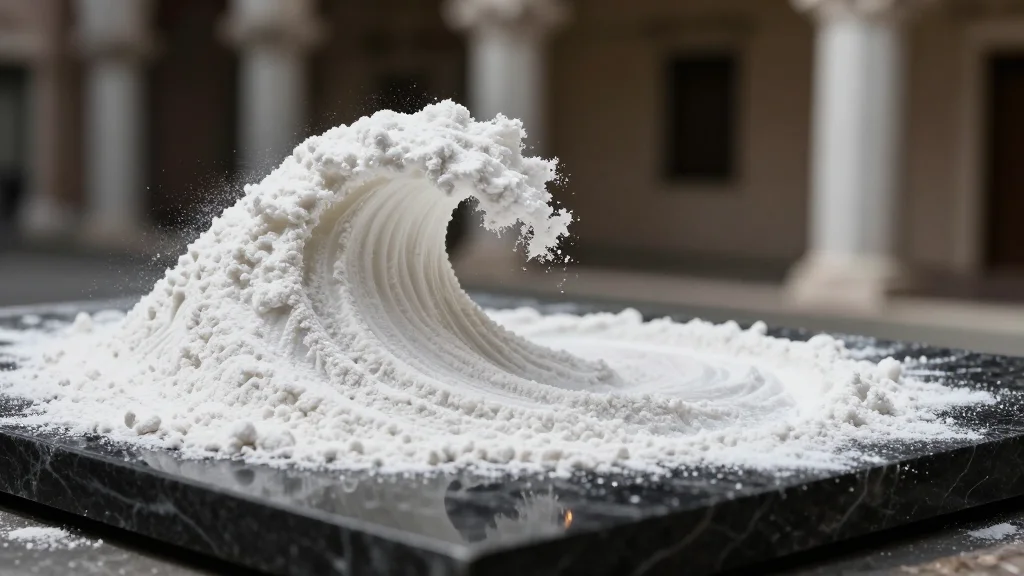
Jermay Michael Gabriel to Debut “Waves of Ash” At 2026 Venice Biennale

Why It Matters
Waves of Ash places a transnational, post‑colonial narrative at the center of the Venice Biennale, an institution long critiqued for its Eurocentric focus. By foregrounding African diaspora experiences through a performance that physically engages the Venetian lagoon, the work challenges traditional hierarchies of art history and expands the Biennale’s curatorial vocabulary. The project also exemplifies a growing institutional commitment to environmentally responsive art. Its use of burned wood and lagoon‑sourced materials ties ecological concerns to cultural memory, offering a model for future large‑scale exhibitions that aim to address climate change and historical injustice simultaneously.
Key Takeaways
- •Jermay Michael Gabriel will present the performance‑installation “Waves of Ash” at the 2026 Venice Biennale
- •The work will be shown during preview week, May 5‑9, 2026, at Giardini della Marinaressa
- •Created in collaboration with Ethiopian artist Tsedaye Makonnen
- •Part of the “1922 Revisited” program organized by Third Space Art Foundation and African Art in Venice Forum
- •The piece uses burned wood, textiles and lagoon‑collected materials to explore migration, memory and colonial histories
Pulse Analysis
The Venice Biennale has historically served as a barometer for global art trends, and its 2026 edition appears poised to deepen the decolonial turn that began gaining momentum in the early 2020s. By commissioning Waves of Ash, the Biennale not only acknowledges the urgency of African diaspora narratives but also integrates them into its most visible platform, signaling to other major institutions that post‑colonial perspectives are no longer peripheral.
Gabriel’s practice, which merges archival research with immersive performance, aligns with a broader shift toward art that functions as living archive. This approach resonates with curators seeking to move beyond static objects toward experiences that record, transform, and release memory in real time. The collaboration with Makonnen further underscores a collaborative model that privileges multiple cultural lenses, a strategy likely to be emulated as funding bodies increasingly demand inclusive programming.
Looking ahead, the success of Waves of Ash could catalyze a wave of site‑specific, environmentally engaged works at future biennials. If audiences and critics respond positively, we may see a rise in commissions that tie ecological materials to sociopolitical narratives, reinforcing the Biennale’s role as a laboratory for experimental, socially resonant art. Conversely, any backlash could prompt a re‑evaluation of how such ambitious projects are contextualized within historic exhibition frameworks, prompting curators to balance innovation with audience accessibility.
Jermay Michael Gabriel to Debut “Waves of Ash” at 2026 Venice Biennale
Comments
Want to join the conversation?
Loading comments...