
Why It Matters
Julio Le Parc’s death closes the chapter on one of the most influential figures in kinetic and Op‑Art, a movement that reshaped how audiences experience visual art. His emphasis on viewer participation prefigured the immersive installations that dominate major museums today, making his work a cornerstone for understanding contemporary practices that blend art, technology, and physical interaction. The Tate Modern retrospective not only honors his legacy but also provides a critical reference point for artists exploring sensor‑based and participatory works. By situating his decades‑long experiments within a modern context, the exhibition underscores the continuity between mid‑20th‑century kinetic art and today’s digital immersion, reinforcing Le Parc’s relevance for future generations.
Key Takeaways
- •Julio Le Parc died on May 30, 2026, at age 97 in Paris.
- •His son Yamil Le Parc confirmed the death and noted his father's ongoing engagement with his work.
- •Le Parc co‑founded the Groupe de Recherche d’Art Visuel (GRAV) in 1960, pioneering collaborative kinetic art.
- •He won the Grand Prize for Painting at the 1966 Venice Biennale, cementing his international reputation.
- •A major Tate Modern retrospective opens June 11, 2026, showcasing seven decades of his installations.
Pulse Analysis
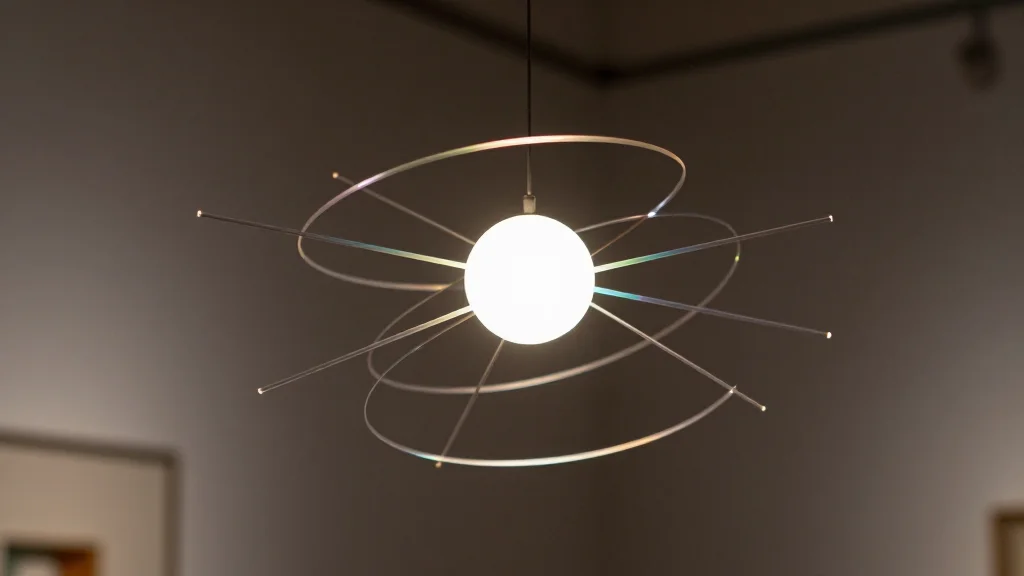
Julio Le Parc’s career illustrates a through‑line from post‑war avant‑garde experimentation to the present‑day obsession with immersive experiences. His early work with mirrors, light, and motion anticipated the sensor‑driven installations now common in institutions seeking to attract broader, experience‑hungry audiences. By foregrounding the viewer’s physical presence, Le Parc helped dissolve the barrier between artwork and spectator, a principle that underpins contemporary practices ranging from virtual reality exhibitions to large‑scale light festivals.
The timing of his death, just before the Tate Modern retrospective, amplifies the cultural resonance of his legacy. The show offers curators a chance to re‑examine the lineage of participatory art, positioning Le Parc alongside newer figures like teamLab and Refik Anadol, who blend technology with kinetic principles. This juxtaposition highlights how the core ideas of perception, movement, and audience agency remain fertile ground for artistic innovation.
Looking forward, museums are likely to lean even more heavily on Le Parc’s model as they design exhibitions that compete with digital entertainment. His emphasis on simple, yet radical, interactive mechanisms suggests a roadmap for institutions that lack the budget for high‑tech installations but still wish to engage visitors dynamically. In this sense, Le Parc’s death may catalyze a renewed interest in low‑tech, high‑impact kinetic works, ensuring his influence endures beyond the walls of the Tate Modern.
Julio Le Parc, Kinetic Art Pioneer, Dies at 97
Comments
Want to join the conversation?
Loading comments...