
Companies Mentioned

Why It Matters
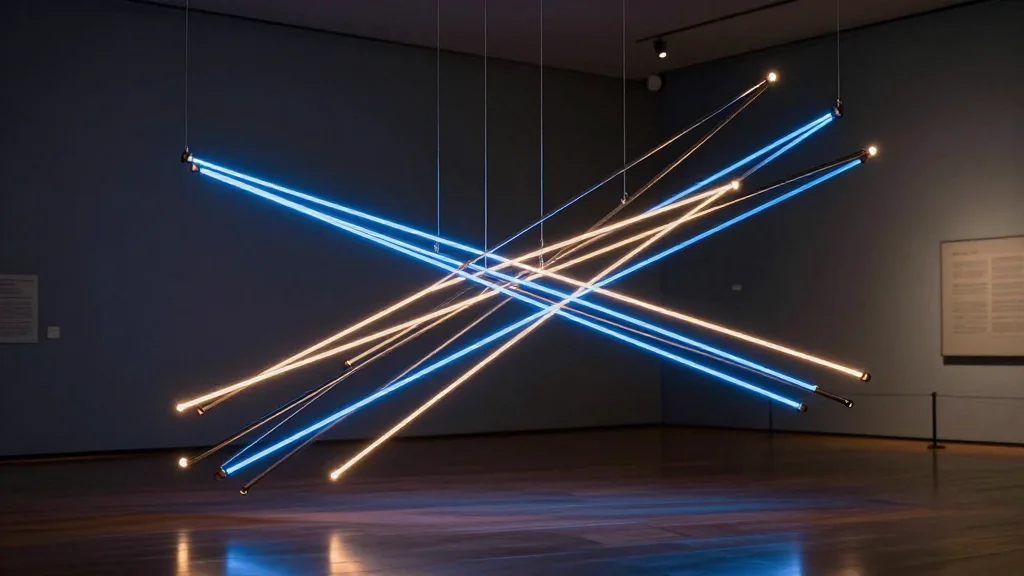
Julio Le Parc’s death marks the loss of a foundational figure whose experiments with light and movement reshaped how audiences engage with art. His work laid the groundwork for contemporary immersive installations, virtual reality experiences, and public art that reacts to human presence. By documenting his practice, institutions preserve a critical lineage that informs current debates about technology’s role in artistic expression. The market response to his passing also highlights the growing financial and cultural capital assigned to kinetic and interactive art. As collectors and museums vie for his limited pieces, the sector is likely to see increased investment in artists who blend engineering, optics, and perception—areas that Le Parc helped legitimize as fine art.
Key Takeaways
- •Julio Le Parc, kinetic and Op art pioneer, died in Paris at age 97.
- •His son Yamil Le Parc confirmed the death to La Nación.
- •Recent auction sales of Le Parc’s work have exceeded $1 million, indicating strong market demand.
- •Major institutions such as the Guggenheim and Musée d’Art Moderne plan 2027 exhibitions in his honor.
- •His estate will digitize archives, making sketches and prototypes accessible to scholars and artists.
Pulse Analysis
Le Parc’s career bridged the gap between scientific inquiry and artistic practice, a synthesis that resonates in today’s data‑driven art world. His emphasis on viewer interaction prefigured the rise of sensor‑based installations and the current fascination with AI‑generated environments. As museums grapple with attracting younger, tech‑savvy audiences, Le Parc’s legacy offers a blueprint: art that is not only seen but experienced in real time.
The recent surge in auction prices for kinetic works reflects a broader market recalibration. Collectors are no longer content with static objects; they seek pieces that can be reprogrammed, exhibited in varied contexts, and that carry a narrative of technological innovation. Le Parc’s limited‑edition sculptures, many of which still contain functional motors, are uniquely positioned to meet this demand, driving up their scarcity premium.
Looking ahead, the digitization of Le Parc’s archives could democratize access to his experimental processes, inspiring a new wave of creators who blend hardware hacking with visual art. This archival release may also spark scholarly reassessment of kinetic art’s place within modernist history, potentially reshaping curricula and exhibition strategies worldwide.
Julio Le Parc, Kinetic Art Pioneer, Dies at 97
Comments
Want to join the conversation?
Loading comments...