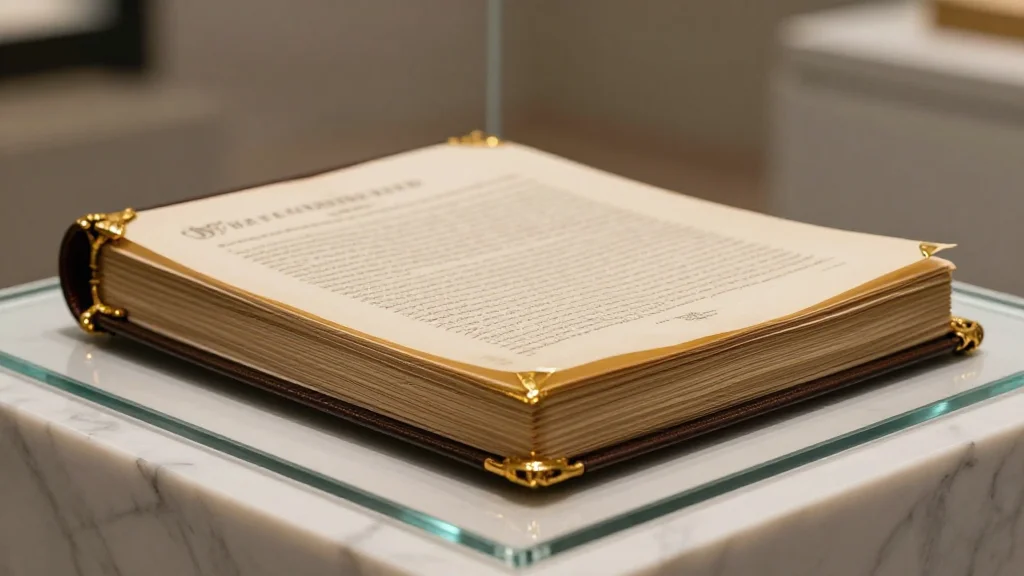
Ken Griffin’s $43.2 Million Constitution Copy Debuts at New York Museum

Why It Matters
The public display of a $43.2 million Constitution copy highlights the tension between private wealth and collective cultural stewardship. By moving a foundational legal document from a private vault into a museum, the episode forces policymakers, curators, and the public to confront how historic artifacts are financed, preserved, and interpreted. It also signals that the market for rare documents is maturing into a sector where financial clout can dictate access to national heritage. Moreover, the exhibition could reshape museum funding models. If high‑profile loans from collectors prove to drive attendance and donor interest, institutions may increasingly rely on private partnerships, potentially reshaping acquisition strategies and curatorial priorities across the art and cultural sector.
Key Takeaways
- •Ken Griffin paid $43.2 million for a rare 1787 U.S. Constitution copy in 2021.
- •The document is now on view at New York’s South Street Seaport Museum.
- •Curator Maya Patel highlights the artifact’s exceptional preservation.
- •Critics warn that high prices risk turning historic texts into investment assets.
- •The loan agreement runs until at least 2028, with potential for a touring schedule.
Pulse Analysis
Griffin’s acquisition underscores a shift in the collectibles ecosystem where historic documents are treated with the same speculative fervor as blue‑chip art. This convergence is driven by a confluence of factors: tax incentives for charitable loans, the prestige associated with owning a piece of national history, and the low supply of authentic, well‑preserved documents. As a result, museums are increasingly positioned as intermediaries that can legitimize private ownership while delivering public value.
Historically, museums have relied on donations and public funding; the Griffin deal illustrates a hybrid model that blends private capital with public exhibition. While this can unlock resources for conservation and programming, it also introduces volatility—if a collector withdraws support, institutions may lose marquee pieces. The long‑term loan framework attempts to mitigate this risk, but it also places curatorial decisions under the shadow of donor expectations.
Looking forward, the market for rare documents is likely to intensify. As wealth concentrates, more collectors will seek to acquire items that confer cultural legitimacy, prompting auction houses to expand their offerings beyond traditional fine art. Museums that can navigate these relationships without compromising scholarly integrity will set the standard for 21st‑century stewardship of heritage.
Ken Griffin’s $43.2 Million Constitution Copy Debuts at New York Museum
Comments
Want to join the conversation?
Loading comments...