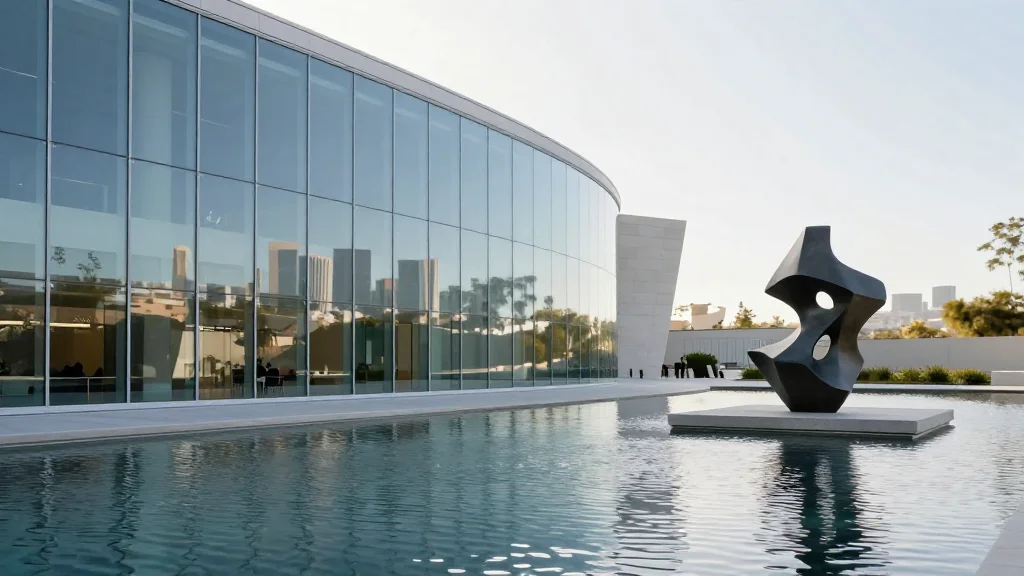
LACMA Opens $700 Million David Geffen Galleries, First Major Public Building in Decades

Why It Matters
The opening of LACMA’s $700 million David Geffen Galleries signals a watershed moment for American museum architecture, demonstrating how large‑scale public funding can be leveraged to create landmark cultural infrastructure. At the same time, the mixed reception highlights the risk of prioritizing iconic design over visitor comprehension, a dilemma that could influence future museum projects nationwide. If the Geffen Galleries succeed in attracting diverse audiences and fostering meaningful cross‑disciplinary dialogues, they may set a new standard for how institutions reimagine exhibition spaces. Conversely, persistent criticism could prompt a reevaluation of how museums allocate resources between building projects and curatorial programming, shaping funding priorities for cultural institutions across the United States.
Key Takeaways
- •LACMA opened the $700 million David Geffen Galleries, the first major public museum building in Los Angeles in over two decades.
- •The glass‑clad structure spans Wilshire Boulevard and offers sweeping city views, positioning the museum as a landmark ahead of the 2028 Olympics.
- •Funding came from a mix of Southern‑California philanthropists, corporate sponsors, and international backers.
- •Critics argue the building’s unconventional layout lacks clear navigational cues, leading to visitor frustration.
- •LACMA plans rotating exhibitions and community collaborations to test the new curatorial model.
Pulse Analysis
LACMA’s gamble reflects a broader shift among flagship museums toward experiential architecture that doubles as a brand asset. By investing $700 million in a building that is as much a visual statement as a container for art, the museum is betting on the idea that iconic design can drive attendance and donor interest. This mirrors trends seen at institutions like the Getty Center and the Broad, where the building itself becomes a tourist draw. However, the early criticism of the Geffen Galleries underscores a potential misalignment: when the architecture overshadows the curatorial narrative, the museum risks alienating its core public. The tension between spectacle and substance is not new, but the scale of LACMA’s investment amplifies its stakes.
Historically, museums that have successfully integrated bold architecture—such as the Guggenheim Bilbao—paired it with a clear curatorial vision that leveraged the building’s unique spaces. LACMA appears to be testing a more radical approach, discarding traditional taxonomies in favor of thematic juxtapositions. If the institution can refine this model through responsive programming and community engagement, it could pioneer a new paradigm for large public museums. If not, the project may serve as a cautionary example that even massive capital outlays cannot compensate for a lack of visitor‑centric design.
Looking ahead, the Geffen Galleries will likely become a barometer for future museum projects that seek to blend high‑profile architecture with innovative curatorial strategies. Stakeholders—from city planners to private donors—will watch closely to see whether LACMA can translate its architectural ambition into sustained public relevance, or whether the building will stand as a costly monument to aesthetic excess.
LACMA Opens $700 Million David Geffen Galleries, First Major Public Building in Decades
Comments
Want to join the conversation?
Loading comments...