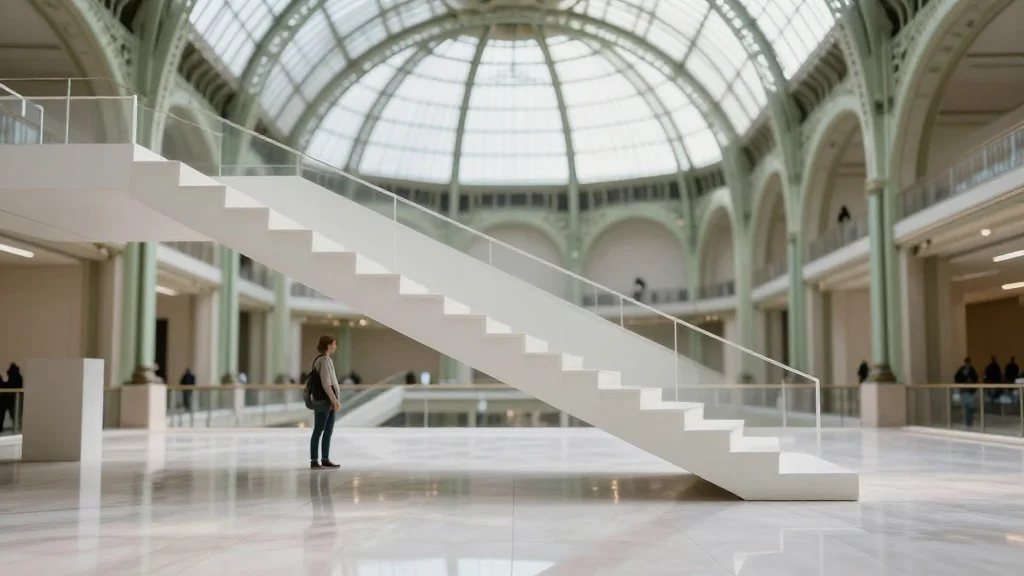
Leandro Erlich Unveils Immersive Illusion Exhibition at Paris’s Grand Palais

Why It Matters
Erlich’s Grand Palais exhibition demonstrates how immersive installations can revitalize historic cultural venues, attracting new demographics while prompting reassessment of the museum’s role as a static container of objects. By merging sophisticated engineering with conceptual art, the show underscores a growing trend where artists collaborate with architects and technologists to create experiences that are both physically demanding and intellectually provocative. This convergence could reshape funding models, as institutions seek partnerships that blend artistic vision with technical expertise. The exhibition also contributes to ongoing debates about authenticity and preservation. Installing large, temporary structures within protected heritage sites raises questions about the long‑term impact on the fabric of historic buildings. Erlich’s project, which required careful coordination with conservation authorities, may set precedents for how future large‑scale works are negotiated, potentially influencing policy on temporary installations in landmark venues worldwide.
Key Takeaways
- •Leandro Erlich opens his first major Paris monographic exhibition at the Grand Palais.
- •The show features immersive installations that create impossible staircases, gravity‑defying façades and indoor clouds.
- •A comprehensive archive of three decades of Erlich’s work accompanies the new pieces.
- •The exhibition runs through September and includes educational workshops on illusion and spatial design.
- •The project highlights new collaborative models between artists, architects and heritage institutions.
Pulse Analysis
Erlich’s Grand Palais installation arrives at a crossroads where museums are increasingly competing with digital entertainment and experiential venues. By offering a physically immersive experience that cannot be replicated on a screen, the exhibition reasserts the unique value of in‑person art encounters. This aligns with a broader shift in the cultural sector toward "experience‑first" programming, where institutions prioritize visitor engagement metrics such as dwell time and repeat visitation.
Historically, large‑scale immersive art has been associated with pop‑culture festivals or temporary pop‑up spaces. Erlich’s decision to embed his work within a protected heritage site elevates the genre, suggesting that immersive art can coexist with, and even enhance, the narrative of historic architecture. This could encourage other legacy institutions to experiment with similar collaborations, potentially leading to a new sub‑genre of site‑specific illusion art that respects and reinterprets existing structures.
Looking ahead, the success of this exhibition may influence funding bodies to allocate resources toward technically complex projects that blend art, engineering and heritage preservation. As artists continue to push the boundaries of perception, museums that can accommodate such ambitious works will likely gain a competitive edge in attracting global audiences, while also redefining the very definition of what a museum exhibition can be.
Leandro Erlich Unveils Immersive Illusion Exhibition at Paris’s Grand Palais
Comments
Want to join the conversation?
Loading comments...