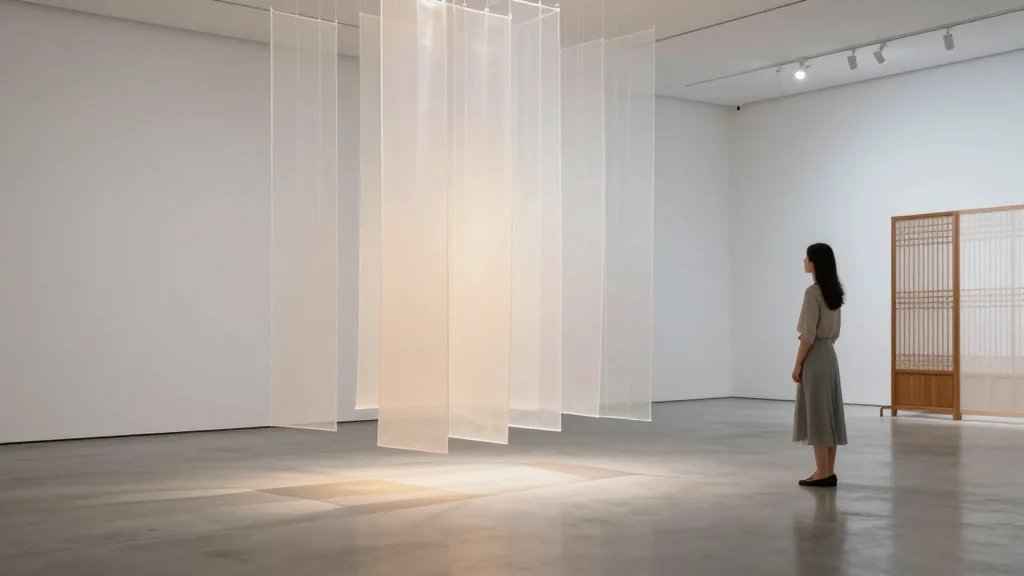
Leeum Museum to Open Immersive Women Artists Exhibition Through Nov 2026

Why It Matters
The Leeum exhibition tackles two intertwined issues: the gender imbalance in art historical narratives and the commodification of immersive experiences. By spotlighting women who pioneered sensory environments decades before the term "installation art" entered museum vocabularies, the show challenges the perception that immersive art is a recent, technology‑driven phenomenon. It also demonstrates how rigorous archival work can resurrect lost works, offering a model for institutions seeking to diversify their collections without relying solely on new commissions. Beyond scholarship, the exhibition has cultural resonance in South Korea, where the avant‑garde of the 1960s and 70s has often been framed through a male‑dominated lens. Placing Korean women artists alongside their European and American peers reframes the country’s artistic legacy as part of a broader, transnational dialogue, potentially influencing future curatorial decisions and funding priorities across the region.
Key Takeaways
- •Leeum Museum of Art in Seoul will host "Inside Other Spaces" through Nov 29, 2026
- •Exhibition reconstructs immersive works by women artists from 1956‑1976 across three continents
- •Collaboration with Munich’s Haus der Kunst expands the 2023 debut with additional Korean pieces
- •Features artists such as Lygia Clark, Marta Minujín, Nanda Vigo, Tsuruko Yamazaki, and Jung Kangja
- •Curators rebuilt temporary environments using archival photographs, sketches and letters
Pulse Analysis
Leeum’s decision to foreground women’s immersive practices reflects a broader shift in museum strategy: moving from blockbuster spectacles to historically grounded programming that can claim both scholarly rigor and public appeal. The exhibition’s reliance on reconstruction rather than new production reduces costs while delivering a unique visitor experience, suggesting a viable template for institutions with limited acquisition budgets.
Historically, immersive art has been marketed as a novelty, often emphasizing cutting‑edge technology to attract crowds. By turning the lens backward, Leeum repositions immersion as a conceptual lineage rooted in feminist experimentation. This reframing may encourage other museums to revisit overlooked archives, potentially reshaping the canon of post‑war art. Moreover, the cross‑continental partnership signals a growing appetite for collaborative exhibitions that pool resources and expertise, a model that could become standard as institutions grapple with funding constraints.
Looking ahead, the exhibition’s potential travel to other Asian venues could amplify its impact, prompting a reassessment of how gender and geography intersect in art history curricula and acquisition policies. If successful, Leeum’s approach may inspire a wave of similar projects that blend restoration, gender equity and immersive experience, redefining what audiences expect from contemporary museum visits.
Leeum Museum to Open Immersive Women Artists Exhibition Through Nov 2026
Comments
Want to join the conversation?
Loading comments...