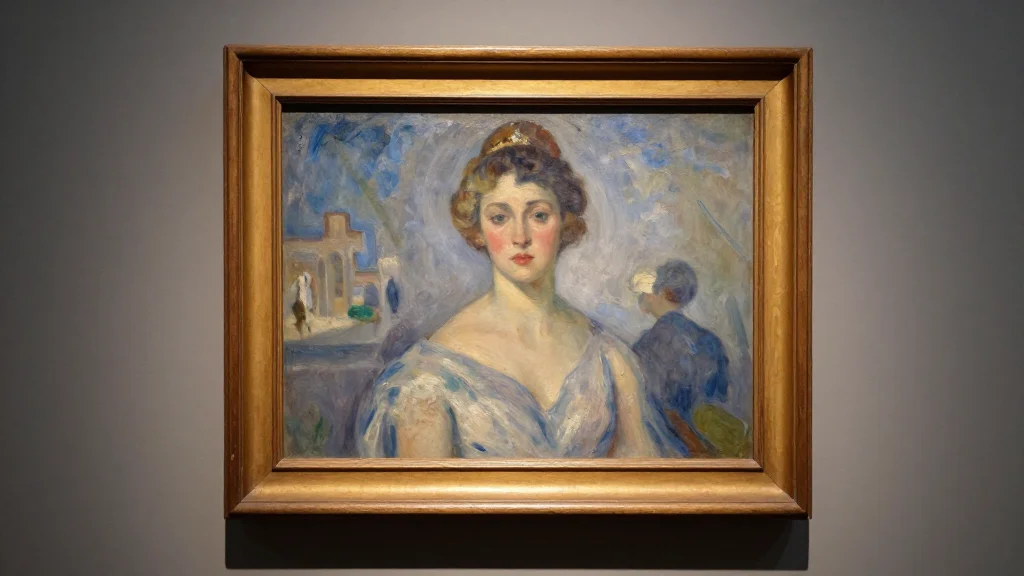
Leonora Carrington's Lost 1940 Painting 'Villa Pilar' Debuts at Freud Museum

Why It Matters
The public debut of "Villa Pilar" reshapes the understanding of Leonora Carrington’s early surrealist production, providing concrete evidence of how her psychiatric confinement directly influenced her visual language. By situating the work within a dedicated exhibition, scholars gain access to primary material that can refine timelines, attribution, and thematic analysis of her broader corpus. Beyond academia, the painting’s exposure highlights the intersection of art and mental health, prompting museums and cultural institutions to reconsider how they present works created under duress. The heightened attention may also stimulate market activity, as collectors and investors reassess the value of Carrington’s lesser‑known pieces, potentially driving up auction estimates and influencing future acquisitions.
Key Takeaways
- •Leonora Carrington's previously unknown 1940 painting "Villa Pilar" will be shown publicly for the first time at the Freud Museum, London, July 1–August 10, 2026.
- •The work was recovered from the estate of Dr. Luis Morales, Carrington’s psychiatrist during her 1940 confinement in Santander, Spain.
- •Exhibition title: "Leonora Carrington: The Symptomatic Surreal," featuring both "Villa Pilar" and its companion piece "Down Below."
- •After London, the painting will travel to Faro Santander in September 2026 for a second public showing.
- •The discovery offers new material for scholars, may affect Carrington’s market valuation, and sparks discussion on art created under mental‑health treatment.
Pulse Analysis
Leonora Carrington’s "Villa Pilar" arrives at a moment when the art market is increasingly attentive to works that bridge historical significance with contemporary relevance. The painting’s provenance—emerging from the personal archives of a psychiatrist—adds a narrative depth that resonates with current cultural conversations about mental health and artistic expression. Institutions like the Freud Museum are capitalizing on this synergy, curating exhibitions that not only showcase rare objects but also contextualize them within broader societal themes.
Historically, rediscovered works by canonical artists have acted as catalysts for reassessing their legacies. In Carrington’s case, the painting fills a gap in the chronology of her early surrealist period, offering visual proof of how institutional confinement translated into a distinct iconography of hybrid creatures and ominous skies. Scholars will likely revisit existing catalogues raisonnés, adjusting attributions and potentially re‑dating other pieces that share stylistic traits with "Villa Pilar."
From a market standpoint, the unveiling could trigger a ripple effect. While the painting itself is not for sale, its visibility may elevate the perceived scarcity and desirability of Carrington’s 1940s output, prompting higher auction estimates for comparable works. Collectors, especially those focused on women surrealists, may accelerate acquisitions to secure pieces before further scholarly revelations potentially inflate prices. The subsequent showing in Santander reinforces the transnational appeal of Carrington’s narrative, positioning her as a figure whose story transcends geographic boundaries and continues to attract institutional investment.
Overall, the debut of "Villa Pilar" underscores how a single recovered canvas can influence academic discourse, market dynamics, and public perception simultaneously. As museums continue to mine archives for hidden gems, the art world can expect more such moments where scholarship and commerce intersect, reshaping the valuation and interpretation of twentieth‑century modernism.
Leonora Carrington's Lost 1940 Painting 'Villa Pilar' Debuts at Freud Museum
Comments
Want to join the conversation?
Loading comments...