Why It Matters
The exhibition revives a rare dye‑transfer print, underscoring Eggleston’s lasting influence on colour photography and high‑end art markets. It also sparks dialogue about perception, memory, and the value of scarce archival processes.
Key Takeaways
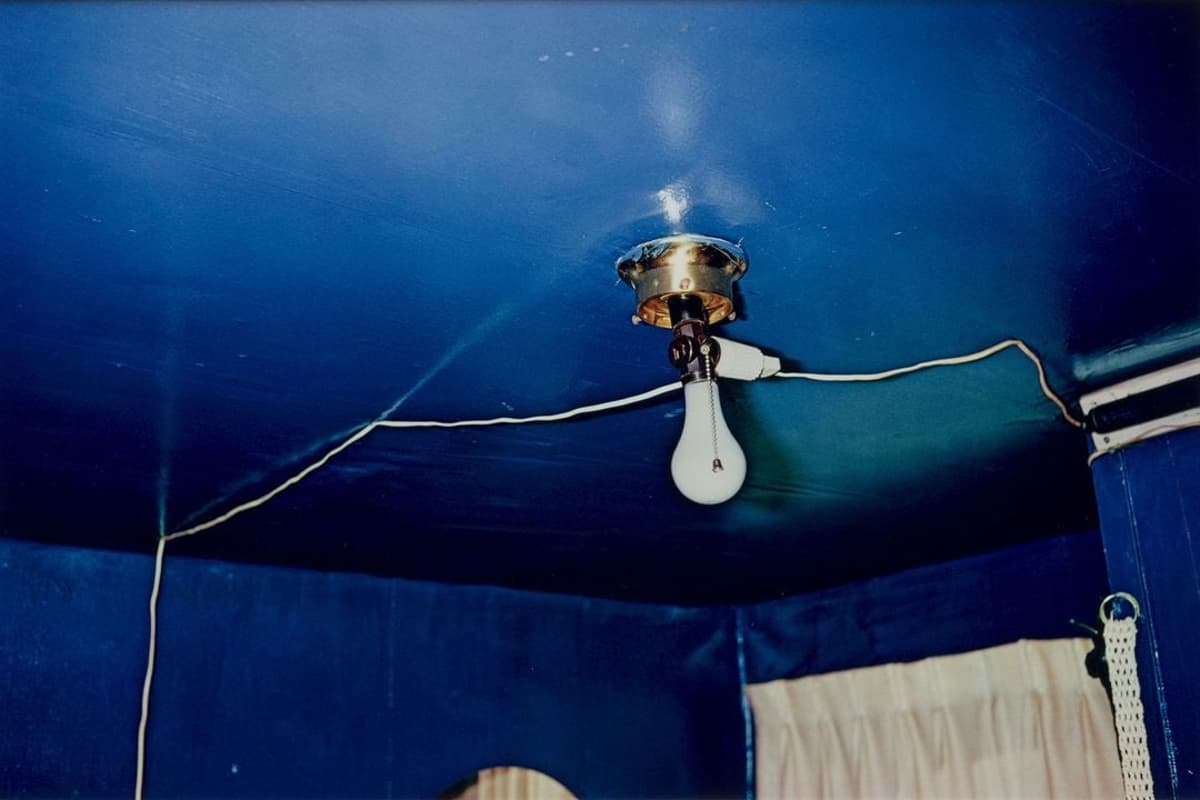
- •Eggleston’s blue “Untitled” mirrors iconic “Red Ceiling.”
- •Dye‑transfer printing ceased in 1994, making prints scarce.
- •Exhibition highlights parallel‑reality narrative via Mandela effect analogy.
- •Photo served as cover for Big Star’s 1974 album.
- •David Zwirner showcases lesser‑known Eggleston works.
Pulse Analysis
The David Zwirner gallery in New York has opened *The Last Dyes* exhibition, centering on William Eggleston’s 1973 “Untitled” photograph—a striking blue lightbulb scene that feels like an alternate version of his famed “Red Ceiling.” By invoking the Mandela effect, the curatorial text invites viewers to consider how collective memory can fracture, turning a single image into a portal between imagined realities. This framing resonates with contemporary audiences attuned to digital culture’s fluid narratives, while reaffirming Eggleston’s status as the godfather of colour photography.
Eggleston’s mastery of the dye‑transfer process gives the blue print its luminous depth. The technique separates a slide into cyan, magenta and yellow matrices, then prints each onto a light‑sensitive film, producing a colour range described as “from blackest black to whitest white.” Kodak halted production of the necessary materials in 1994, rendering existing prints exceptionally rare and highly prized by collectors. By showcasing a lesser‑known work printed with this exacting method, the exhibition underscores the technical virtuosity that differentiates Eggleston’s oeuvre from contemporary digital practices.
Beyond its technical allure, the photograph has woven itself into popular culture, gracing the cover of Big Star’s 1974 *Radio City* album and inspiring a 2016 restaging by Cortis & Sonderegger. Its eerie, oceanic blue tone invites reinterpretations that bridge fine art, music, and internet folklore. As the market continues to value limited‑edition, historically significant prints, Eggleston’s “Untitled” not only enriches scholarly discourse but also reinforces the financial and cultural capital of archival photography in today’s art ecosystem.
Lightbulb Moment: William Eggleston’s Alternate Reality
0
Comments
Want to join the conversation?
Loading comments...