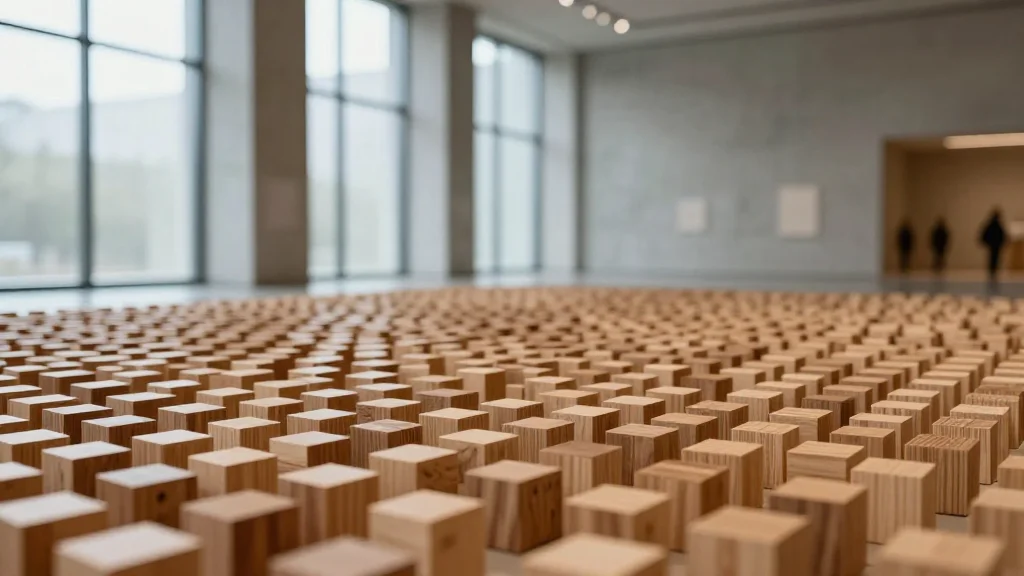
Lina Lapelytė’s 400,000-Block Installation Opens at Berlin’s Hamburger Bahnhof

Companies Mentioned
Why It Matters
The project spotlights a shift in contemporary art toward immersive, audience‑driven experiences that blur the line between creator and spectator. By embedding participation at its core, Lapelytė’s work challenges traditional museum hierarchies and offers a template for institutions seeking to deepen public engagement. Moreover, the partnership with Chanel illustrates how luxury brands are leveraging cultural capital to support experimental art that reaches broader demographics. This model may encourage other corporate patrons to fund works that prioritize communal interaction over object‑based sales, potentially reshaping funding structures in the art world.
Key Takeaways
- •Lina Lapelytė installs 400,000 pine and spruce cubes at Hamburger Bahnhof.
- •Commission funded by Chanel, part of the Chanel Culture Fund.
- •Opening date: May 1, 2026; runs through January 10, 2027.
- •Weekly performances feature a libretto with poems by Ocean Vuong, Etel Adnan, Forugh Farrokhzad, and Mahmoud Darwish.
- •Co‑directors Sam Bardaouil and Till Fellrath emphasize community, participation, and inclusion.
Pulse Analysis
Lapelytė’s *We Make Years Out of Hours* arrives at a moment when museums are re‑examining their role as static repositories. By converting a monumental hall into a mutable construction site, the work aligns with a broader trend toward relational aesthetics, where the artwork exists primarily in the interactions it provokes. This approach not only democratizes the creative process but also generates a living archive of visitor contributions, offering scholars new data on collective behavior in cultural spaces.
The Chanel partnership underscores a strategic pivot for luxury brands: moving from sponsorship of marquee exhibitions to underwriting projects that embed the brand within the creative process itself. This deeper integration can yield more authentic cultural relevance, but it also raises questions about artistic autonomy when corporate objectives intersect with curatorial decisions. As more brands adopt this model, the art market may see a rise in large‑scale, participatory commissions that prioritize experience over object, potentially reshaping how value is assessed in contemporary art.
Looking ahead, the success of this installation could inspire similar collaborations across Europe, especially as institutions seek to attract younger, experience‑seeking audiences. If the digital documentation of the evolving structures gains traction, it may also open new revenue streams through virtual exhibitions, further blurring the boundaries between physical participation and online consumption.
Lina Lapelytė’s 400,000-Block Installation Opens at Berlin’s Hamburger Bahnhof
Comments
Want to join the conversation?
Loading comments...