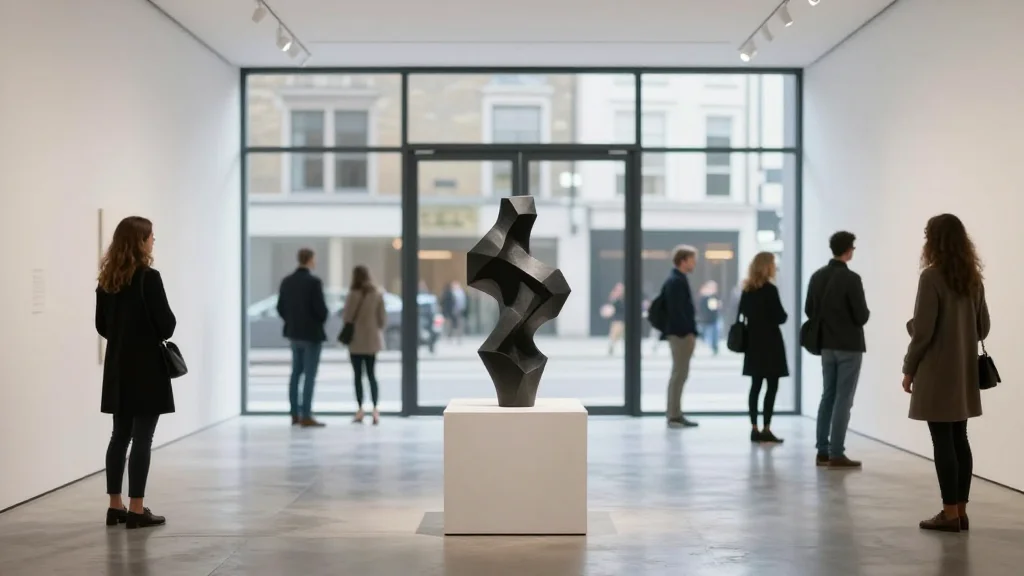
Lisson Grove Galleries Unite to Boost London's Emerging Art District

Companies Mentioned
Why It Matters
The Lisson Grove collaboration signals a strategic effort to revitalize a historically under‑represented art enclave, offering a counter‑balance to the commercial dominance of central London’s West End. By pooling resources across nonprofit and commercial entities, the initiative aims to sustain affordable creative spaces while attracting new audiences and investment, potentially reshaping the city’s cultural geography. If successful, the model could inspire similar coalitions in other parts of the UK and beyond, demonstrating how coordinated programming can amplify the visibility of emerging art districts without sacrificing their independent ethos.
Key Takeaways
- •Lisson Gallery, The Showroom, The Bomb Factory, Patrick Heide and Palmer Gallery launch the Lisson Grove Galleries initiative.
- •The programme debuts at London Gallery Weekend on June 5 with talks, tours and a community barbecue.
- •Founder Nicholas Logsdail recalls early challenges, emphasizing the district’s DIY heritage.
- •Professor Andrew Renton describes Lisson Grove as “the last part of central London to be gentrified—an act of resistance.”
- •The initiative blends nonprofit and commercial galleries to create a replicable model for cultural revitalisation.
Pulse Analysis
The Lisson Grove alliance reflects a broader trend in the art world where fragmented districts co‑opt collective branding to compete with high‑profile museum quarters. Historically, London’s art market has been polarized between the West End’s blue‑chip galleries and the East End’s experimental spaces. Lisson Grove, perched between these poles, has cultivated a hybrid identity—home to both conceptual pioneers like Lisson Gallery and community‑focused venues such as The Showroom. By formalising a joint programme, the partners are leveraging economies of scale: shared marketing, coordinated event calendars and a unified narrative that can attract press coverage and patronage.
Economically, the initiative could inject significant visitor spend into the area, benefitting not only galleries but also local cafés, restaurants and ancillary services. However, the risk of accelerated gentrification looms, as heightened visibility often leads to rising rents that threaten the very studios and independent spaces the programme seeks to protect. The partners’ emphasis on community‑driven programming—breakfast tours, barbecues and artist collectives—suggests an awareness of this tension and an attempt to embed cultural value beyond pure market transactions.
Looking ahead, the success of Lisson Grove’s collaborative model may prompt other mid‑city neighborhoods—such as Peckham, Shoreditch’s off‑shoots, or even Manchester’s Northern Quarter—to adopt similar frameworks. If the initiative can demonstrate measurable economic uplift while preserving affordable creative infrastructure, it could become a blueprint for sustainable cultural development in post‑pandemic urban centers.
Lisson Grove Galleries Unite to Boost London's Emerging Art District
Comments
Want to join the conversation?
Loading comments...