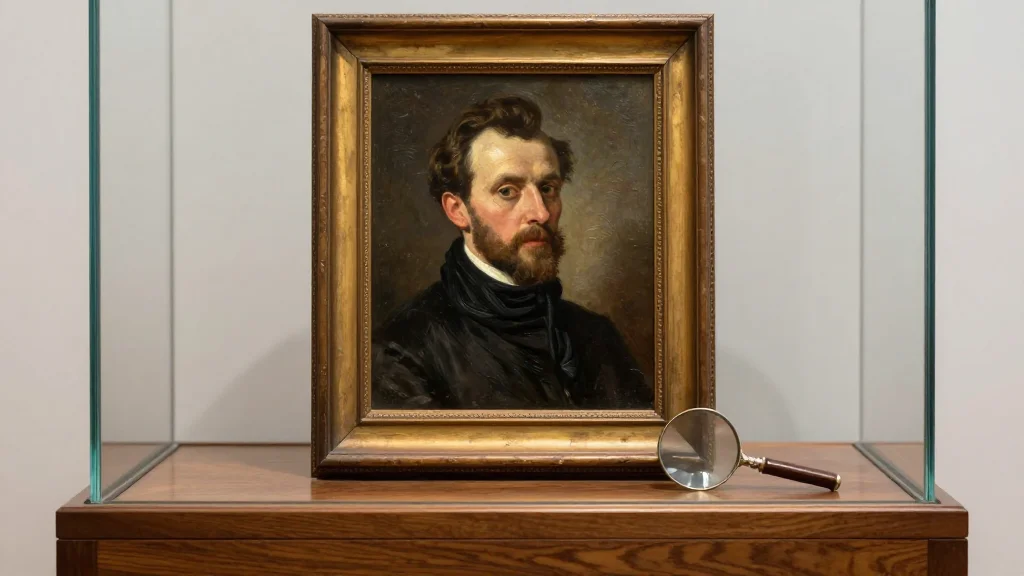
Lost Lucian Freud Portrait Authenticated, Set for London Museum Exhibition

Companies Mentioned
Why It Matters
The authentication of *Man in a Black Scarf* reshapes the early chronology of Lucian Freud’s oeuvre, adding a pivotal piece that illustrates his developmental approach to portraiture. By confirming the work’s provenance, scholars can better trace the evolution of Freud’s technique and thematic concerns, enriching academic discourse on 20th‑century British art. For the museum sector, the story underscores the value of deep archival research and interdisciplinary collaboration in resolving attribution disputes. It also signals to collectors that even long‑disputed works can gain legitimacy, potentially influencing market valuations and future acquisition strategies.
Key Takeaways
- •The portrait *Man in a Black Scarf* was painted by Lucian Freud in 1939 while at the East Anglian School.
- •BBC’s *Fake or Fortune?* and Tate Britain archives provided the key evidence that led to authentication.
- •Owner Jon Lys Turner revealed the painting was originally given to him to “infuriate Lucian” by former classmate Denis Wirth‑Miller.
- •The work will debut at the Garden Museum’s Benton End exhibition in July 2026.
- •The case highlights the clash between an artist’s denial and archival proof in art attribution.
Pulse Analysis
The Freud authentication is a textbook example of how provenance research can overturn even the most entrenched artist narratives. Historically, artists have wielded the power to shape their own legacies, often disavowing early works that no longer fit their mature brand. Freud’s denial, likely rooted in personal animosities and a desire to curate his public image, kept the painting in limbo for decades. The recent breakthrough demonstrates that institutional archives—when systematically examined—can provide irrefutable timelines that outpace anecdotal testimony.
From a market perspective, the validation of a previously contested Freud piece could ripple through auction houses and private collections. While the painting itself will not be sold immediately, its confirmed authenticity may set a precedent for re‑evaluating other early works by Freud and his peers, potentially unlocking hidden value in private holdings. Collectors may now be more willing to invest in rigorous provenance research, seeing it as a safeguard against future disputes.
Looking ahead, the exhibition at the Garden Museum serves as a catalyst for renewed scholarly interest in the East Anglian School’s network. By situating Freud alongside mentors like Cedric Morris, the show invites a reassessment of how regional art colonies contributed to the broader narrative of British modernism. If the public response is strong, we could see a wave of similar exhibitions that re‑contextualize early works of other major artists, further blurring the line between myth and documented history.
Lost Lucian Freud Portrait Authenticated, Set for London Museum Exhibition
Comments
Want to join the conversation?
Loading comments...