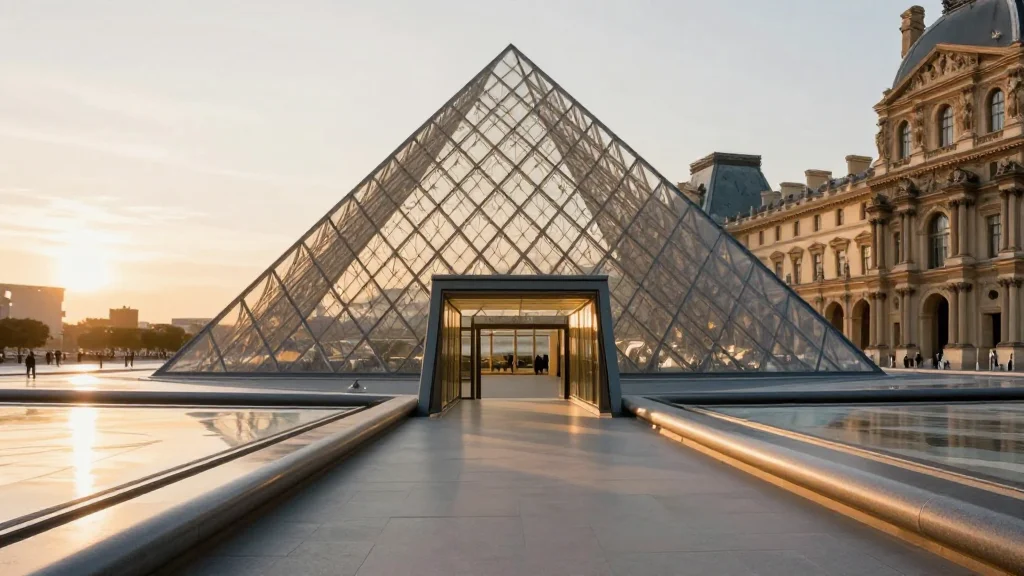
Louvre Names Architects for $1.2 Billion ‘Nouvelle Renaissance’ Expansion

Why It Matters
The expansion reshapes how the Louvre will accommodate growing global demand while confronting aging infrastructure. By creating a dedicated Mona Lisa gallery, the museum hopes to protect its most visited masterpiece from overcrowding and environmental stress, potentially setting a new standard for high‑traffic artworks worldwide. Financially, the project tests France’s ability to fund large‑scale cultural capital projects without compromising other public services, a debate that could influence future museum funding models across Europe. Moreover, the selection of an international architectural team signals a willingness to blend global design perspectives with French heritage, a move that may inspire other historic institutions to pursue similarly bold, cross‑border collaborations. The outcome will likely affect the Louvre’s brand positioning, visitor experience, and its capacity to generate revenue in an increasingly competitive cultural tourism market.
Key Takeaways
- •Selldorf Architects and Studios Architecture Paris chosen to lead €1 billion ($1.2 billion) Louvre expansion.
- •Project includes a new entrance and a 33,000‑sq‑ft dedicated Mona Lisa gallery.
- •Director Christophe Leribault called the plan “crucial and necessary” and warned cost cuts are limited.
- •Budget estimates vary: €270 million ($315 million) to €1.1 billion ($1.3 billion).
- •Expansion aims to add three million visitors annually and address recent security and infrastructure crises.
Pulse Analysis
The Louvre’s decision to embark on a $1.2 billion expansion reflects a broader shift in the museum sector toward mega‑projects that blend visitor experience with revenue generation. Historically, institutions like the British Museum and the Smithsonian have relied on incremental upgrades; the Louvre is now opting for a transformative overhaul that promises both operational resilience and a refreshed brand narrative. By allocating a substantial portion of the budget to a dedicated Mona Lisa space, the museum acknowledges the economic magnetism of a single artwork while attempting to mitigate the wear and tear that comes with mass tourism.
Financially, the project tests the limits of public‑private partnership models in the cultural sphere. France’s willingness to shoulder a large share of the cost signals confidence in the Louvre’s ability to recoup investment through higher ticket sales, ancillary services, and increased global visibility. However, the divergent cost estimates expose a risk: if funding gaps persist, the museum may be forced to defer essential maintenance, undermining the very stability the expansion seeks to secure. Stakeholders will watch closely how the French government balances cultural prestige with fiscal prudence.
From an architectural standpoint, the collaboration between Selldorf and Studios Architecture Paris could set a precedent for future heritage projects. Their challenge is to respect the Louvre’s historic fabric while delivering a contemporary visitor flow that reduces congestion. Success could inspire other legacy institutions to pursue similarly ambitious redesigns, positioning architecture as a catalyst for both preservation and modernization in the art world.
Louvre Names Architects for $1.2 Billion ‘Nouvelle Renaissance’ Expansion
Comments
Want to join the conversation?
Loading comments...