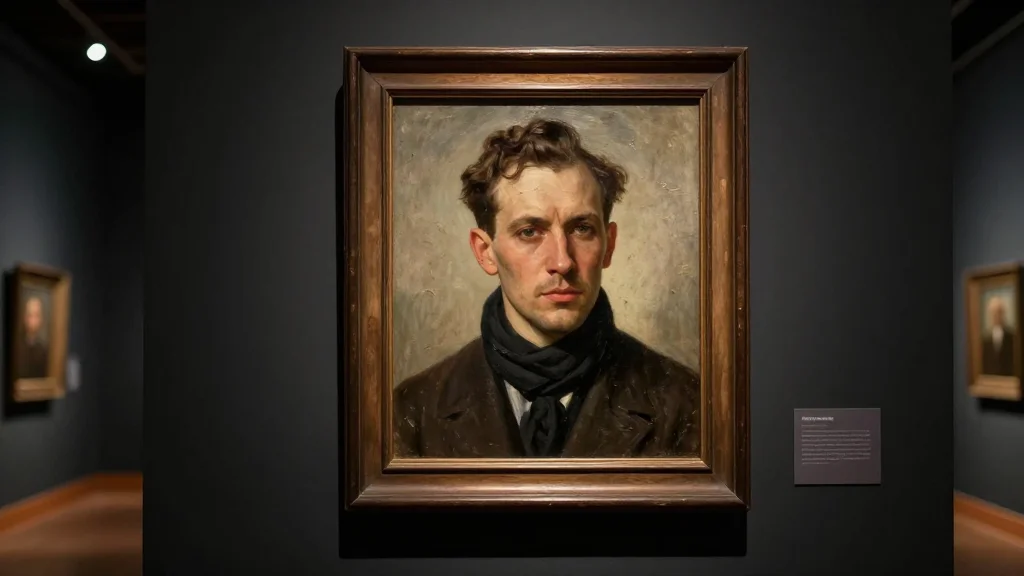
Lucian Freud Painting He Spent Decades Denying Will Go on Public View for the First Time
Companies Mentioned
Why It Matters
The authentication reshapes the painting’s market value and underscores the growing power of archival research in resolving provenance disputes, influencing collectors, museums, and auction houses.
Key Takeaways
- •Man in a Black Scarf authenticated after 80‑year dispute.
- •Exhibition at London’s Garden Museum showcases Freud’s early portrait.
- •Research in Tate archives linked painting to 1939 student records.
- •Artist denial challenges provenance standards in the art market.
- •Case highlights role of media and forensic scholarship in authentication.
Pulse Analysis
The newly authenticated *Man in a Black Scarf* offers a rare glimpse into Lucian Freud’s formative years, long obscured by his own repudiation. Painted while he studied at the East Anglian School, the work resurfaced through meticulous Tate Britain archival research that matched daily student logs to Freud’s hand. This discovery not only validates the portrait’s provenance but also fuels public interest, culminating in its debut at the Garden Museum’s exhibition that celebrates the Suffolk farmhouse where the school thrived. By situating the piece alongside contemporaneous works, the show illustrates how early mentorship shaped Freud’s evolving technique.
Freud’s steadfast denial mirrors historic disputes involving artists like Pablo Picasso and Gerhard Richter, where personal narratives clashed with scientific and documentary evidence. Television programs such as *Fake or Fortune?* and investigative journalism have become pivotal in challenging entrenched attributions, prompting the art world to adopt more rigorous forensic methods. The case underscores a shifting paradigm: provenance is no longer dictated solely by an artist’s testimony but increasingly by multidisciplinary verification, including pigment analysis, stylistic comparison, and archival corroboration.
For the market, the authentication translates into a substantial valuation uplift, as collectors and institutions reassess the financial and cultural weight of disputed works. Museums gain confidence to exhibit pieces previously mired in controversy, while auction houses must navigate heightened scrutiny when cataloguing similar items. Ultimately, the Freud saga highlights the delicate balance between artistic intent, historical record, and market forces, signaling that unresolved attributions will continue to be resolved through collaborative scholarship rather than singular authority.
Lucian Freud Painting He Spent Decades Denying Will Go on Public View for the First Time
Comments
Want to join the conversation?
Loading comments...