Why It Matters
The award highlights how Australian art can bridge historic commemoration with current geopolitical issues, influencing public discourse around war memory and cultural responsibility.
Key Takeaways
- •ELK wins 2026 Gallipoli Art Prize with $20,000 award.
- •Artwork depicts vandalism of Gaza war cemetery.
- •Cornish’s great‑uncle Alfred Cook is buried at Deir al‑Balah.
- •Prize highlights intersection of art, history, and current conflict.
- •Acquisition adds politically charged piece to Gallipoli Memorial Club collection.
Pulse Analysis
The Gallipoli Art Prize, administered by the Gallipoli Memorial Club, awards a $20,000 acquisitive prize each year to works that engage with the legacy of the First World War. Established in 2005, the prize has become a focal point for Australian artists seeking to reinterpret the Anzac narrative through contemporary lenses. By purchasing the winning piece, the club ensures the artwork becomes part of a permanent collection that educates visitors and preserves evolving perspectives on sacrifice, nationhood, and remembrance.
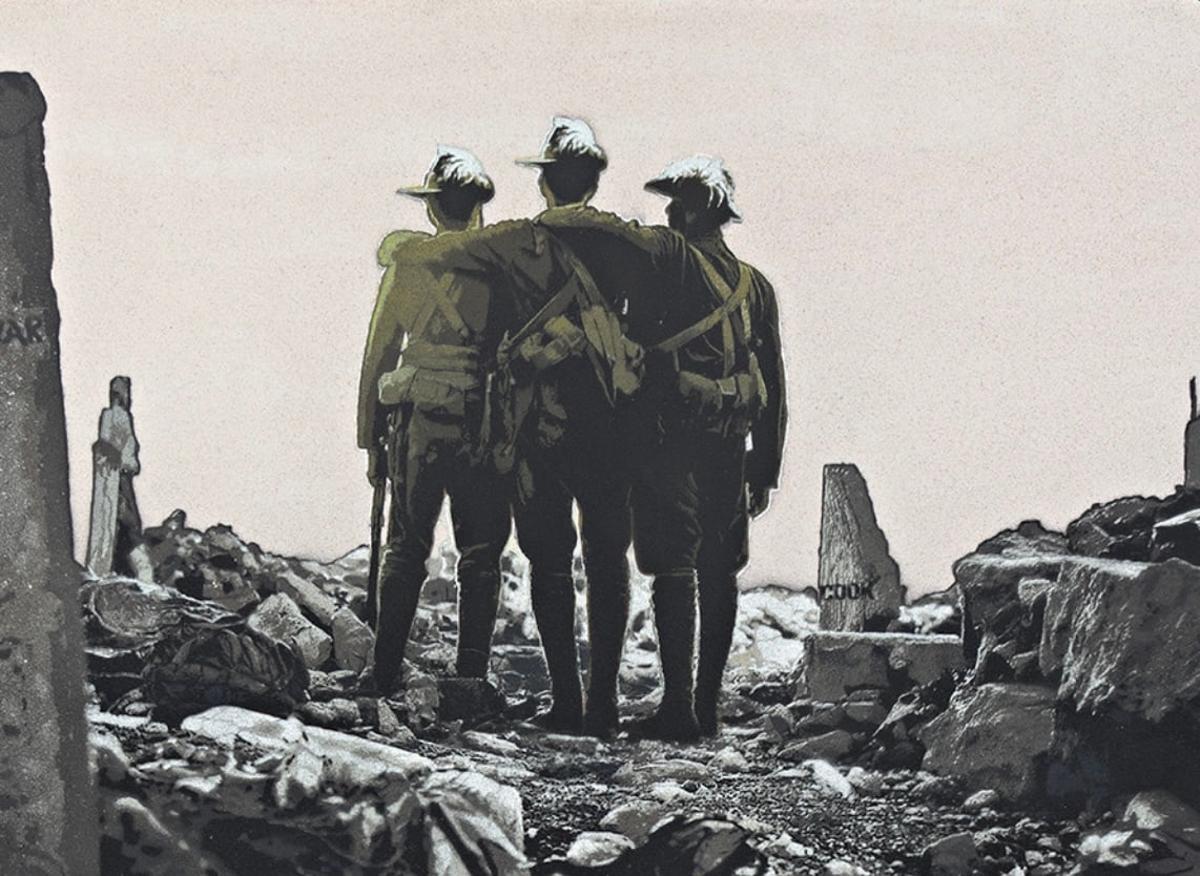
Sydney‑based street artist Luke Cornish, who works under the moniker ELK, is renowned for large‑scale aerosol paintings that blend realism with graphic‑novel aesthetics. His 2026 winning entry, *No Rest (The Vandalism of Deir al‑Balah)*, measures 100 × 135 cm and portrays the recent damage inflicted on the Commonwealth War Cemetery in Gaza’s Deir al‑Balah by the Israeli Defence Force. Cornish links the site to his own family history—his great‑uncle Alfred Cook of the Australian Light Horse lies among the interred—turning personal memory into a broader critique of forgotten wartime sanctuaries.
The award spotlights how contemporary Australian art can confront present‑day conflicts while honoring historic sacrifice. By acquiring Cornish’s politically charged canvas, the Gallipoli Memorial Club signals openness to dialogue about the Middle East’s impact on Anzac heritage, a stance that may provoke debate among veterans’ groups and cultural institutions. The piece also sets a precedent for future prize entries to address contentious geopolitics, encouraging artists to explore the nexus of memory, trauma, and accountability. In doing so, the prize reinforces its role as a catalyst for national conversation.
Luke Cornish (ELK) wins the 2026 Gallipoli Art Prize
Comments
Want to join the conversation?
Loading comments...