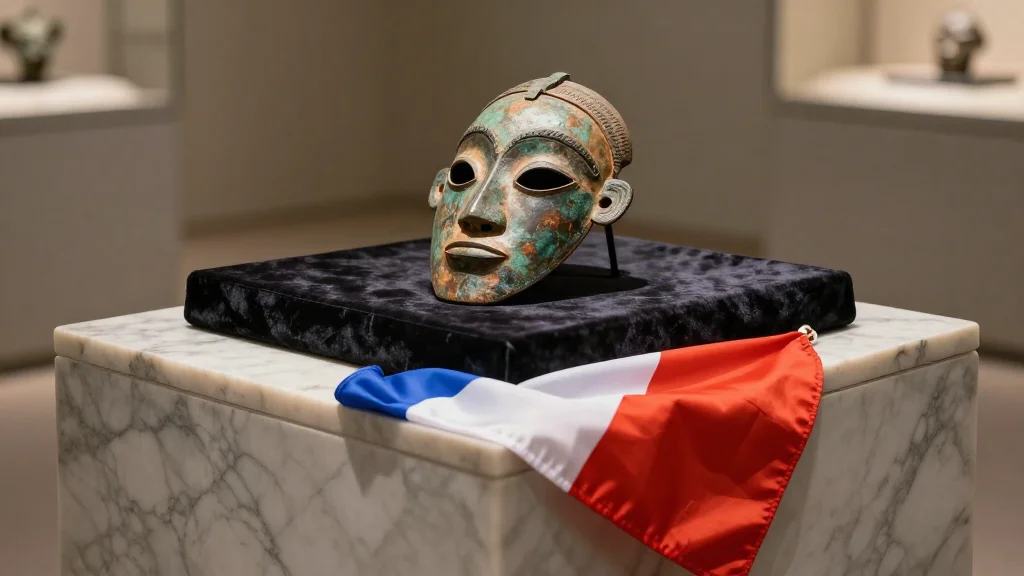
Macron Promises Conditional Return of African Artefacts
Why It Matters
Macron’s conditional pledge reshapes cultural diplomacy, pressuring former colonial powers to couple artifact repatriation with capacity‑building in African institutions, and influencing how heritage assets are managed globally.
Key Takeaways
- •Macron ties restitution to functional African museums.
- •France has returned artefacts to Senegal, Benin, Côte d’Ivoire.
- •Sarr‑Savoy Report calls for full return of looted objects.
- •Critics demand all items be returned; Macron urges selective approach.
- •Musée du quai Branly still holds most African collections.
Pulse Analysis
The debate over African cultural restitution has intensified as former colonial powers confront a legacy of looted artefacts. France, home to the world’s largest African art collection at the Musée du quai Branly, faced mounting pressure after activists highlighted the moral and legal implications of retaining objects taken during the 19th‑century scramble for Africa. The 2020 Sarr‑Savoy Report, commissioned by the French government, concluded that any object acquired through force or inequitable means should be returned, setting a benchmark for other European nations.
Macron’s latest remarks in Nairobi underscore a pragmatic shift: restitution will proceed only when African nations possess secure, climate‑controlled facilities and trained curatorial staff. He pointed to concrete examples—Senegal’s El Hadj Omar Tall sword, Benin’s Dahomey royal treasures, and Côte d’Ivoire’s Djidji Ayokwe drum—to illustrate a phased approach that balances moral responsibility with logistical readiness. Critics argue that selective returns perpetuate a colonial mindset, yet Macron warns that returning items to under‑prepared institutions could jeopardize preservation and diminish public access.
The conditional stance signals a broader transformation in cultural diplomacy, where heritage repatriation is linked to capacity‑building and long‑term partnership. If France successfully supports museum development across West and Central Africa, it could set a precedent for the UK, Belgium and Germany, prompting a wave of similar agreements. Conversely, failure to deliver on infrastructure promises may erode trust and stall future restitutions, leaving thousands of artefacts in limbo. Stakeholders now watch closely as the next phase of negotiations unfolds, shaping the future of global museum collections and post‑colonial reconciliation.
Macron promises conditional return of African artefacts
Comments
Want to join the conversation?
Loading comments...