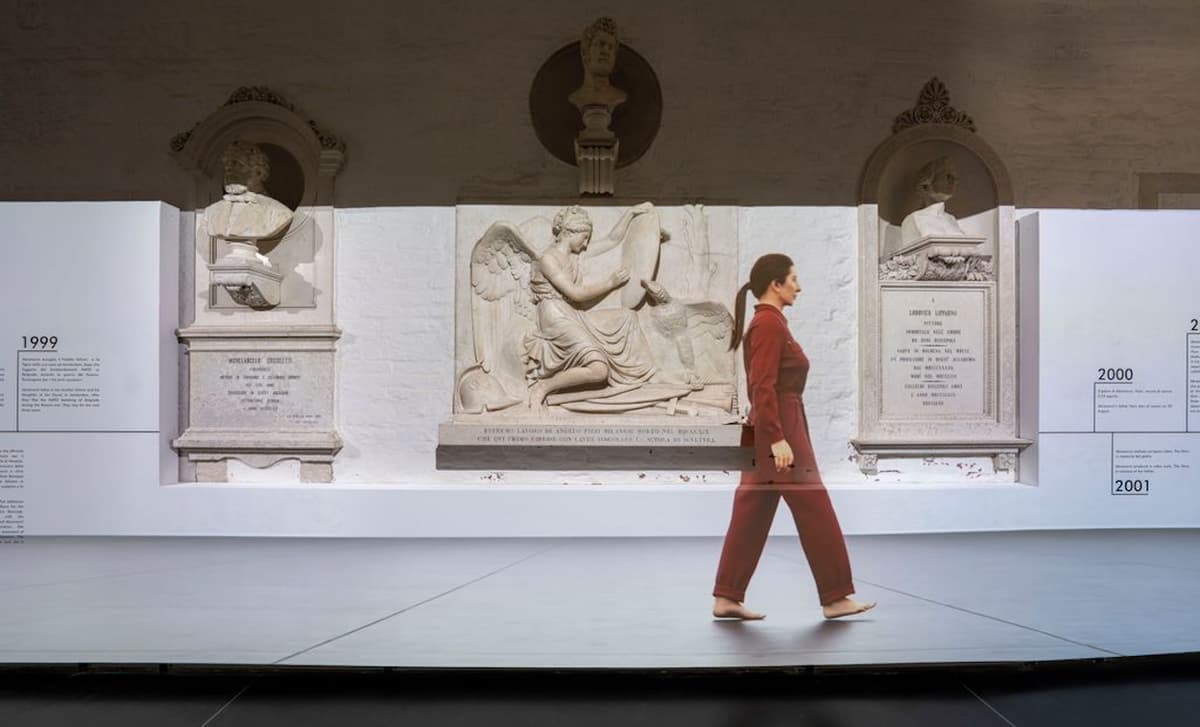
Marina Abramović’s Historic Venice Biennale Exhibition Is a Full-Circle Moment
Why It Matters
The exhibition marks a historic breakthrough for female artists at a premier museum, signaling broader institutional commitment to gender equity in the global art market. It also redefines how performance art can intersect with classical collections, expanding curatorial possibilities for major cultural institutions.
Key Takeaways
- •First living woman honored with solo show at Gallerie dell’Accademia
- •Exhibition pairs Abramović’s performance pieces with Venetian Renaissance masterpieces
- •“Transitory Objects” invite visitor participation using crystals and stones
- •Highlights 1997 Golden Lion‑winning “Balkan Baroque” in its original venue
- •Signals growing institutional support for women artists at major biennials
Pulse Analysis
Marina Abramović’s new show at the Gallerie dell’Accademia arrives at a symbolic crossroads: her 80th birthday and a half‑century of performance art that has reshaped notions of the body as both medium and message. By securing the first solo exhibition for a living woman at the historic museum, the Biennale signals a shift toward inclusive representation, acknowledging the artist’s role in expanding performance from avant‑garde fringe to mainstream cultural discourse. This milestone reflects a broader market trend where collectors and institutions increasingly value experiential works that engage audiences beyond visual observation.
Curator Shai Baitel’s strategy foregrounds a conversation between Abramović’s endurance‑based pieces and the Accademia’s Renaissance holdings. Works like “The Lovers, Great Wall Walk” and “Balkan Baroque” are juxtaposed with Titian’s unfinished *Pietà*, highlighting a shared preoccupation with the body as a site of suffering, devotion, and transformation. The “Transitory Objects” installation further blurs the line between art and visitor, inviting participants to lie among crystals and stones, thereby making geological time tangible. This curatorial model demonstrates how contemporary performance can be contextualized within historic narratives, offering museums a template for integrating living art into permanent collections.
Beyond artistic innovation, Abramović’s exhibition amplifies the conversation about gender parity in the art world. Her reflections on past marginalization and the Biennale’s evolving gender balance underscore a persistent demand for systemic change. As major institutions spotlight women creators, market dynamics respond with heightened demand for works by female artists, influencing auction results and museum acquisitions. The show thus serves as both a cultural landmark and a catalyst for continued progress toward equitable representation in the global art ecosystem.
Marina Abramović’s Historic Venice Biennale Exhibition Is a Full-Circle Moment
Comments
Want to join the conversation?
Loading comments...